Things to do in Toronto
Toronto: 2-Hour Downtown Walking Tour
What are the best things to do in Toronto?
Walk the harbourfront and take the ferry to the Toronto Islands, explore Kensington Market and the Distillery District on foot, and pick one paid attraction (CN Tower, ROM, or Casa Loma) rather than trying to see all of them in one visit.
A city best understood on foot, not from a bus window
Toronto doesn’t have one single must-see the way Paris has the Eiffel Tower. It has a downtown core you can walk in an afternoon, a chain of islands ten minutes offshore by ferry, and a dozen distinct neighborhoods that each feel like a different city. The mistake most first-time visitors make is trying to hit every attraction on a checklist instead of picking a handful and actually spending time in them. This guide covers what’s genuinely worth doing, roughly what it costs, and where the crowds and the marketing outpace the experience.
Start with orientation. Downtown Toronto sits along Lake Ontario, with the CN Tower and Rogers Centre near the waterfront, the Financial District and PATH underground network just north of that, and Old Town/St. Lawrence Market further east. The subway (TTC) connects most of what matters — see the TTC transit guide before you land, since a day pass at $13.50 CAD beats paying per ride if you’re moving around a lot.
| Where | Downtown core along Lake Ontario, plus neighborhoods radiating outward |
| Cost | Free (harbourfront, neighborhoods) to around $46 CAD (CN Tower) per paid attraction |
| Time needed | Two full days for the core; three with a Niagara Falls day trip added |
| Getting there | TTC subway/streetcar day pass around $13.50 CAD; walkable core |
| Best time | June–September for patios and islands; weekday mornings for fewer crowds |
Downtown landmarks: pick one, not all three
The CN Tower, Ripley’s Aquarium of Canada, and the Rogers Centre all sit within a five-minute walk of each other near the base of the tower, which makes it tempting to try to do all three in one day. Don’t — each one takes two to three hours once you account for lines, and by the third you’re rushing.
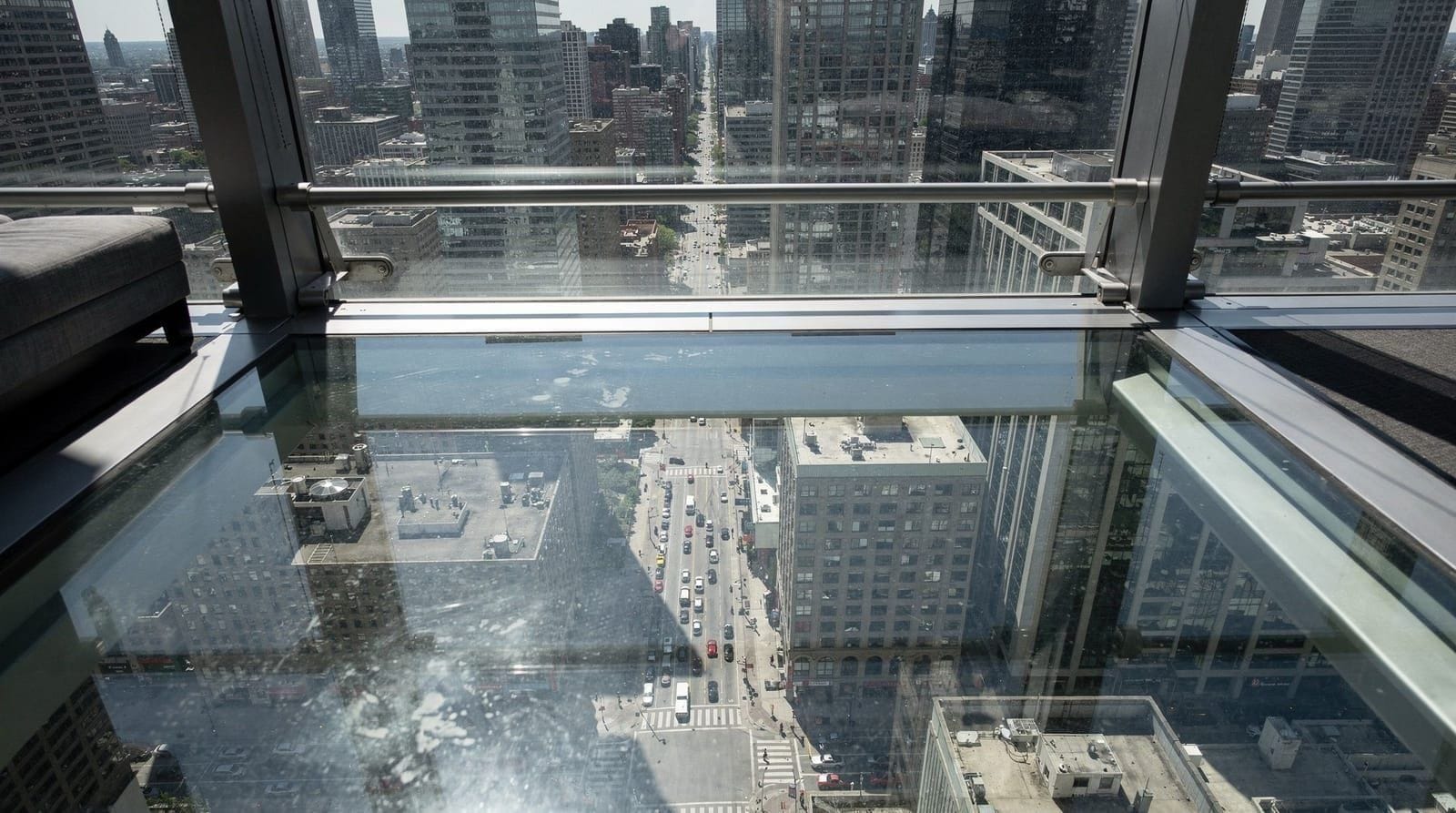
The CN Tower (301 Front St W) is the observation-deck experience: general admission runs roughly $46 CAD for adults, with a further add-on ticket for The Top (the highest platform). It’s genuinely worth it on a clear day for the 360-degree view over the lake and the islands — see our honest breakdown in is the CN Tower worth it if you’re deciding between it and a cheaper alternative like the Skylon Tower in Niagara Falls. Book ahead online; the walk-up line at the base can run 45 minutes on a summer Saturday.
Ripley’s Aquarium of Canada, right next door, is Toronto’s best rainy-day option for families, with a 96-metre underwater tunnel through the shark tank. Adult tickets run around $44 CAD; visiting after 5pm is usually a few dollars cheaper and noticeably less crowded. You can book it directly:
Ripley’s Aquarium of Canada entry ticketFor a broader orientation to downtown that covers the CN Tower district plus the Financial District and the PATH, a guided walk is the fastest way to get your bearings on day one:
Toronto 2-hour downtown walking tourSee the full downtown Toronto walking guide for a self-guided version of the same route if you’d rather explore solo.
The harbourfront and Toronto Islands — the real highlight
If you only have one full day in Toronto, spend it here. The Harbourfront stretches along the lake from the ferry terminal to Ontario Place, with public art, splash pads, and patios that get lively from June through September. From the Jack Layton Ferry Terminal, boats run out to the Toronto Islands roughly every 30-45 minutes in peak season; a round-trip adult ticket is about $9.57 CAD.
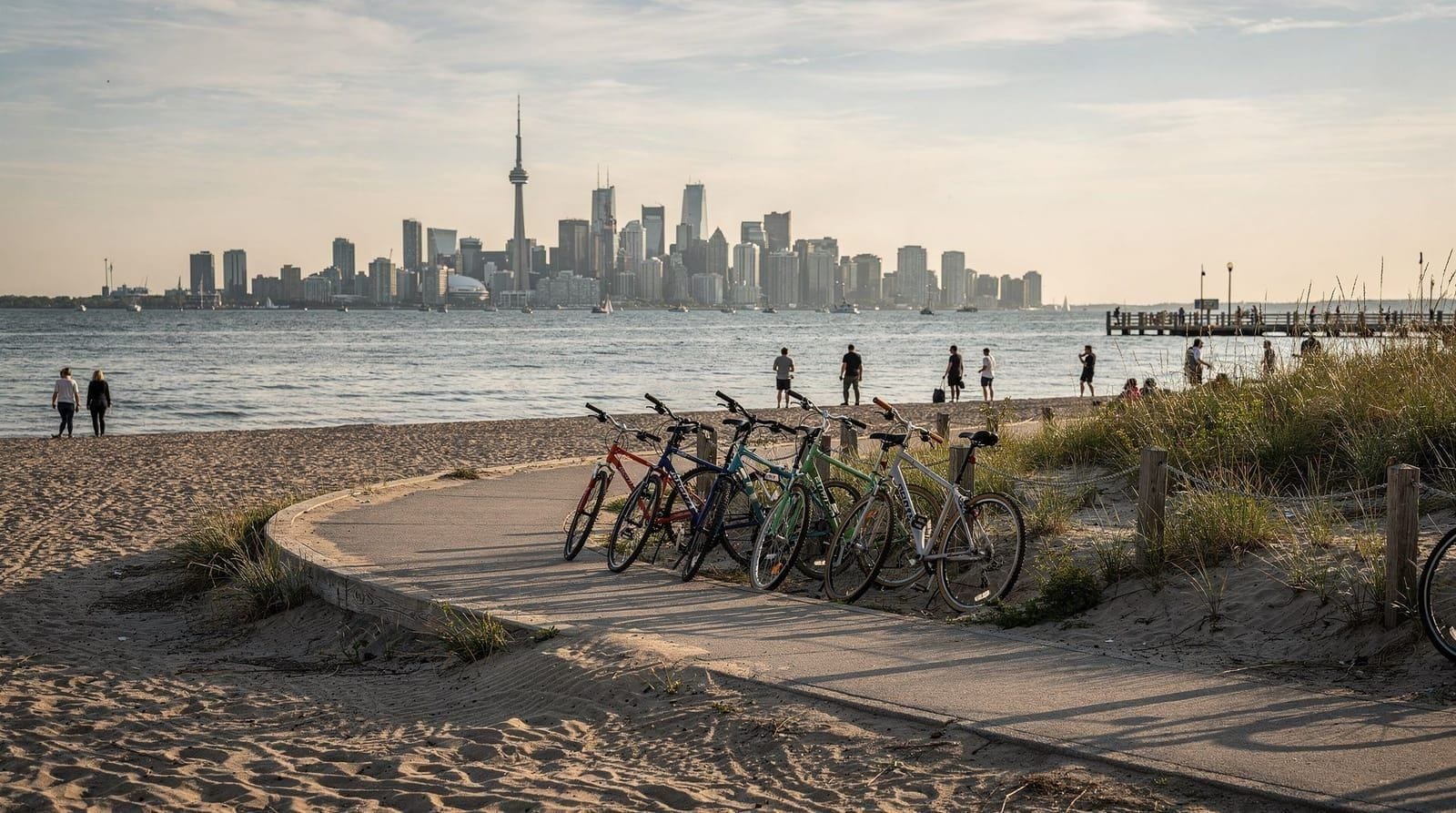
The islands themselves are car-free, which is most of the appeal — you get sand beaches (Hanlan’s Point and Centre Island), quiet boardwalks, a small amusement park (Centreville) for younger kids, and a clear skyline view back at the city that’s better than most paid photo spots downtown. Renting a bike on the islands is a good way to cover more ground than walking; see things to do on Toronto Islands for a route that avoids the crowded main pier area.
For a broader view of the harbour before or after the islands, a guided cruise covers the skyline and the breakwater in about an hour:
Toronto guided harbour and islands sightseeing cruiseKensington Market, Chinatown, and the Distillery District
These three neighborhoods are Toronto’s strongest argument against the “it’s just a business city” reputation. Kensington Market is a dense grid of vintage shops, taco counters, and Caribbean and Latin American grocers that’s stayed scrappy and independent even as rents downtown have climbed; it borders Chinatown on Spadina Avenue, so you can walk both in an afternoon. Neither neighborhood really gets going before 11am, so don’t show up at 9.
The Distillery District is the opposite mood: cobblestone lanes of restored Victorian-era whisky distillery buildings, now filled with galleries, patios, and the Mill Street Brewery. It’s genuinely handsome architecture and worth an hour or two, though it leans more “photo backdrop” than “authentic neighborhood” compared to Kensington — see the guide to the Distillery District for which parts are worth lingering in.
Museums and culture: ROM, AGO, and Casa Loma
The Royal Ontario Museum (ROM) on Bloor Street is Canada’s largest museum, with natural history, world cultures, and a distinctive crystal-shaped addition on the facade that either delights or bewilders depending who you ask. Adult admission through Plan Ahead Pricing typically runs $26-30 CAD depending on the date. The Art Gallery of Ontario (AGO), a 15-minute walk south, has a strong Canadian and Indigenous art collection alongside a genuine Group of Seven room; adult admission is $30 CAD, and the gallery runs free evening hours on select Wednesdays — check ago.ca before you plan around it. See the Royal Ontario Museum guide for what’s worth prioritizing inside if you only have 90 minutes.
Casa Loma, the Gothic Revival “castle” built by financier Henry Pellatt in the early 1900s, sits in midtown near Casa Loma & The Annex. Adult tickets run around $45 CAD, which is steep for what’s essentially a house tour, but the towers, secret passages, and gardens make it a legitimately fun couple of hours, especially with kids — see Casa Loma guide for the full verdict.
St. Lawrence Market and the food scene
St. Lawrence Market, a covered market building that National Geographic once named the world’s best food market, is worth a stop even if you’re not planning to cook — dozens of vendors under one roof selling everything from peameal bacon sandwiches (the market’s signature dish) to artisan cheese and fresh seafood. The south market building runs Tuesday through Saturday, with a separate farmers’ market in the north building on Saturdays only. See the St. Lawrence Market food guide for which stalls are worth the line.
Beyond the market, Toronto’s food scene stretches across dozens of distinct neighborhood strips — Little Italy on College Street, Greektown on the Danforth, and Little Portugal along Dundas West all offer genuine ethnic-enclave dining rather than a watered-down “international food court” version. If you want a structured introduction rather than wandering blind, a guided food tour through Kensington Market or the Distillery District covers several stops with context on the neighborhood’s history alongside the food itself — see the Toronto food tours guide for options.
Live sports and entertainment
Toronto is one of the few cities in North America with major-league teams across all four big sports, and catching a game is a genuinely good way to experience the city’s fan culture rather than just its attractions. The Toronto Blue Jays play at Rogers Centre, the retractable-roof stadium right beside the CN Tower, from April through September; the Toronto Raptors (NBA) and Toronto Maple Leafs (NHL) both play at Scotiabank Arena downtown, with the Leafs’ rabid, decades-long championship drought giving their games a distinct emotional intensity even in the regular season.
See the Blue Jays game guide, Raptors game guide, and Maple Leafs game guide for ticket-buying strategy and where to sit.
Beyond sports, Toronto’s festival calendar is genuinely dense: the Toronto International Film Festival (TIFF) takes over the Entertainment District each September with red-carpet premieres and public screenings, while summer brings Caribana (North America’s largest Caribbean carnival-style festival) and the Canadian National Exhibition, a sprawling end-of-summer fair with rides, food, and agricultural exhibits that’s been running since 1879. See the TIFF Toronto guide and Canadian National Exhibition guide for what to expect if your visit lines up with either.
Toronto by the water and beyond downtown
Once you’ve covered the core, The Beaches neighborhood in the east end gives you a genuine boardwalk-and-sand afternoon without leaving the city, and High Park in the west end is Toronto’s answer to Central Park, with a zoo, hiking trails, and (briefly, in late April) a cherry blossom bloom that draws crowds rivaling any downtown attraction — see High Park cherry blossoms guide for timing.
If you have a full extra day and want to leave the city, Niagara Falls is 1.5 hours away and is genuinely worth the trip, while Hamilton offers waterfalls and a livelier, cheaper food scene 45 minutes west for those who’ve already done the obvious Toronto list.
Yorkville and Queen West
For a quieter, more upscale counterpoint to Kensington Market’s grit, Yorkville — once Toronto’s hippie district in the 1960s, now its highest-end shopping and dining strip — is worth a walk even if you’re not buying anything, if only to see how completely the neighborhood’s identity has flipped over sixty years. Queen West, running from University Avenue out toward Trinity Bellwoods Park, splits the difference: independent boutiques, gallery spaces, and a livelier bar scene than Yorkville without Kensington’s market-stall chaos.
Practical notes
Most attractions accept tap-to-pay and contactless cards everywhere; you rarely need cash in Toronto. Sales tax (13% HST) is added at the register, not included in posted prices — factor that into any budget. Weekday mornings before 11am are consistently the quietest time to visit any paid attraction; Saturday afternoons in July and August are the busiest by a wide margin. Public washrooms are reliably available inside subway stations, major malls like the Eaton Centre, and any of the museums or paid attractions listed above — a useful thing to know since standalone public restrooms are sparser on the street than in many other major cities.
Choosing between the big paid attractions
| Attraction | Cost | Time needed | Best for |
|---|---|---|---|
| CN Tower | ~$46 CAD | 2–3hrs incl. lines | The iconic skyline view, clear days |
| Ripley’s Aquarium | ~$44 CAD | 2–3hrs | Families, rainy days |
| ROM | $26–30 CAD | 3–4hrs | Natural history, world cultures |
| AGO | $30 CAD | 2–3hrs | Art, architecture, free Wednesday evenings |
| Casa Loma | ~$45 CAD | 2–3hrs | Kids, castle-and-passages novelty |
Picking one or two from this list rather than all five in a single trip is the single biggest quality-of-life improvement most first-time visitors can make to their itinerary.
First-time neighborhoods, side by side
| Neighborhood | Mood | Best for |
|---|---|---|
| Kensington Market | Scrappy, independent, market-stall energy | Vintage shopping, tacos, people-watching |
| Distillery District | Polished, Victorian-industrial, photo-friendly | Architecture, galleries, a relaxed patio afternoon |
| Yorkville | Upscale, quiet, boutique | A slower walk, high-end shopping, ROM add-on |
| Queen West | Independent boutiques, galleries, livelier bars | Splitting the difference between Kensington and Yorkville |
If you only have one day
A realistic single-day plan starts at the harbourfront and the Toronto Islands ferry in the morning, moves to Kensington Market and Chinatown for a late lunch, and finishes with either the CN Tower at golden hour or a slower walk through the Distillery District before dinner. Trying to add the ROM or Casa Loma on top of that day specifically is what causes most first-timers to feel rushed — see the Toronto weekend escape itinerary or the fuller Toronto 3 days itinerary for how to pace a longer stay instead.
Frequently asked questions about things to do in Toronto
How many days do I need to see the main things to do in Toronto?
Two full days covers the core: one for downtown landmarks and the harbourfront/islands, one for neighborhoods like Kensington Market, the Distillery District, and a museum. Add a third day if you want to include a day trip to Niagara Falls.
Is the CN Tower worth the money compared to other viewpoints?
It’s the tallest and most iconic viewpoint, but not the only one — the Toronto Islands give you a free skyline view from the water, and rooftop bars downtown offer a paid alternative with a drink included. See is the CN Tower worth it for a full comparison.
What’s the cheapest way to see a lot of Toronto in one day?
Combine the free waterfront walk, the Toronto Islands ferry (under $10 CAD round trip), and a self-guided walk through Kensington Market and Chinatown. That covers the highlights for roughly $15-20 CAD total. See free things to do in Toronto for more no-cost options.
Do I need a car to see Toronto’s main attractions?
No. Downtown, the harbourfront, and most neighborhoods are walkable or connected by the TTC subway and streetcar network. A car becomes useful only if you’re planning day trips to Niagara, Muskoka, or other regions outside the city.
Which Toronto attractions are overrated?
Hop-on hop-off bus tours get mixed reviews given Toronto’s compact, walkable core — see our honest review. Some downtown attractions also charge premium prices for relatively short experiences; the overpriced Toronto attractions guide breaks down which ones deliver and which don’t.
Is Toronto safe for tourists walking around at night?
Downtown, the Distillery District, and the waterfront are well-lit and busy into the evening. Standard city precautions apply elsewhere — see the safety tips for Toronto guide for neighborhood-specific notes.
What’s the single best thing to do in Toronto if I only have a few hours?
The harbourfront and a Toronto Islands ferry crossing — it’s the fastest way to get a genuine sense of the city’s relationship with the lake and a skyline view that most paid attractions can’t match for the price.
Is Toronto worth visiting if I’ve already done Niagara Falls?
Yes — they’re complementary rather than redundant. Toronto is a walkable, neighborhood-driven city experience, while Niagara is a single natural landmark; most visitors do both on the same trip rather than choosing one over the other.
Top experiences
Bookable activities with verified prices and instant confirmation on GetYourGuide.