Downtown Toronto
A practical guide to Downtown Toronto: the CN Tower, PATH, Union Station, best neighborhoods to base yourself, and how to see the core in one to two days.
Toronto: 2-Hour Downtown Walking Tour
Quick facts
- Best base for
- First-time visitors, transit-free travel
- Nearest subway
- Union, King, Queen, St. Andrew (Line 1)
- Iconic sight
- CN Tower, 553m observation deck
- Typical hotel range
- C$180-450/night
Why downtown is your default base
If you land in Toronto with no plan and one question — where do I stay — the honest answer is almost always downtown. Union Station puts you on the UP Express from Pearson in 25 minutes, the subway’s Line 1 threads directly beneath it, and everything from the CN Tower to the Distillery District sits within a 20-minute walk or a two-stop ride. That convenience comes at a price: downtown hotels run C$180-450 a night depending on season, well above the city average, and the core can feel more like a business district than a neighborhood once office towers empty out after 6pm. But for a first visit, or a weekend escape where you don’t want to think about logistics, it earns its premium.
| Best base for | First-timers, business travel, walkable everything |
| Typical hotel cost | Around C$180-450/night depending on season |
| Days needed | 1-2 full days |
| Getting there | UP Express (25 min from Pearson) or subway Line 1 |
| Best time | May-September for patios; December for skating and lights |
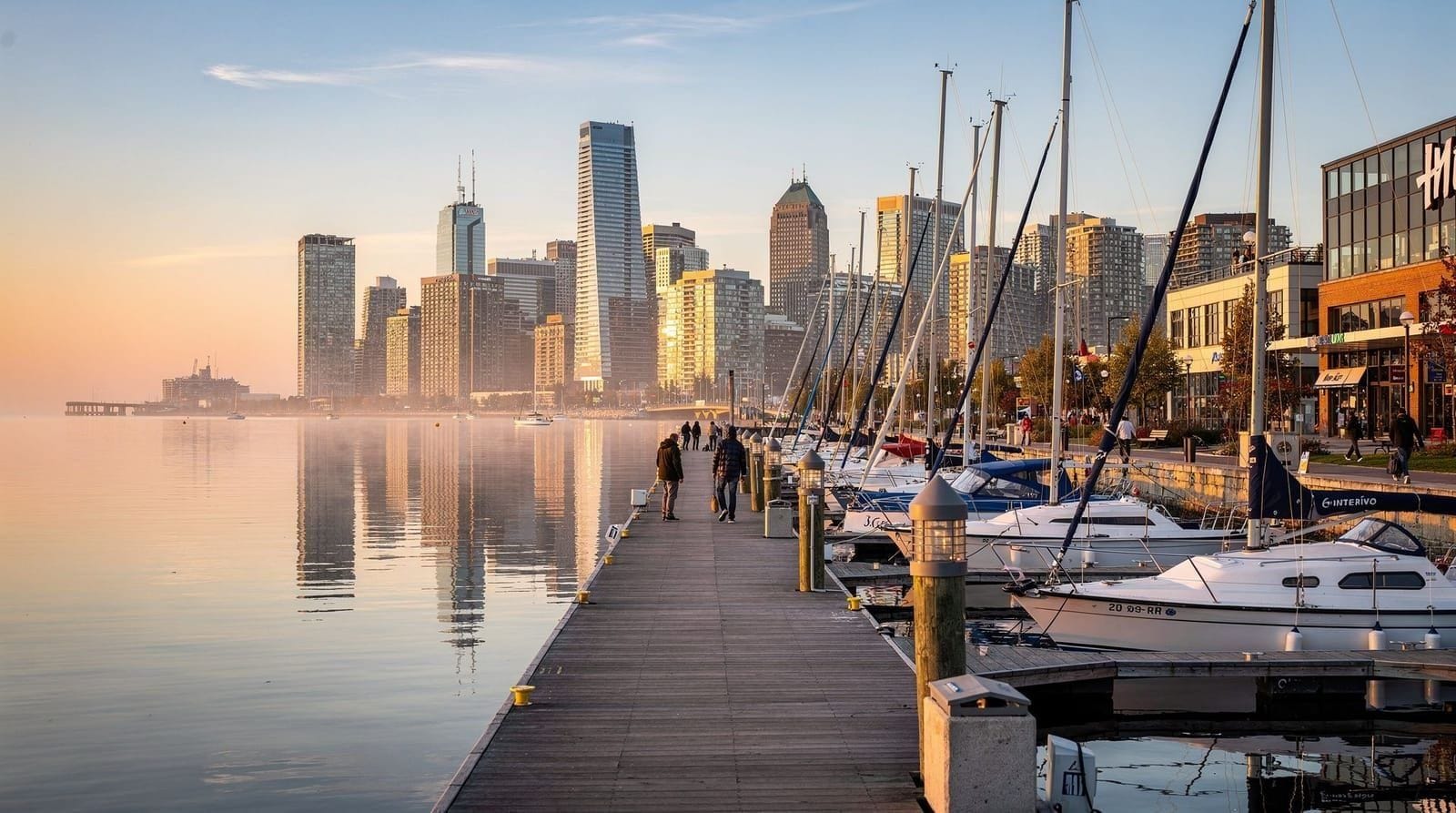
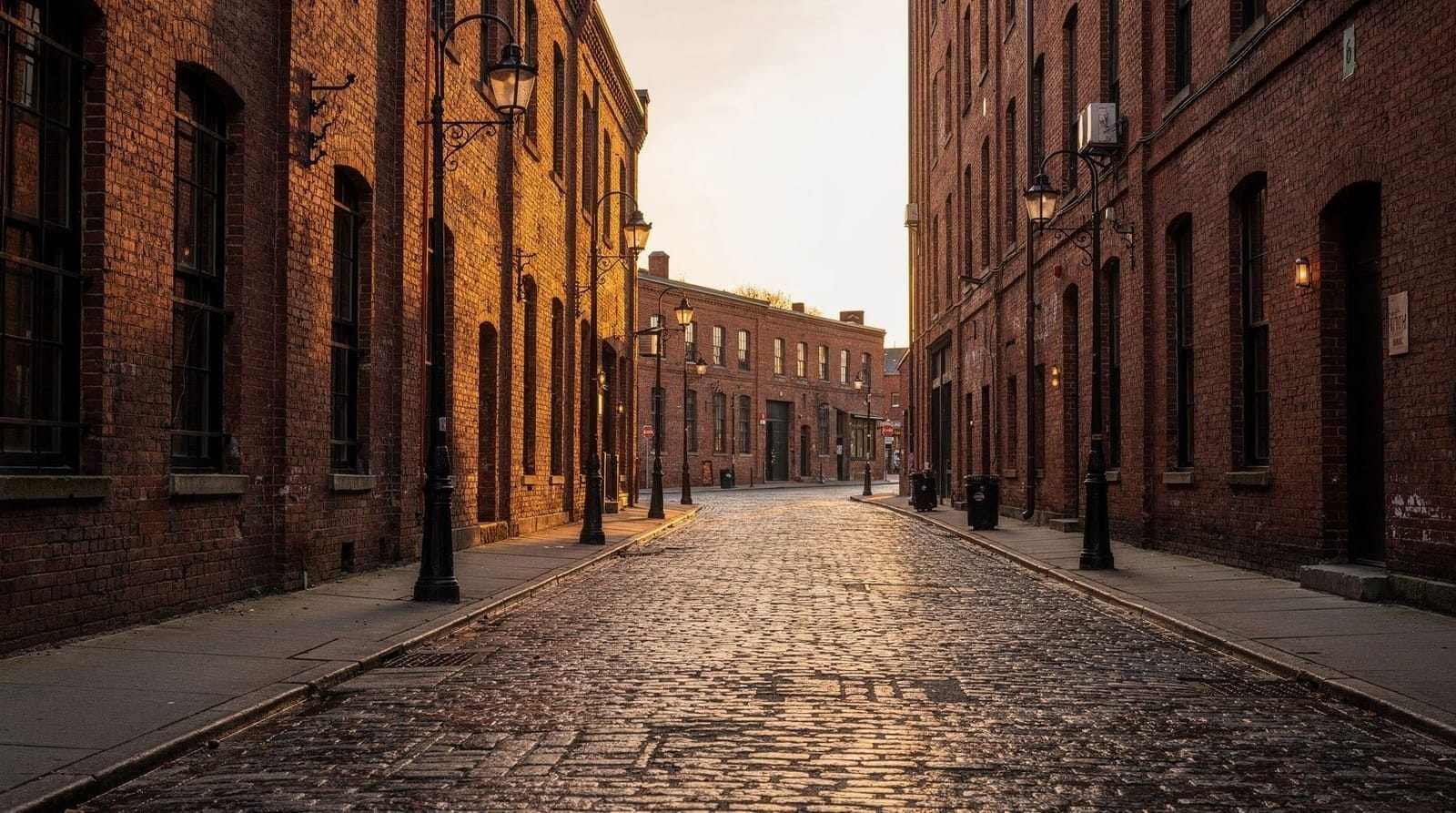
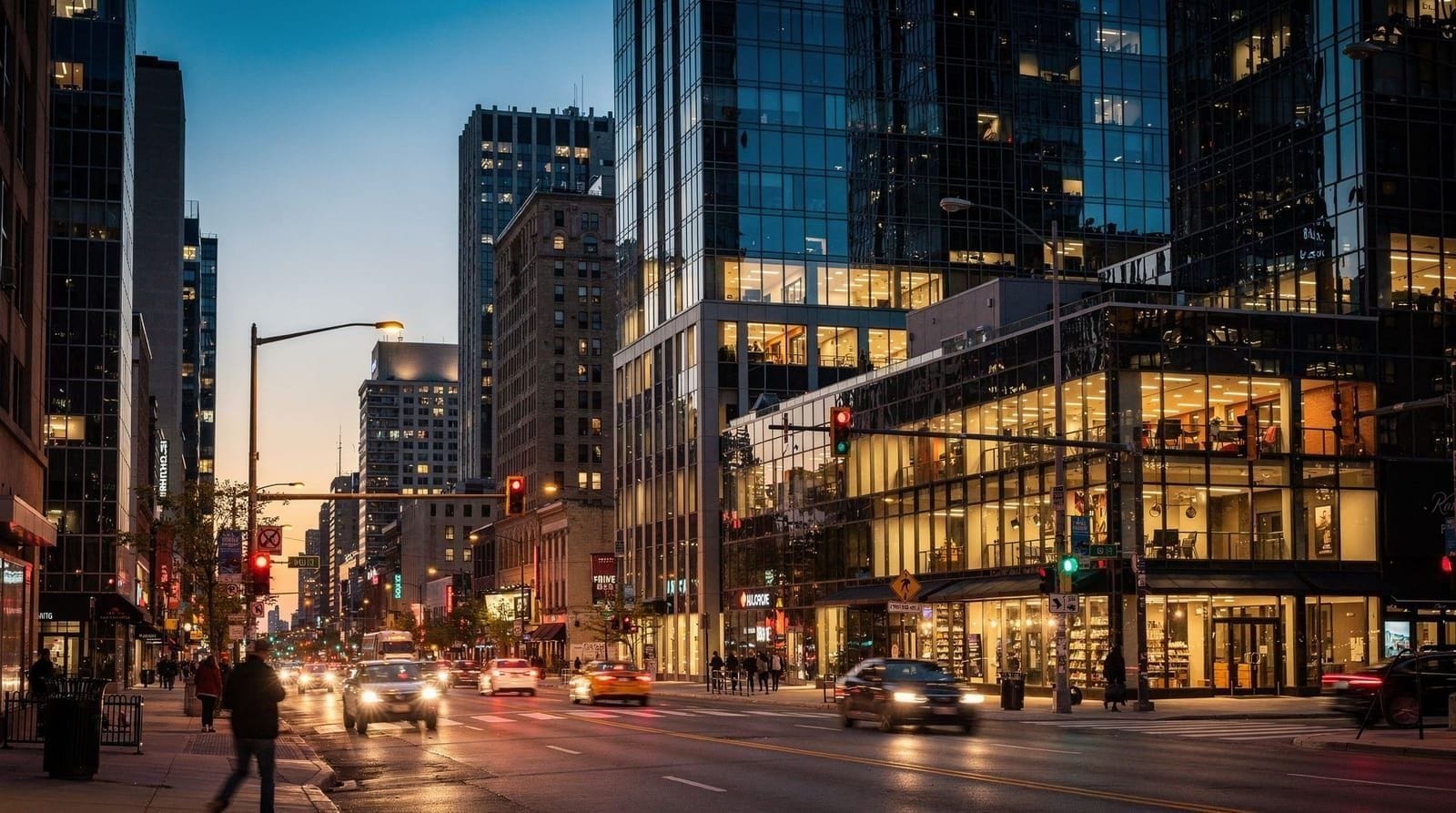
Downtown Toronto isn’t one neighborhood so much as a cluster of them stitched together by King Street and Yonge Street: the Financial District’s glass canyons, the Theatre District around King West, Old Town near St. Lawrence Market, and the waterfront edge that bleeds into Harbourfront. Knowing which pocket you’re in changes what you’ll find — a suit-and-tie lunch crowd on Bay Street looks nothing like the pre-theatre buzz on King West at 7pm.
The CN Tower and the skyline view question
The CN Tower is the single most photographed thing in the city, and also the most argued-about. At 553 metres it held the title of world’s tallest freestanding structure for over three decades, and the LookOut level (346m) and Glass Floor still deliver genuine vertigo. General admission runs roughly C$45-55 depending on season and time slot; the EdgeWalk (a harnessed walk around the outer rim at 356m, summer season only) costs considerably more and needs to be booked days ahead in peak months.
Whether it’s worth the money depends on what else is on your list — locals will tell you the Sky Pod’s higher elevation adds little over the main LookOut, and clear-day timing matters more than the ticket tier you buy. If you’d rather see the tower lit up at night with fewer crowds and a guide filling in the history, a CN Tower night tour is a reasonable way to combine the ticket with context instead of queuing solo.
For a broader first-orientation walk that hits the tower, the Rogers Centre, and the harbour without needing a car or transit pass, a downtown highlights walking tour with tower entry bundles the ticket with a guide who’ll point out which vantage points are worth the return trip.
PATH: the underground city that solves winter
Toronto’s PATH system is 30 kilometres of underground and above-ground connected walkways linking Union Station to dozens of office towers, hotels, and shopping concourses beneath the Financial District. It’s not a tourist attraction in the conventional sense — it’s a practical answer to January’s -15°C wind chill or a July downpour. Signage improved significantly in recent years with colour-coded zones, but first-timers still get turned around; the system was built incrementally over 60 years by dozens of different property owners, so it doesn’t follow a single logical grid.
A PATH underground walking tour is genuinely useful here, not a novelty — a guide who knows the shortcuts between Union Station, the Eaton Centre, and the Financial District can save you real time on a bad-weather day, and you’ll come away able to navigate it solo afterward.
Where to eat without overpaying for the view
The trap in any downtown core is restaurants that charge for proximity to landmarks rather than quality. Skip the food court chains lining Front Street near the tower and walk two blocks in almost any direction instead. Terroni on Adelaide does reliably good Southern Italian in a converted warehouse space. Byblos on Duncan Street leans into modern Eastern Mediterranean with a lively bar scene that works for a group dinner.
For something faster and cheaper, the food stalls inside Union Station’s revitalized concourse — including a proper Kinton Ramen outpost — beat anything at street level nearby. If you’re near St. Lawrence Market, the peameal bacon sandwich at Carousel Bakery is the one dish locals will actually recommend without irony.
Getting around without a car
Don’t rent a car for downtown Toronto — parking runs C$25-40 a day at most hotels and garages, and the street grid plus one-way restrictions make driving more stressful than useful. The TTC’s Line 1 subway stops at Union, King, Queen, St. Andrew, and Osgoode, covering the core in a straight north-south line; a single ride costs C$3.25 with a PRESTO card, and a day pass at C$11 pays for itself after four rides. Streetcars on King and Queen fill the east-west gaps. For short hops, walking is often faster than waiting for transit given how compact the core is — the CN Tower to St. Lawrence Market is a flat 15-minute walk.
Shopping and rainy-day options
The Eaton Centre anchors Yonge-Dundas Square with over 250 stores under one glass-vaulted roof, useful on a genuinely bad-weather day even if it’s the same mall you’d find in most North American cities. More distinctive shopping sits a short walk or streetcar ride away — head to Queen West for independent boutiques or Kensington Market for vintage. The Hockey Hall of Fame, tucked into a restored 1885 bank building at Yonge and Front, is worth an hour even for casual fans, largely because the building itself (a former Bank of Montreal branch) is as much a draw as the exhibits.
Nightlife and the Entertainment District spillover
Downtown’s evening energy concentrates around King West and spills into the neighbouring Entertainment District, where Scotiabank Arena and the Rogers Centre pull crowds on game nights. On non-event evenings, King West’s rooftop bars and lounges (many inside converted warehouses) draw a dressier crowd than you’ll find in Queen West a few blocks over. Expect cover charges and dress codes at the bigger clubs on weekends.
Union Station itself is worth ten minutes
Before you head anywhere, spend a few minutes in Union Station’s Great Hall. The 1927 Beaux-Arts building underwent a decade-long revitalization completed in the mid-2010s, and the coffered ceiling and limestone columns are genuinely impressive rather than the usual transit-hub grind. It’s also the connective tissue for the whole downtown visit: UP Express trains to Pearson leave from here, GO Trains to Niagara Falls and Hamilton depart from the same platforms, and the subway’s Union station sits directly below. If you’re planning a Niagara Falls day trip, this is where it starts and ends.
A realistic one-day plan
Start early at the CN Tower before the 10am rush builds — first entry slots have noticeably shorter lines. From there, walk (or take the free shuttle) toward the harbour and consider a short cruise; the Toronto harbour and islands cruise departs a short walk from the tower and gives you the skyline view from the water, which most visitors rate above the tower’s own view.
Midday, head into the Financial District for lunch and a PATH detour if the weather’s bad, then finish the afternoon at St. Lawrence Market before it closes (it’s shut Sundays and Mondays, worth checking before you build your day around it). Evening options split by mood: King West for a dressier night out, or a quieter dinner in Old Town near the market.
Budgeting a downtown day
A single day downtown covering the CN Tower, transit, a sit-down lunch, and a casual dinner runs roughly C$120-180 per person at a mid-range pace — tower admission (C$50), two subway rides (C$6.50), lunch (C$25-35), and dinner (C$40-60) before drinks. Skipping the tower and substituting a free walk along the harbour or through the Financial District on a Sunday (when it’s emptied of office workers and feels almost eerie) can bring that down closer to C$60-80. Hotel costs are the real variable — booking a downtown-adjacent property in St. Lawrence Market or the Distillery District fringe rather than directly on Front Street can save 20-30% without adding meaningful walking distance.
Best time to visit downtown
Downtown works year-round because so much of it is either indoors or underground, but the character shifts hard by season. May through September brings patio season, with restaurants spilling onto sidewalks and the Harbourfront waterfront filling with events — this overlaps with the FIFA World Cup matches at BMO Field in June-July 2026, which will visibly raise hotel rates and foot traffic downtown.
September brings the Toronto International Film Festival, when King West closes to traffic for red-carpet premieres and hotel prices spike again. Winter (December especially) has its own appeal: skating rinks pop up at Nathan Phillips Square and along the waterfront, and holiday lights make the financial towers feel less austere. January and February are the cheapest months for hotels but also the coldest — this is when PATH earns its keep.
Practical tips before you go
Book CN Tower tickets online in advance for a specific time slot; walk-up lines at peak season (July-August, TIFF week) can run over an hour. If you’re combining the tower with a harbour cruise or Toronto Islands ferry, do the tower first thing in the morning when visibility is best and lines are shortest. Sunday morning is the quietest window to walk the Financial District, since office workers are absent and the streets photograph almost empty. Most downtown hotels are within a 10-minute walk of a subway station, so when booking, check proximity to Union or King rather than a vague “downtown” label — some properties technically fall in downtown’s boundaries but sit a 20-minute walk from the nearest stop.
Which downtown pocket should you actually stay in
Not all of “downtown” is the same trip. If you’re deciding between staying near the tower, near the market, or near the nightlife, a quick side-by-side helps more than the vague “downtown” label on a booking site.
| Best for | Trade-off | |
|---|---|---|
| Financial District / Union | First-timers, transit access, CN Tower | Feels dead after 6pm on weekends |
| Old Town / St. Lawrence | Food, market mornings, quieter evenings | Fewer big-name sights within steps |
| King West / Entertainment | Nightlife, game nights, dressier dinners | Louder, pricier hotels, cover charges |
| Harbourfront edge | Waterfront views, ferries, summer festivals | 15-20 min walk to subway core |
Staying in Old Town near St. Lawrence Market is the pick most locals would make for a first visit — it keeps you within a flat 15-minute walk of the tower while giving you an actual neighborhood feel in the evenings, rather than an emptied-out Financial District.
Combining downtown with a day trip
Because Union Station is the transit hub for the whole region, downtown works well as a base for excursions rather than just a destination itself. GO Trains from Union reach Hamilton in under an hour, and the same platforms serve buses toward Niagara Falls for a full-day excursion. If you’d rather not manage transfers yourself, a guided day tour bundles transport and skip-the-line entries — worth considering if you’re only in the city for a few days and don’t want to lose half of one to logistics.
Niagara Falls day tour with boat cruise from TorontoFrequently asked questions about downtown Toronto
Which downtown neighborhood is quietest at night?
Old Town near St. Lawrence Market and the Financial District itself both quiet down considerably once offices empty and the market closes, making them a better pick than King West if you want a calmer evening within walking distance of the core sights.
Can downtown Toronto work as a base for day trips to Niagara or Hamilton?
Yes — Union Station is the departure point for GO Trains to both, and several guided day tours pick up from downtown hotels directly, which is often less hassle than driving or managing train transfers yourself on a short visit.
Is downtown Toronto safe to walk at night?
Yes, the core is generally safe, well-lit, and busy with pedestrians even after dark, particularly along King, Queen, and Front Streets. Standard city precautions apply — stick to main streets, and be more cautious in the stretch east toward Moss Park after 10pm.
How many days do I need in downtown Toronto?
One full day covers the CN Tower, a PATH walk, and a meal in the Financial District; two days lets you add St. Lawrence Market, a harbour cruise, and an evening in the Entertainment District without rushing.
Is the CN Tower worth the money?
Most first-time visitors find it worth doing once for the view and the novelty of the Glass Floor, though locals rarely return. Compare it against alternatives like the free view from the Toronto Islands ferry before committing to the higher-priced EdgeWalk tier.
What’s the best subway stop for downtown sightseeing?
Union Station puts you closest to the CN Tower, the harbour, and St. Lawrence Market. King station is better positioned for the Entertainment District and Financial District dining.
Do I need a car to explore downtown Toronto?
No. The core is walkable and well served by subway and streetcar; a car adds parking costs and stress without saving meaningful time given the compact grid.
When is downtown Toronto the busiest?
TIFF week in September and the FIFA World Cup matches in June-July 2026 will both push hotel rates and crowds up significantly; book accommodation well in advance for either window.
Top experiences
Bookable activities with verified prices and instant confirmation on GetYourGuide.