Kensington Market
Guide to Kensington Market, Toronto's vintage and street-food neighbourhood: what to eat, where to shop, and how it connects to Chinatown.
Kensington Market 'Taste the World' Food Tour
Quick facts
- Best base for
- Vintage shopping, street food, indie culture
- Nearest transit
- 510 Spadina streetcar, College station
- Character
- Low-rise, walkable, no chain stores
- Famous event
- Pedestrian Sundays (last Sunday, May-Oct)
A neighbourhood that resisted the chains
Kensington Market has spent decades fending off the kind of redevelopment that flattened similar low-rise, immigrant-founded neighbourhoods elsewhere in North America. There’s still no Starbucks inside its core (a point of local pride, occasionally re-litigated whenever a new coffee chain tries), and the mix of Victorian rowhouses converted into vintage shops, spice stores, and hole-in-the-wall restaurants has stayed remarkably intact since the area’s Jewish immigrant roots in the early 20th century gave way to waves of Portuguese, Caribbean, East Asian, and Latin American communities, each leaving a layer still visible today.
UNESCO has recognized the market as a “cultural landscape,” which sounds bureaucratic until you actually walk it and notice how much genuine, lived-in diversity is packed into roughly six square blocks.
What to eat, and where to start
Kensington’s food scene rewards grazing over sit-down dining. Seven Lives Tacos, a tiny stall that’s expanded slightly but kept its counter-service simplicity, does some of the best Baja-style fish tacos in the city and routinely draws a line out the door at lunch. Jumbo Empanadas has been serving Chilean empanadas from the same Augusta Avenue storefront for decades. For something sweet, Cheese Boutique (technically just outside the core but close enough) and the neighbourhood’s Portuguese bakeries both have devoted followings.
If you’d rather have someone else map the route between the stalls worth stopping at and the ones that are just tourist-priced, a Kensington Market taste the world food tour covers several stops in a couple of hours, or the Kensington Market international food tour takes a similar approach with a different mix of vendors.
Vintage and independent shopping
Blue Banana Market anchors the vintage and gift-shopping scene with several floors of secondhand clothing, local crafts, and novelty items packed into a converted building. Courage My Love, one of the longest-running vintage stores in the market, specializes in beads, buttons, and genuinely old clothing rather than curated “vintage-style” reproductions. Expect to actually dig — Kensington’s thrift culture rewards patience over efficient racks, which is either the charm or the frustration depending on your shopping style. Prices run higher than a suburban thrift store but well below curated vintage boutiques elsewhere in the city.
Where Kensington meets Chinatown
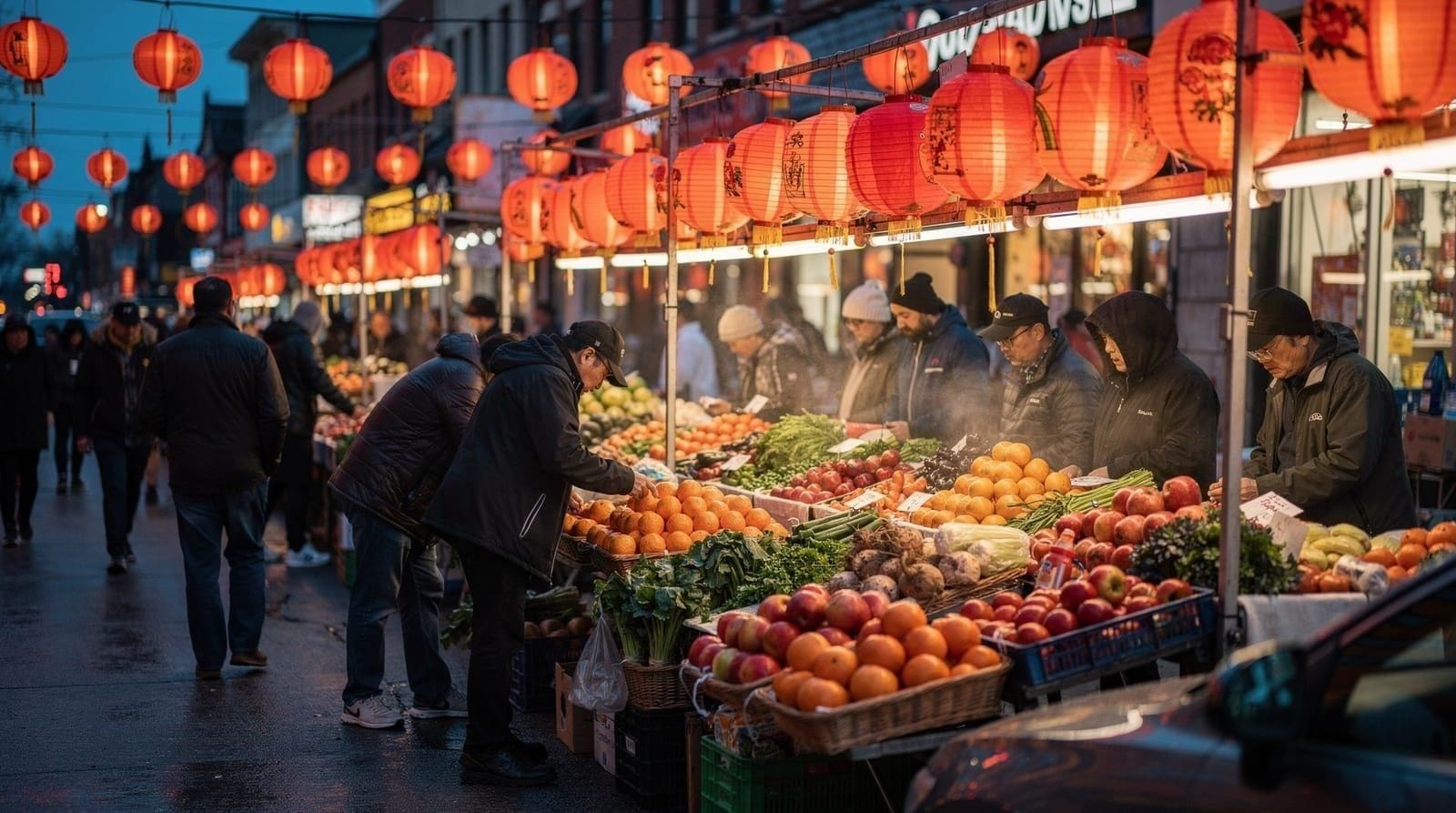
Kensington Market’s western edge blurs almost seamlessly into Chinatown along Spadina Avenue, and most visitors end up crossing between the two without a clear boundary line. If you want the two neighbourhoods covered together with someone pointing out where one starts to feel like the other, the Kensington Market and Chinatown hidden gems walk is built specifically around that overlap — alleyway murals, small grocers, and the kind of detail you’d walk past without knowing to look for it.
Street art and Graffiti Alley
Rush Lane, better known as Graffiti Alley, runs for several blocks just south of Queen Street between Kensington and Queen West, and it’s one of the most consistently repainted legal street-art corridors in the city — pieces change over months, so no two visits look quite the same. It’s free, unmarked beyond local knowledge, and worth the short detour if you’re walking between the two neighbourhoods anyway.
Pedestrian Sundays
On the last Sunday of the month from May through October, Kensington closes its core streets to cars entirely. What’s normally a tight, occasionally chaotic mix of pedestrians, cyclists, and delivery vans dodging each other becomes a full street festival — buskers, food vendors setting up outside their usual storefronts, and a noticeably more relaxed pace throughout the day. It’s the single best time to visit if your schedule allows, though it’s also the most crowded.
The layers of immigration that built the market
Kensington’s earliest identity as a market neighbourhood dates to the early 1900s, when Eastern European Jewish immigrants settled the area and opened the pushcart-and-storefront market that gave the neighbourhood its name and its enduring layout of small, densely packed retail units carved out of converted houses.
Waves of Portuguese immigration followed mid-century, then Caribbean, East and Southeast Asian, and Latin American communities through the latter half of the 20th century, each opening businesses without fully displacing what came before — which is why you’ll still find a kosher bakery a few doors from a Jamaican patty shop and a Chinese grocer in the same block. Few Toronto neighbourhoods wear their immigration history this visibly or this densely layered.
A sample walking route
Enter from Spadina Avenue near Dundas and head west on Baldwin Street first, a quieter stretch with a good concentration of produce shops and cafés. Cut south to Kensington Avenue for the vintage-shop core (Blue Banana Market, Courage My Love), then loop back east along Augusta Avenue, home to Seven Lives Tacos and Jumbo Empanadas, before finishing at Rush Lane (Graffiti Alley) if you have time for the detour south. This loop covers the market’s core character in about 90 minutes without retracing your steps, and leaves you a short walk from Chinatown to continue the afternoon.
Galleries and small studios
Beyond the well-known vintage shops, Kensington has a quieter scattering of small art studios and galleries tucked into upper floors and side streets — nothing on the scale of a formal gallery district, but worth a look if you enjoy stumbling onto working artist spaces rather than curated exhibitions. Several of the market’s murals, painted directly onto shop exteriors rather than a dedicated alley, rotate periodically as buildings change hands, so the visual texture of the neighbourhood shifts gradually year to year even as its overall character stays consistent.
Practical realities
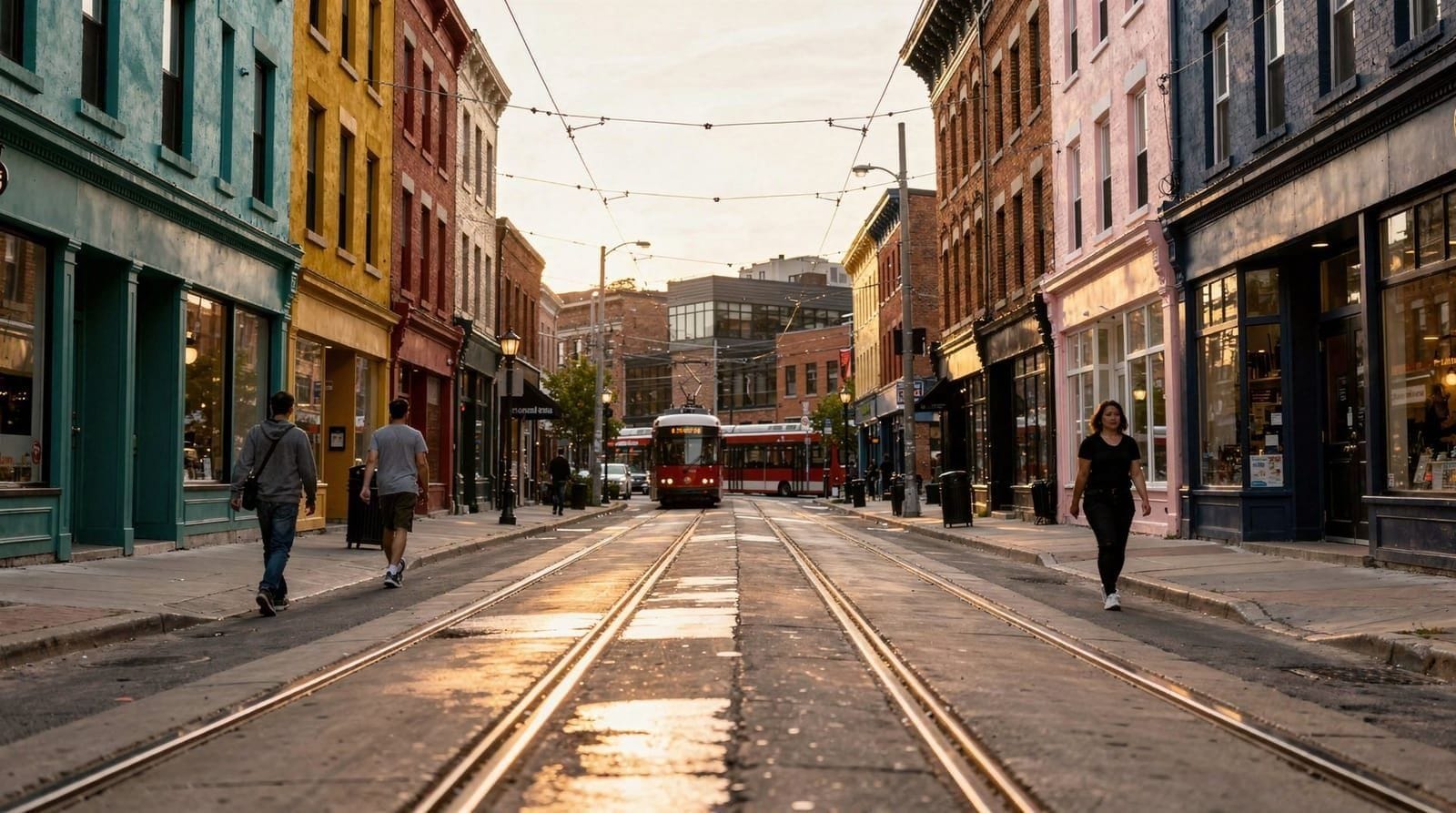
Kensington Market has narrow sidewalks, uneven pavement in spots, and no real parking to speak of — driving here is actively counterproductive given the one-way streets and near-total absence of lots. The 510 Spadina streetcar runs along the eastern edge and connects to both College and Dundas subway stations; from there it’s a five-minute walk into the core. Cash is still preferred at several of the smaller food stalls, though most now take cards. Some of the market’s charm comes with real texture — it can feel a little rough around the edges compared to a manicured shopping district, and that’s largely the point.
Music and the market’s performance culture
Kensington has a long-running tradition of informal street performance and live music spilling out of certain bars and cafés, particularly on weekend afternoons and during Pedestrian Sundays when buskers set up throughout the closed streets. It’s not a formal music venue district in the way some other neighbourhoods are, but the ambient presence of live music, drumming circles, and impromptu performances is part of what gives the market its distinct, slightly chaotic energy compared to a more curated shopping district.
Combining Kensington with a longer west-end day
Kensington Market pairs naturally with a broader loop through the west end: Chinatown directly adjacent, Queen West a short walk south via Graffiti Alley, and Little Italy a further 15-20 minutes north along Bathurst or Augusta. A full day covering all four is ambitious but doable on foot for a fit walker, or comfortably spread across an afternoon and evening with the 510 Spadina and 506 College streetcars filling in the longer gaps.
Best time to visit
Weekday mornings offer the market at its calmest, with vendors setting up and shopkeepers opening at a relaxed pace. Weekends, especially Saturday afternoons, are the busiest and most atmospheric, with the streets genuinely full of people. Pedestrian Sundays (last Sunday, May-October) are the peak experience but also peak crowding. Winter thins the crowds considerably and several outdoor vendors scale back, though the core shops and restaurants stay open year-round.
The ongoing tension between preservation and change
Kensington Market’s identity as a resistant-to-chains neighbourhood isn’t accidental or guaranteed — it’s the result of ongoing, sometimes contentious community organizing by residents and business owners who’ve actively opposed specific proposed developments and franchise openings over the decades, including a well-publicized pushback against a chain coffee shop opening in the market’s core some years back.
This activism has real limits; rents have still risen substantially, and some longtime vendors have been priced out even as the neighbourhood’s overall independent character has held. Knowing this context adds a layer to a Kensington visit beyond the surface-level charm — this is a neighbourhood actively fighting to stay what it is, not simply one that happened to avoid redevelopment by luck.
Budgeting a Kensington visit
A grazing lunch across two or three food stalls typically runs C$20-30 per person, less if you stick to a single Seven Lives taco order and a coffee. Vintage shopping has no real ceiling — a used band T-shirt at Courage My Love might run C$15-25, while a genuinely rare piece can go well beyond that — but browsing costs nothing, and the market rewards patience over a targeted budget. The Kensington Market taste the world food tour is a useful way to sample several stalls in one outing without over-ordering at any single stop.
What locals actually do here versus what visitors do
Locals tend to use Kensington Market functionally — a specific butcher, a favourite produce stall, a regular coffee spot — visiting repeatedly rather than treating it as a single big outing the way a tourist might. If you have more than one day in the city, consider a shorter, more targeted return visit rather than trying to see everything in one long walk; picking two or three specific stops (a food stall, a vintage shop, a coffee break) and revisiting the market on a different day often gives a better sense of its actual rhythm than an exhaustive single pass.
Seasonal differences beyond Pedestrian Sundays
Outside the well-known summer Pedestrian Sundays, Kensington’s character shifts noticeably with the seasons in ways worth knowing about. Winter thins the outdoor food stalls considerably and several vendors reduce hours, though the indoor shops and restaurants operate largely unaffected. Fall brings a genuinely pleasant walking temperature with the summer crowds thinned out, arguably the most comfortable season for a leisurely visit without either winter’s cold or summer’s density of tourists and locals both competing for the same narrow sidewalks.
Frequently asked questions about Kensington Market
Is Kensington Market safe?
Yes, it’s a well-trafficked, generally safe neighbourhood by day and evening, though like any dense urban area it pays to be aware of your belongings in crowded stretches, particularly during Pedestrian Sundays.
How long should I spend in Kensington Market?
Two to three hours covers a proper walk through the core, a couple of food stops, and some shopping. It pairs naturally with a visit to neighbouring Chinatown the same afternoon.
Is Kensington Market walkable from downtown?
Yes, it’s roughly a 20-25 minute walk from Union Station, or a shorter ride via the 510 Spadina streetcar to Dundas or College station and a short walk west.
What’s the difference between Kensington Market and Chinatown?
Kensington is a smaller, more eclectic mix of vintage shops, international food stalls, and independent businesses; Chinatown along Spadina Avenue is denser with Chinese and broader East Asian restaurants, grocers, and businesses. The two neighbourhoods border each other directly.
Are there chain stores in Kensington Market?
Very few — the neighbourhood has actively resisted large chains for decades, which is part of why it retains its distinct character compared to more homogenized shopping districts elsewhere in the city.
Is Kensington Market good for vegetarians and vegans?
Yes, the neighbourhood has a strong reputation for plant-based options, with several dedicated vegetarian and vegan restaurants alongside the broader mix of international food stalls.
Top experiences
Bookable activities with verified prices and instant confirmation on GetYourGuide.