Distillery District
Guide to Toronto's Distillery District: Victorian-era industrial architecture turned pedestrian village, galleries, breweries, and the Christmas Market.
Distillery District Historic Walking Tour
Quick facts
- Best base for
- Architecture and gallery walks, date nights
- Nearest transit
- 504 King streetcar or 65 Parliament bus
- Site history
- Gooderham & Worts distillery, est. 1832
- Famous for
- Toronto Christmas Market (November-December)
The largest collection of Victorian industrial architecture in North America
That’s not marketing copy — it’s the actual claim the Distillery District makes, and it holds up. The 13-acre site was once the Gooderham & Worts distillery, founded in 1832 and at one point the largest whisky producer in the British Empire. When the distillery closed in 1990, the red-brick warehouses, cobblestone lanes, and cast-iron facades sat mostly untouched for over a decade before a redevelopment in the early 2000s turned the whole complex into a car-free pedestrian village of galleries, boutiques, restaurants, and public art.
Because it was never demolished and rebuilt, the district has a coherence you don’t get in most converted-industrial neighbourhoods elsewhere — it genuinely looks and feels like a 19th-century industrial complex, not a themed reproduction of one.
| Where | East of downtown, 504 King streetcar or 65 Parliament bus |
| Cost | Free to walk; Christmas Market may require timed tickets |
| Time needed | 2-3 hours, longer during the Christmas Market |
| Getting there | Streetcar or a 20-minute walk from Union Station |
| Best time | Sept-Oct for mild weather; late Nov-Dec for the Christmas Market |
Walking the district without a plan
The Distillery District rewards aimless wandering more than almost anywhere else in the city — the cobblestone lanes are compact enough (roughly 40 buildings across 13 pedestrian-only acres) that you can’t really get lost, and the payoff is stumbling onto something you didn’t expect: a public art installation, a working glassblowing studio, or a pop-up gallery. If you’d rather have the history filled in as you go, a Distillery District historic walking tour covers the Gooderham & Worts story, the architecture, and points out details — brick patterns, loading doors, the old boiler house — that are easy to miss without context.
For something more active, a Distillery District Segway tour covers the district plus adjoining waterfront in less time than walking, which works well if you’re combining this stop with St. Lawrence Market or harbourfront the same day and are short on hours.
Food and drink in the district
Mill Street Brewery operates its original brewpub here, inside one of the restored distillery buildings, and remains the anchor food-and-drink stop for most visitors — it’s touristy by local standards but the beer is genuinely well made and the patio (in the warmer months) sits right on the cobblestones. Beyond Mill Street, the district has a denser concentration of good coffee, chocolate, and small-batch food shops than its size suggests: Soma Chocolatemaker does bean-to-bar chocolate on-site with a tasting counter, and Balzac’s Coffee Roasters’ original café here (in a converted stable building) is arguably the better version of a chain that’s since expanded across the city.
If you want the food to be the point rather than a stop between galleries, a Distillery District beer and cheese tasting tour structures a couple of hours around exactly that, or start the day differently with a Distillery District breakfast walking tour, which gets you into the district before the day-trip crowds arrive.
Galleries and public art
Corkin Gallery, one of the longer-running contemporary art spaces in the district, focuses on photography and has hosted internationally recognized names. Smaller studios throughout the district rotate frequently, so what you find will vary visit to visit — this isn’t a museum with a fixed collection, it’s a working arts district. The public art is the more consistent draw: look for the large-scale sculptures scattered through the lanes, several of which have become minor photo landmarks in their own right (the giant heart sculpture near the main entrance in particular gets a steady stream of tourists posing in front of it).
The Toronto Christmas Market
From mid-November through the end of December, the Distillery District transforms into the Toronto Christmas Market — modeled loosely on European Christmas markets, with a towering lit tree, wooden vendor huts selling mulled wine and crafts, and enough lights strung overhead to make the cobblestones genuinely magical after dark. It’s become one of the most photographed seasonal events in the city, which also means it’s crowded and, on weekends, ticketed with timed entry in recent years — check current admission requirements before visiting, since the market has shifted between free and ticketed models across different seasons. Weekday evenings are consistently the better bet if you want the atmosphere without the crush.
Film and TV’s favourite backlot
Because the district’s brick warehouses and cobblestone lanes look convincingly like 19th-century New York, Chicago, or various European settings depending on framing, it’s become one of the most heavily used filming locations in the city — a fact locals will mention if you ask, and one that occasionally means a section of the district is closed off for a production shoot. It’s worth glancing at any posted notices near the entrance before your visit, since a closed lane or two doesn’t happen often but can affect a specific gallery or restaurant you’d planned to visit.
Comparing the Distillery District to St. Lawrence Market
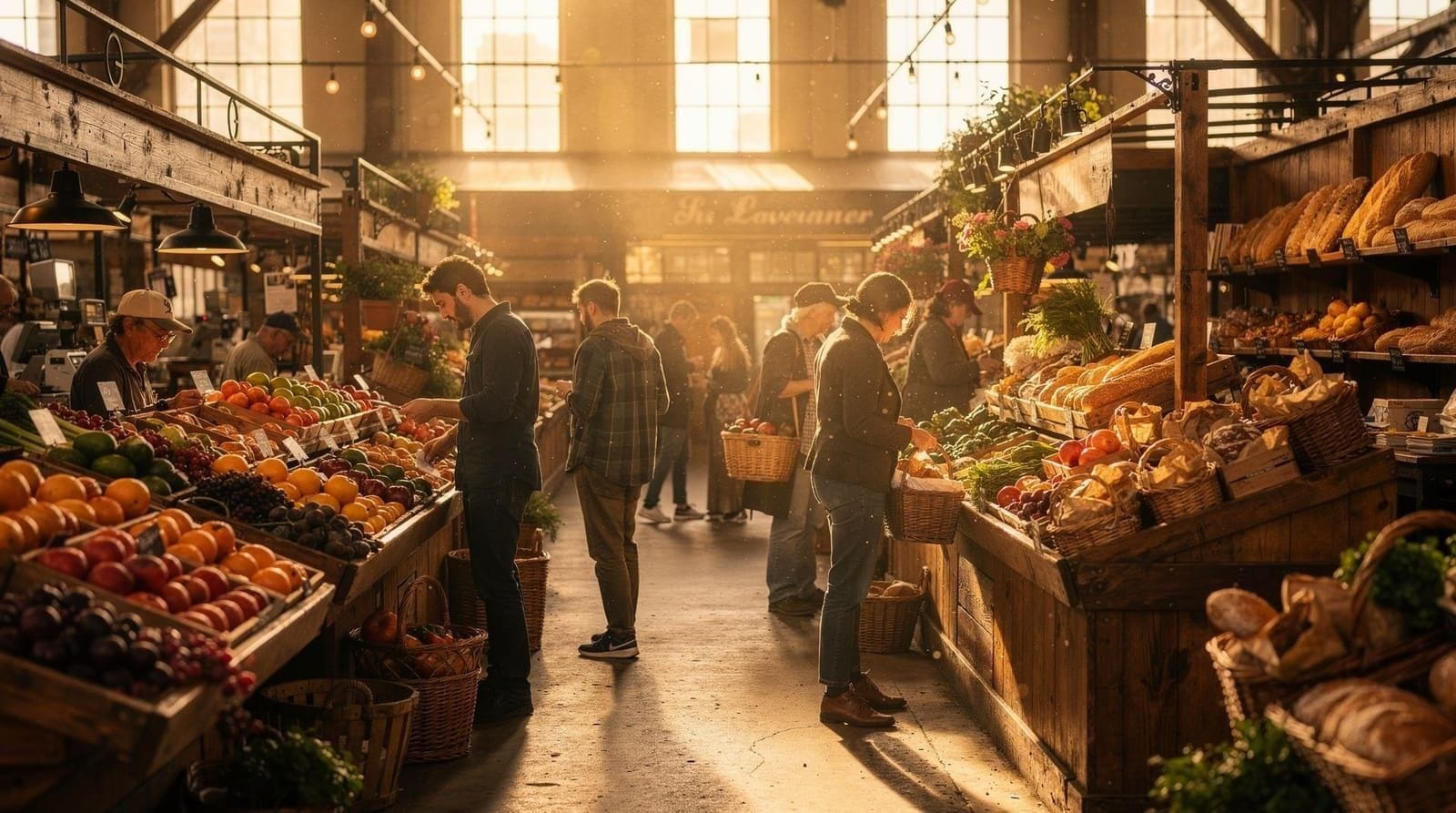
Visitors often ask which of the two nearby historic sites to prioritize if short on time. St. Lawrence Market, a 10-15 minute walk northwest, is a working food market with over two centuries of continuous operation — the draw is grazing and buying, not architecture for its own sake. The Distillery District is the reverse: the buildings themselves are the primary attraction, with food and drink as a secondary layer on top. If you only have half a day, the market rewards an earlier visit (morning, when the food stalls are freshest and least crowded) while the Distillery District works better in the afternoon or early evening when its restaurants and bars come alive.
Comparing to Cabbagetown for a slower pace
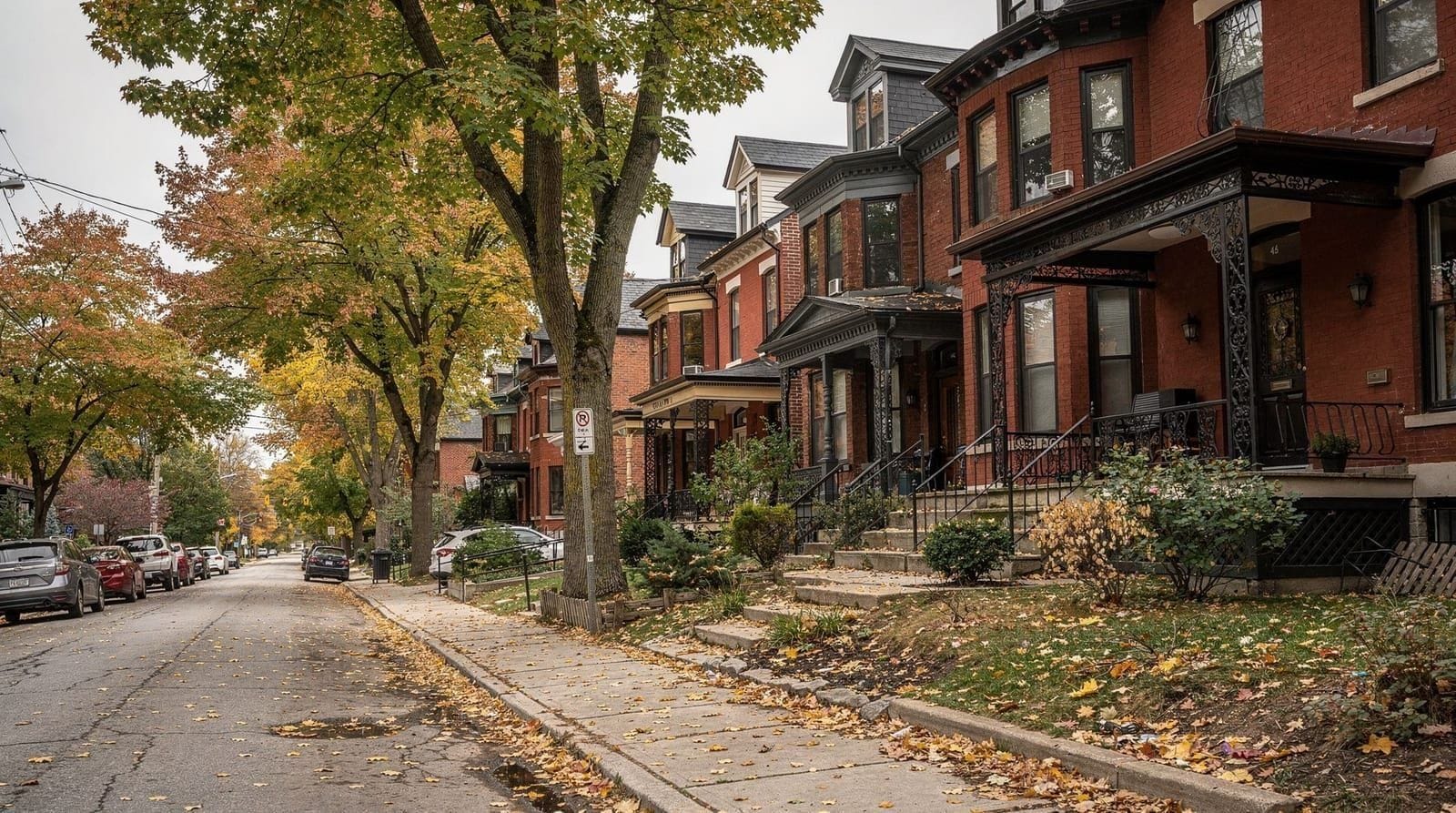
If the Distillery District’s crowds feel like too much, Cabbagetown sits a genuinely pleasant 10-15 minute walk away and offers the opposite pace entirely — quiet Victorian residential streets rather than a dense commercial district. Many visitors combine the two, using the Distillery District for food, drink, and galleries and Cabbagetown for a slower architectural wind-down, or vice versa depending on time of day.
A sample two-hour route
Enter from the Trinity Street side and walk the full length of the district’s main lanes first, taking in the architecture without stopping. Loop back through Tank House Lane for the galleries and public art, then settle at Mill Street Brewery’s patio (weather permitting) for a beer and a late lunch. Finish with a coffee at Balzac’s original café before heading toward St. Lawrence Market or back into downtown. This route covers the district’s highlights without doubling back unnecessarily and comfortably fits into two hours at an unhurried pace.
Getting there and around
The Distillery District sits just east of downtown and south of Cabbagetown, and it has no subway station of its own — the 504 King streetcar gets you closest, or the 65 Parliament bus. From Union Station it’s roughly a 20-minute walk or a 10-minute streetcar ride. Because the district itself is fully pedestrianized, once you arrive you won’t need transit again until you’re ready to leave.
Rainy-day considerations
The district’s appeal is largely outdoor and architectural, so a rainy visit still works reasonably well thanks to the galleries, shops, and covered patios that dot the lanes, though the cobblestones themselves can get slippery underfoot. If heavy rain is in the forecast, front-loading the visit with indoor galleries and Mill Street Brewery’s interior seating, then saving the outdoor architecture photography for a clearer window later, makes for a more comfortable pace than trying to power through a downpour.
Accommodation nearby
The Distillery District itself has limited on-site lodging, but its position between downtown, Cabbagetown, and St. Lawrence Market means several well-located hotel options sit within a 10-15 minute walk without needing to base directly in the pricier core. This is a reasonable strategy for visitors prioritizing an evening-heavy itinerary centred on the district’s restaurants and bars, since you can walk home rather than relying on late-night transit.
Weddings and private events
Because of its distinctive architecture, the Distillery District is one of the most popular wedding and event venue clusters in the city, and several of its buildings host private functions regularly, particularly on weekends through the warmer months. This occasionally means a specific lane or courtyard is cordoned off for a private event during your visit — it rarely affects the broader district, but it’s worth knowing if you notice a section unexpectedly closed to the public on a Saturday afternoon.
Best time to visit
September and October bring mild weather, fewer crowds than summer, and good light for photographing the brick architecture. Summer (June-August) is busiest, especially on weekends when the district hosts markets and festivals in its open squares. The Christmas Market period (mid-November through December) is the single most popular window of the year and the most crowded — go on a weekday if you want to avoid the worst of it. Winter outside the Christmas Market period is quiet and atmospheric in its own way, with the brick and cobblestones taking on a different character under snow.
Practical tips
The district is fully wheelchair and stroller accessible thanks to its flat cobblestone-and-brick paths, though the cobblestones themselves can be uneven in spots — worth knowing if you’re pushing a stroller or using mobility aids. Most shops and galleries open around 10 or 11am and stay open into the evening, later than typical retail hours, which makes this a good early-evening stop after a full day elsewhere. If you’re visiting during the Christmas Market, arrive right at opening on a weekday for the best combination of atmosphere and manageable crowds — weekend evenings routinely see multi-hour waits for popular photo spots.
The Gooderham & Worts story in more depth
At its peak in the mid-1800s, the Gooderham and Worts distillery was reportedly the largest whisky producer in the British Empire, and the fortune it generated shaped much of Toronto’s early development — the Gooderham family funded numerous civic projects and buildings across the city, including the distinctive flatiron-shaped Gooderham Building still standing in the St. Lawrence neighbourhood, a separate landmark from the distillery site itself and worth knowing apart if you come across both names during a visit.
Prohibition-era pressures and shifting consumer habits through the 20th century gradually reduced the distillery’s output, and production finally ceased in 1990, after which the site sat largely dormant for over a decade before redevelopment began.
Photographing the district
The combination of red-brick warehouses, cobblestone lanes, and consistent Victorian-era architecture makes the Distillery District one of the more reliably photogenic stops in the city, and it’s worth timing a visit around soft morning or early-evening light rather than the flat midday sun for the best results. The public art sculptures scattered through the lanes are popular, well-lit photo spots, though patience is often required around the giant heart sculpture near the entrance, which draws a steady queue of visitors wanting their own shot.
Seasonal events beyond the Christmas Market
While the Christmas Market is the district’s best-known annual event, the Distillery District hosts other seasonal programming worth checking for depending on your travel dates — summer art and design festivals, occasional beer and food festivals tied to Mill Street’s brewing calendar, and smaller pop-up markets scattered through the year. None carry the scale or crowds of the Christmas Market, which makes them a genuinely good way to experience the district’s community-event atmosphere without the peak-season crush.
Where this fits in a broader east-end day
The Distillery District pairs naturally with a fuller Old Town day — the guide to the Distillery District and Distillery District history guide go deeper on the Gooderham & Worts story, while the best restaurants in the Distillery District guide covers dining beyond Mill Street Brewery. For a full east-end itinerary spanning St. Lawrence Market, the Distillery District, and Cabbagetown, most visitors budget a full day rather than trying to rush all three.
Frequently asked questions about the Distillery District
Is the Distillery District free to visit?
Walking the district and browsing shops and galleries is free; the Toronto Christmas Market (mid-November to December) has required ticketed or timed entry in some recent seasons, so check current requirements before visiting during that window.
How long do I need at the Distillery District?
Two to three hours covers a relaxed walk, a stop at Mill Street Brewery, and browsing the galleries. Add another hour if you’re doing a guided tour or tasting experience.
Is the Distillery District good for kids?
It’s manageable with kids thanks to the car-free, flat layout, but it skews toward an adult audience — galleries, breweries, and boutiques rather than playgrounds or kid-specific attractions.
Can I drive to the Distillery District?
Driving isn’t recommended; the district itself is pedestrian-only, and nearby street parking is limited. The 504 King streetcar or a short walk from downtown is more practical.
What’s the difference between the Distillery District and St. Lawrence Market?
They’re about a 15-minute walk apart. St. Lawrence Market is a working food market with a long daily history; the Distillery District is a converted industrial site focused on galleries, shops, and drinking and dining rather than groceries.
Is Mill Street Brewery worth visiting if I don’t drink beer?
The brewpub’s food menu and patio are worth a stop on their own, and the building itself — a restored 19th-century distillery structure — is part of the district’s architectural draw regardless of what you order.
Top experiences
Bookable activities with verified prices and instant confirmation on GetYourGuide.