Casa Loma & The Annex
Guide to Casa Loma castle and the surrounding Annex neighbourhood: secret passages, gardens, University of Toronto's edge, and Spadina Museum next door.
Toronto: Casa Loma Entry Ticket
Quick facts
- Best base for
- Castle tours, historic mansions, student-neighbourhood cafes
- Nearest subway
- Dupont station (Line 2)
- Built
- 1911-1914 for financier Sir Henry Pellatt
- Rooms
- 98, including secret passages and stables
A castle built by a man who lost it all
Casa Loma is genuinely a castle, in the sense that it has turrets, secret passages, and 98 rooms — not a metaphorical use of the word. Sir Henry Pellatt, a financier who made his fortune in hydroelectric power, built it between 1911 and 1914 as his private residence, spending an amount equivalent to tens of millions of dollars today.
The story has a sharp downturn: rising property taxes and the collapse of Pellatt’s business interests forced him out within a decade, and by the 1920s the city had taken over the property after it sat unpaid and unsold. That rise-and-fall arc is part of what makes a Casa Loma visit more interesting than a straightforward historic-house tour — the building’s opulence sits alongside a genuinely cautionary story about the man who built it.
| Where | 1 Austin Terrace, Dupont station (Line 2) |
| Cost | General admission around CAD 40-45; guided tour costs more |
| Time needed | 2-3 hours for the house, tunnel and gardens |
| Getting there | Dupont subway, then a 10-minute uphill walk |
| Best time | May-September for the gardens; December for holiday lights |
What’s actually inside
The self-guided route covers the main halls, the library, Pellatt’s suite, and the genuinely surprising secret passages — including one behind a bookshelf in the study, built to allow Pellatt to move discreetly between floors. The underground tunnel connecting the main house to the stables runs nearly 250 metres and was, at the time, a serious feat of engineering for a private residence.
A straightforward Casa Loma entry ticket covers self-guided access to the full property, while a Casa Loma guided tour adds a docent who fills in the details the audio guide tends to skip — worth the upgrade if you want the full Pellatt story rather than just the room-by-room layout.
The gardens
Casa Loma’s five acres of gardens, terraced across the escarpment the house sits on, are genuinely worth the visit on their own between May and September when they’re in full bloom. The formal English-style layout includes fountains, a rock garden, and views out over the surrounding Annex rooftops toward the downtown skyline in the distance. Garden admission is typically included with the general entry ticket during the growing season.
The Annex: the neighbourhood around the castle
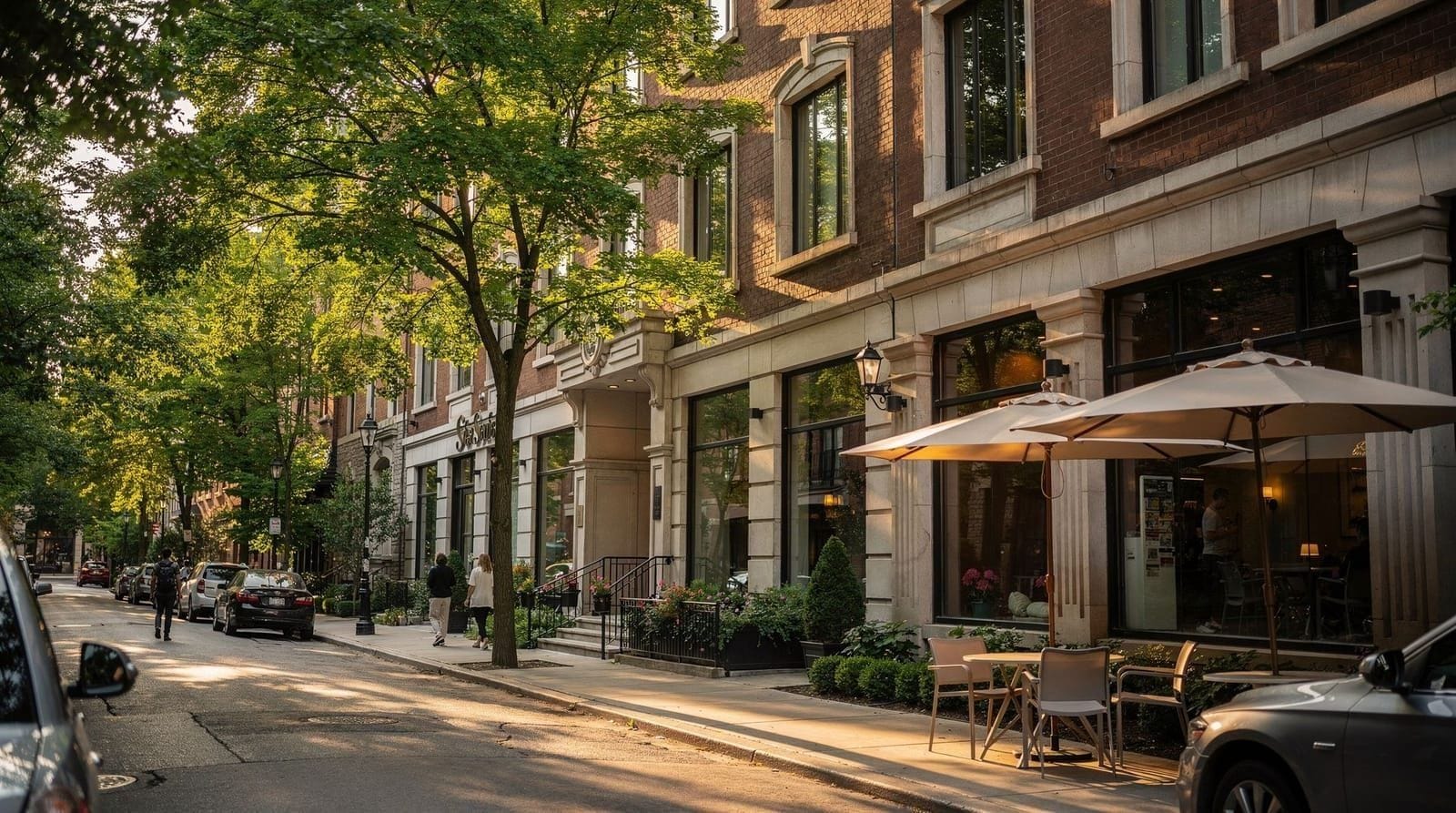
Casa Loma sits at the northern edge of The Annex, a neighbourhood defined by its proximity to the University of Toronto and a dense stock of well-preserved late-Victorian and Edwardian mansions, many now split into student housing or professional offices. The area has a noticeably academic, slightly bohemian character compared to the shopping-driven streets of nearby Yorkville — expect used bookshops, casual cafés catering to students and faculty, and a quieter residential pace once you’re off the main commercial strips of Bloor Street and Spadina Avenue.
Spadina Museum, next door
A short walk from Casa Loma, Spadina Museum offers a useful contrast: a preserved Edwardian-era house museum showing how a wealthy but non-aristocratic Toronto family actually lived in the same period Casa Loma was built. It’s smaller, less visited, and gives a grounded counterpoint to Casa Loma’s fantasy-castle scale — worth the add-on if you have an extra hour and want the fuller picture of the era rather than just the most extravagant example of it.
Casa Loma on screen
Given its scale and genuinely photogenic interiors, Casa Loma has appeared as a filming location in numerous productions over the decades, from major studio films to television series, capitalizing on how few genuinely castle-like buildings exist within easy reach of a major North American production hub. It’s not uncommon for a section of the property to be closed for a shoot on a given day — worth checking the property’s notices if you’re visiting on a tight schedule and want to avoid disappointment over a closed wing.
The Annex’s academic character in more depth
Beyond its architecture, The Annex functions as the de facto off-campus extension of the University of Toronto’s St. George campus, and this shapes the neighbourhood’s rhythm noticeably — busiest during the academic year, quieter in summer when much of the student population disperses. Bloor Street’s used bookshops, several of which have operated for decades, reflect this academic character directly, and the neighbourhood has historically been home to a disproportionate number of writers, professors, and public intellectuals given its proximity to the university and its relatively (for the era) affordable large houses.
Casa Loma versus other Toronto historic-house museums
| Casa Loma | Spadina Museum | Colborne Lodge | |
|---|---|---|---|
| Scale | 98-room castle, tunnels, stables | Preserved Edwardian family home | Regency-era cottage in High Park |
| Cost | Around CAD 40-45 | Lower, modest admission | Lower, modest admission |
| Time needed | 2-3 hours | 45-60 minutes | 45-60 minutes |
| Best for | Families, first-time visitors | A grounded, non-aristocratic contrast | Toronto’s earliest settler history |
Visiting more than one on the same trip works well precisely because they’re not redundant — Casa Loma covers extravagant wealth, while Spadina Museum next door shows how a comfortable but non-aristocratic family actually lived in the same period.
Bloor Street and the university edge
Bloor Street West through The Annex carries a mix of independent bookstores, casual restaurants, and the retail spillover from the University of Toronto’s St. George campus a short walk south. It’s a good stop for an inexpensive lunch between Casa Loma and wherever you’re headed next — expect student-budget pricing rather than the upscale rates a few blocks east in Yorkville.
Getting there
Dupont station on Line 2 sits closest to Casa Loma, about a 10-minute walk uphill (the castle sits on a ridge, part of the old Lake Iroquois shoreline, which is why the views from the gardens work as well as they do). Alternatively, Dupont’s Line 2 connection makes it straightforward to combine with a day that also includes downtown or Yorkville, both reachable via the same line with a transfer.
Best time to visit
May through September covers the full garden season alongside comfortable walking weather for exploring The Annex’s tree-lined streets. December brings Casa Loma’s seasonal holiday light displays, a popular evening event that’s worth checking current dates and ticketing for, since it typically requires separate or upgraded admission from the standard daytime ticket. Winter daytime visits are quieter and cheaper but skip the gardens entirely, which are dormant.
The view from the gardens and tower
Beyond the formal English-style layout, the gardens’ position on the escarpment gives genuinely good sightlines toward the downtown skyline, particularly from the upper terraces near the house itself — worth the short extra walk even for visitors who aren’t especially interested in horticulture. The castle’s tower, accessible as part of the self-guided route, adds a further vantage point over both The Annex’s rooftops and the escarpment drop toward the lake, a detail easy to miss if you rush straight to the tunnel and secret passages without working through the upper floors first.
Accessibility
Casa Loma has made significant accessibility improvements over the years, including elevator access to upper floors, though the underground tunnel and stables section involve some uneven surfaces worth knowing about in advance. The property publishes current accessibility details, worth checking directly if mobility is a specific concern before visiting.
A combined itinerary with Yorkville
Casa Loma and Yorkville sit close enough together, connected via Line 2, that a combined day works well for visitors prioritizing museums and historic architecture over shopping-heavy neighbourhoods. Start at Casa Loma in the morning when tour groups are lighter, then take the subway to Yorkville for lunch and an afternoon at the ROM or AGO — a full day that covers three of the city’s stronger cultural attractions without excessive backtracking.
Practical tips
Wear comfortable shoes — the self-guided route covers multiple floors, the underground tunnel, and the stables building, adding up to a fair amount of walking and stairs. Casa Loma is a genuinely popular school field-trip destination on weekday mornings during the school year, so a weekday afternoon or a weekend often means fewer large groups. If you’re combining the visit with The Annex, budget an extra hour or two for wandering the surrounding streets rather than treating Casa Loma as a stand-alone stop.
Sir Henry Pellatt’s broader legacy
Beyond the castle itself, Pellatt’s business ventures shaped a surprising amount of early 20th-century Ontario infrastructure — his hydroelectric company was instrumental in bringing power generated at Niagara Falls to Toronto, work that predates and helped enable the city’s rapid industrial growth through the early 1900s. His fall from wealth was as dramatic as his rise: he died in comparative poverty in 1939, and the city’s decision to take over Casa Loma rather than see it demolished or sold piecemeal is itself part of why the building survives intact today as a public attraction rather than a private estate or a parking lot, which was a genuine risk during the years the property sat unresolved after Pellatt’s departure.
The Annex’s architectural variety beyond Victorian houses
While the Victorian and Edwardian mansions get most of the attention, The Annex also contains a meaningful stock of early-to-mid-20th-century apartment buildings, reflecting the neighbourhood’s gradual shift from single-family estates toward higher-density student and rental housing as the University of Toronto expanded through the decades. This mix gives the neighbourhood a genuinely layered architectural character worth a slower walk if historic buildings are a specific interest — it’s not purely a single-era showcase the way Cabbagetown’s Victorian core is.
Seasonal events at Casa Loma beyond the holidays
Beyond the December light displays, Casa Loma runs periodic themed events through the year — escape-room-style evening experiences using the castle’s tunnels and rooms have become a popular addition in recent years, alongside occasional outdoor garden events in summer. These typically require separate, advance-purchased tickets distinct from standard daytime admission, so check the property’s current calendar if a themed event rather than a standard tour is what you’re after.
A final planning note
Given Casa Loma’s popularity as both a tourist attraction and a filming and event location, it’s genuinely worth checking the property’s website the day before your visit rather than assuming standard hours apply — closures for private events, though not frequent, do happen with limited public notice, and confirming ahead avoids a wasted trip up the hill from Dupont station.
Comparing Casa Loma to other historic houses in the city
Toronto has several other preserved historic homes — Spadina Museum next door, Mackenzie House downtown, Colborne Lodge in High Park — but none approach Casa Loma’s scale or theatrical ambition. If you’re touring more than one, save Casa Loma for last; its size and drama tend to make more modest historic homes feel underwhelming by comparison if visited afterward rather than before.
Restaurants within walking distance
Beyond the casual student-priced options directly on Bloor Street, a short walk further south into The Annex proper turns up a handful of well-regarded, less touristy restaurants favoured by locals over visitors, generally offering better value than anything directly adjacent to Casa Loma’s parking lot and gift shop. Asking a staff member at the castle for a nearby recommendation often turns up a better meal than defaulting to the closest option.
Planning with kids or a wider family day
Families visiting with children should budget the full 2-3 hours and expect the secret passages and tunnel to be the highlight — the Casa Loma family guide covers age-appropriate pacing and which sections to prioritize if attention spans run short. For a broader day that adds Kensington Market for lunch, the subway connection via Line 2 to Bathurst or St. George makes the detour straightforward, though it adds a transfer compared to the direct Casa Loma-to-Yorkville route described above.
Frequently asked questions about Casa Loma and The Annex
How much does Casa Loma cost to visit?
General admission runs roughly C$40-45 for adults, with the guided tour option costing more. Check current pricing before visiting, since rates are adjusted periodically.
How long does a Casa Loma visit take?
Two to three hours covers the main house, the tunnel, and the gardens (when in season) at a relaxed pace.
Is Casa Loma good for kids?
Yes, the secret passages and tunnel are genuinely engaging for children, and the property is large enough for kids to have some room to move without disturbing other visitors.
What’s the closest subway station to Casa Loma?
Dupont station on Line 2, about a 10-minute uphill walk from the castle.
Is The Annex the same as Casa Loma?
No, Casa Loma is a specific historic property; The Annex is the broader residential neighbourhood surrounding it, home to much of the University of Toronto’s off-campus student housing.
Are the Casa Loma gardens open in winter?
The gardens are dormant and less visually interesting in winter, though the house and tunnel remain open for tours year-round.
Top experiences
Bookable activities with verified prices and instant confirmation on GetYourGuide.