Toronto weekend escape
Toronto: 2-Hour Downtown Walking Tour
Making a two-day trip actually work
A genuine 48-hour weekend in Toronto means you’re realistically working with a Friday evening and all of Saturday, then a half-day Sunday before a flight or the drive home. This itinerary is built around that reality rather than pretending you have two full days — it front-loads downtown and the harbourfront into Saturday, when you have the most daylight, and treats Sunday as a shorter, flexible half-day around the Distillery District. Skip the Toronto Islands unless you’re extending to three days; the ferry queue alone can eat 90 minutes you don’t have on a tight weekend, and it’s better covered in the 3-day Toronto itinerary.
| Where | Downtown, Harbourfront, Distillery District |
| Cost | around $220–320 CAD/person for the full weekend |
| Time needed | 2 days (Friday evening–Sunday) |
| Getting there | UP Express from Pearson (28 min) or TTC; no car needed |
| Best time | Year-round; avoid major events unless you’ve booked ahead |
Stay somewhere within walking distance of Union Station if you can — it puts you closest to everything on this route and cuts down on Sunday-morning transit time before a flight. The Bond Place Hotel and Chelsea Hotel are reliable budget-to-mid-range options near Dundas Square, both in the $150–220 CAD/night range; if you want to spend a bit more, the Broadview Hotel puts you right at the edge of the Distillery District. Two days at a budget-to-mid pace runs roughly $220–320 CAD per person, covering one night’s hotel, food, transit and one paid activity.
If your weekend happens to fall on a long weekend or during a major event — Pride in late June, the CNE in late August/early September, or a Blue Jays or Raptors home game — book your hotel as early as you can, since downtown rates can climb 30–50% above typical weekend pricing and availability tightens fast. Outside those windows, a Friday-to-Sunday Toronto hotel is usually bookable with a week or two of notice, though the best-value rooms at popular mid-range properties still go first.
A note on what this itinerary deliberately skips
Two days is genuinely not enough time for the Toronto Islands, Casa Loma, or a proper museum visit alongside everything below — trying to fit all of it in usually means doing each thing badly rather than a few things well. This itinerary picks downtown’s landmarks, the harbourfront and the Distillery District specifically because they’re close together and don’t require advance ferry planning or a half-day museum visit. If one of those other sights matters more to you than what’s listed here, swap it in and drop the piece that interests you least; the things to do in Toronto guide has the fuller list to choose from.
Friday evening: arrival and a first look at downtown
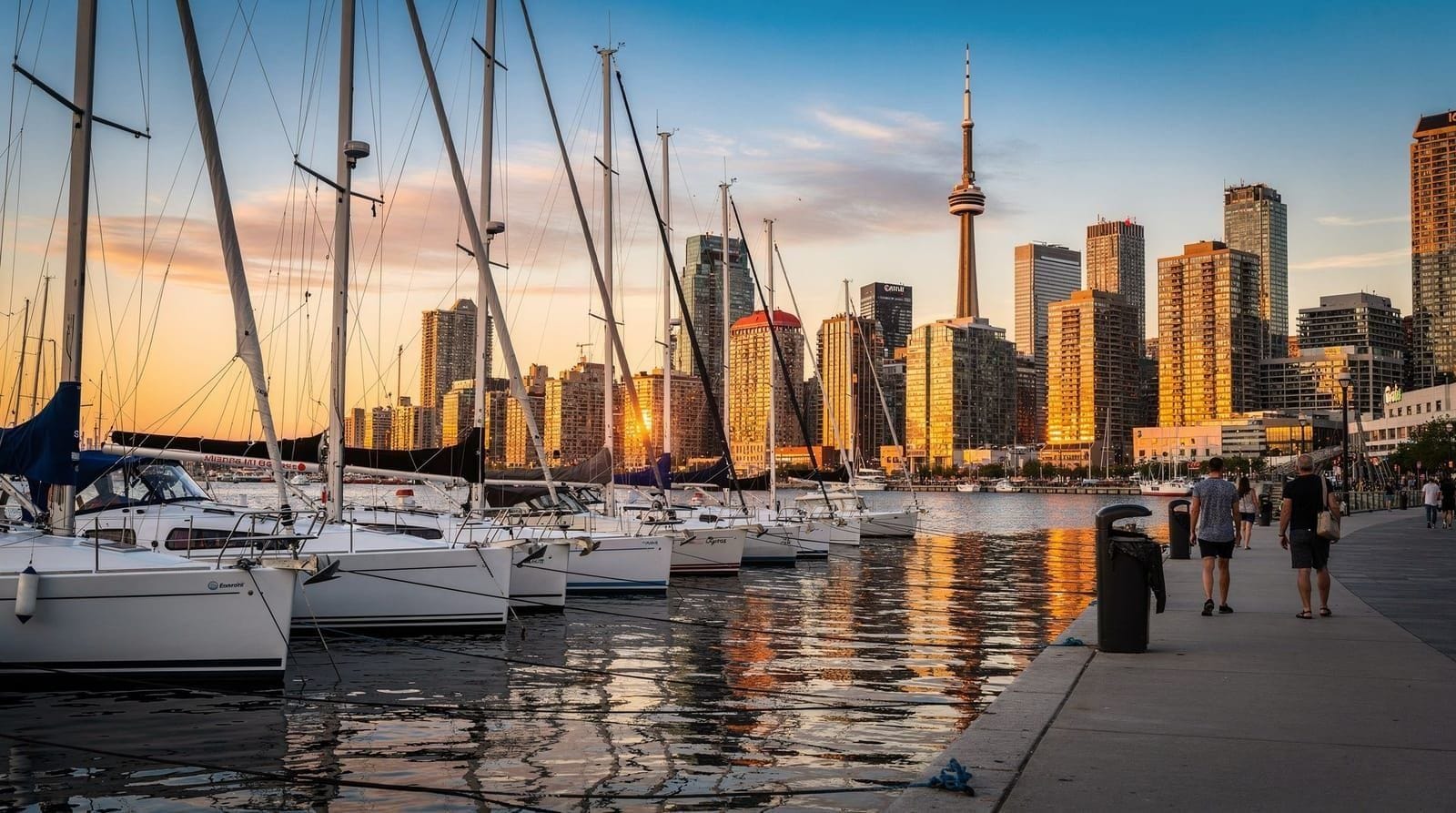
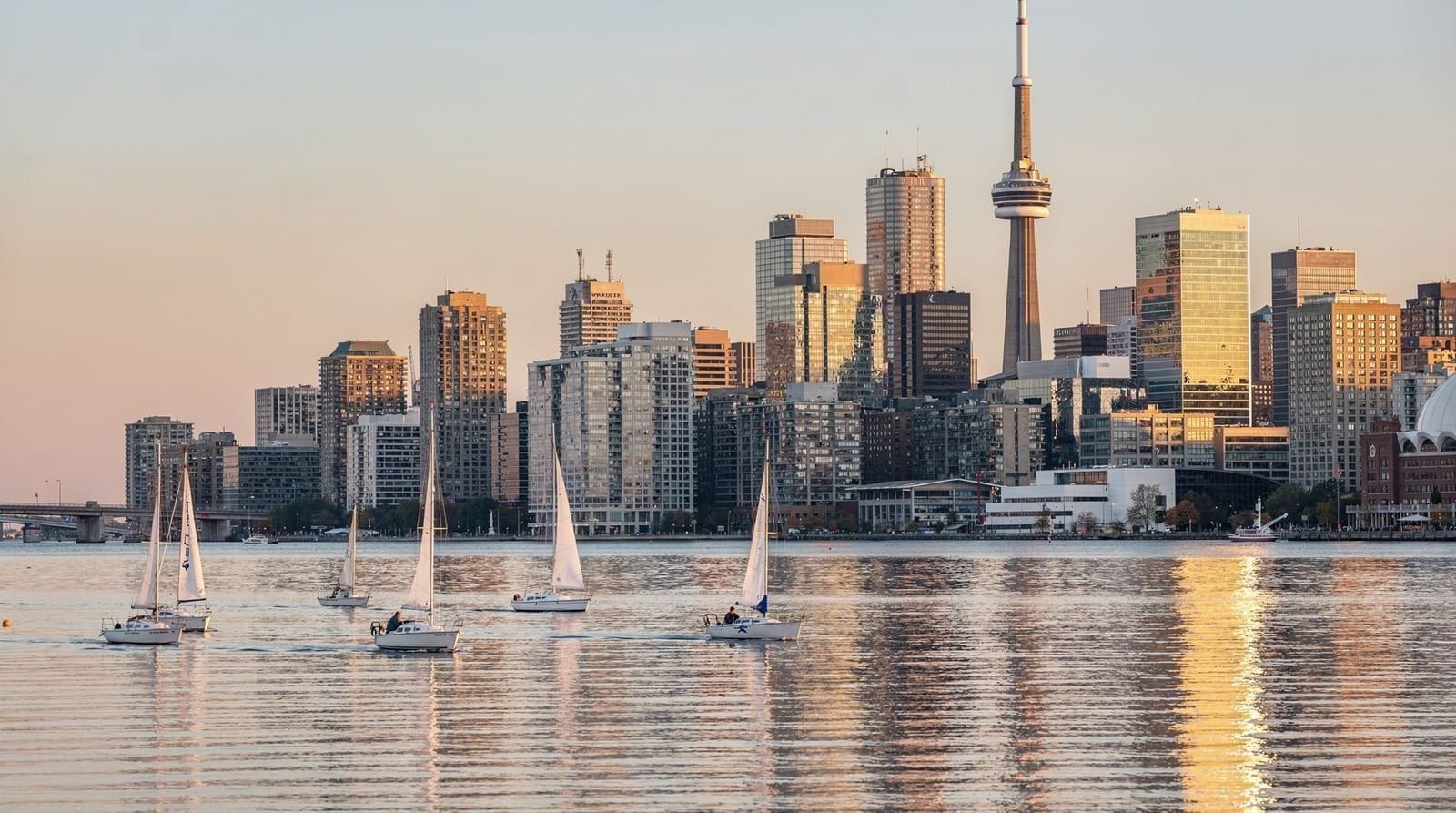
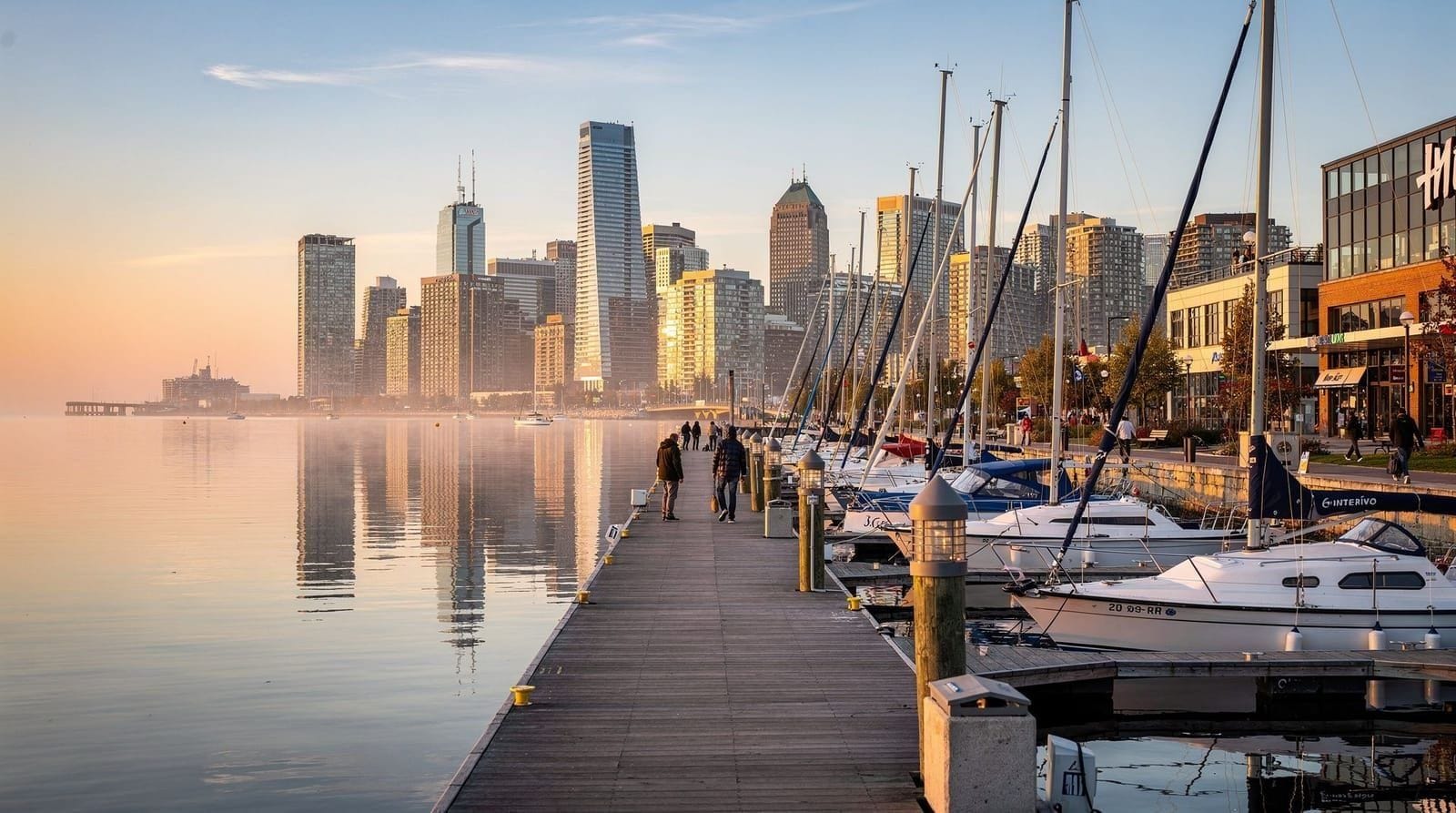
If you land or check in by early evening, don’t waste it in the hotel room. Walk or take the streetcar to the Harbourfront for sunset over Lake Ontario, then head into the Entertainment District or King West for dinner — both have dense, walkable restaurant strips that don’t require reservations on a Friday if you’re flexible about where you sit. Terroni on Adelaide is a solid no-fuss option for wood-fired pizza in the $25–35/person range. If you’re not too jet-lagged, the CN Tower is worth seeing lit up at night from street level even if you’re not going up — it anchors the skyline from almost anywhere downtown.
Saturday: downtown landmarks, then the harbourfront
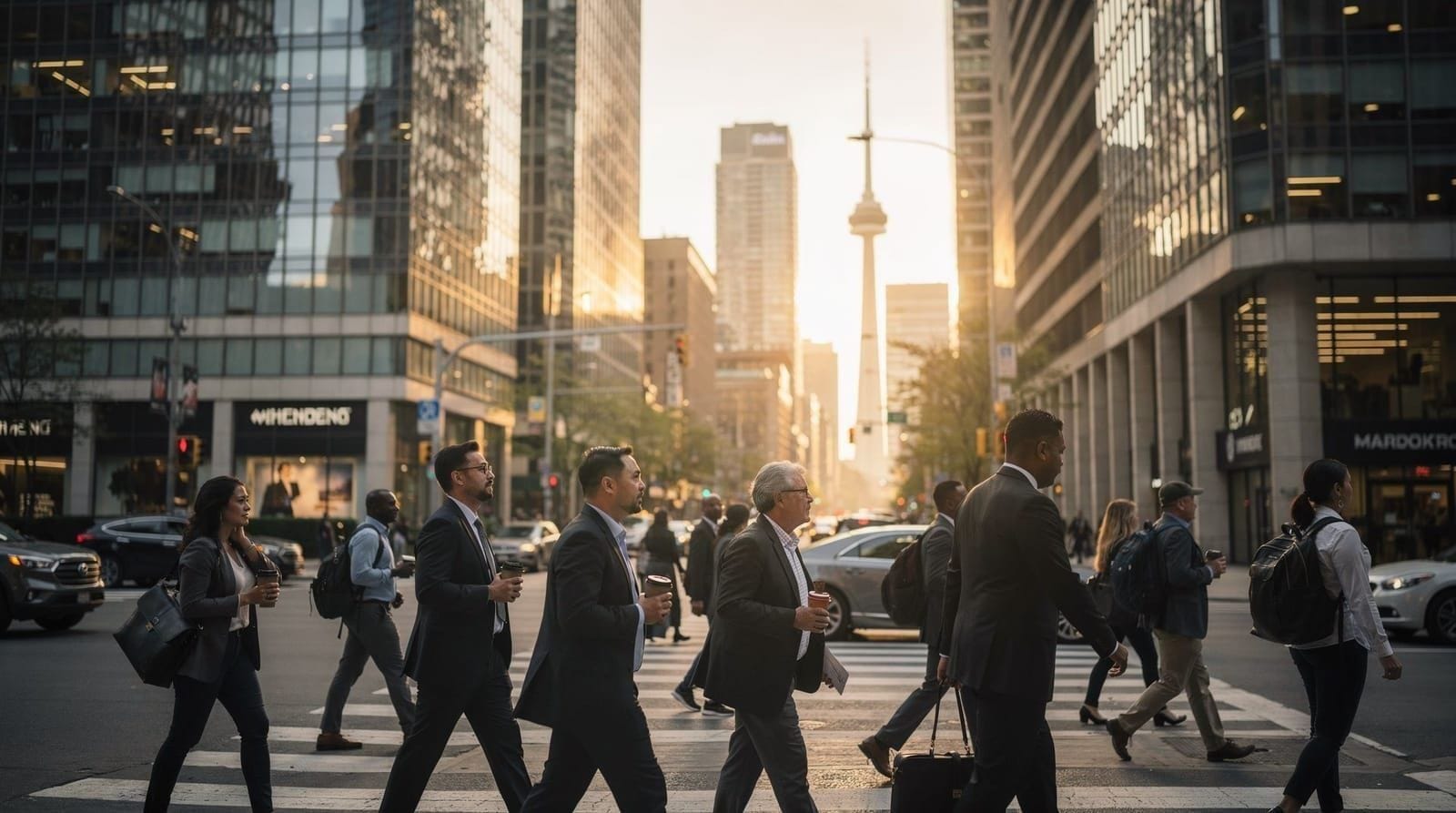
Start the day with the Toronto 2-Hour Downtown Walking Tour, a compact orientation that covers the Financial District, Nathan Phillips Square and the base of the CN Tower without eating your whole morning — useful when you only have one full day to work with. The downtown Toronto walking guide covers the same route in self-guided form if you’d rather set your own pace.
Between the walking tour and the harbourfront, consider a stop at Nathan Phillips Square, Toronto’s civic center and the site of the iconic “TORONTO” sign — a reliably good photo spot that’s directly on the route between downtown’s core and the waterfront, adding maybe 15 minutes if you don’t linger. If it’s winter, the square’s outdoor skating rink is free to use (skate rental available on-site) and worth a stop even for non-skaters, since the City Hall building behind it is one of Toronto’s more distinctive pieces of civic architecture.
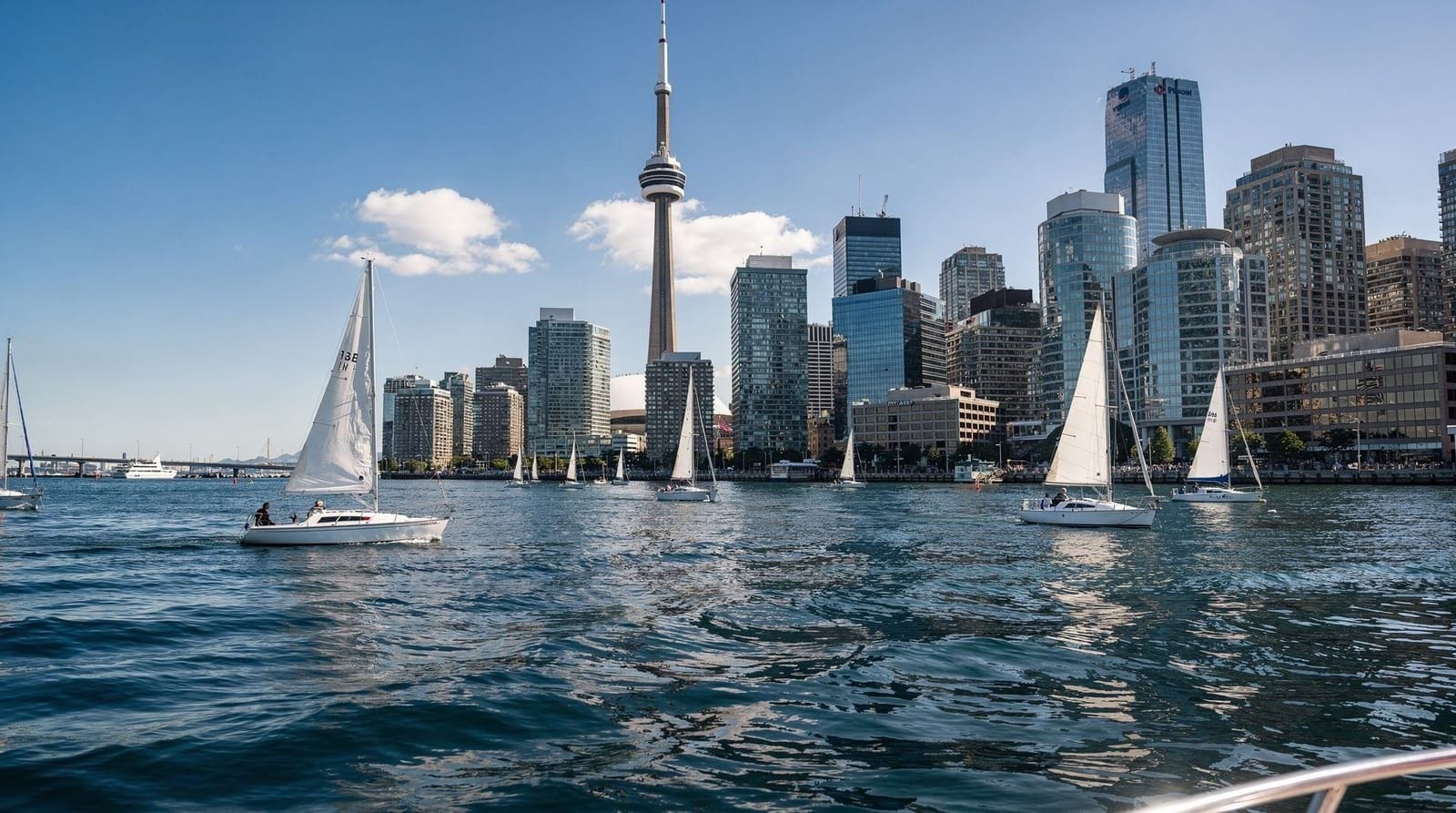
By early afternoon, head down to the Harbourfront. This is where the Guided Harbour and Islands Sightseeing Cruise earns its place on a short trip: it gets you the same skyline-from-the-water views and a pass by the Toronto Islands without committing to the ferry and a full afternoon out there. The cruise runs about an hour, leaving the rest of the afternoon free.
The Harbourfront Toronto guide has more detail on the waterfront trail, parks and galleries if you want to extend the walk. For dinner, St. Lawrence Market’s neighborhood (a 10-minute walk from the harbourfront) has good options if the market itself is closed for the day — Cluny Bistro for French brasserie fare is a reasonable sit-down choice, roughly $40–55/person with a glass of wine.
Sunday: Distillery District before you go
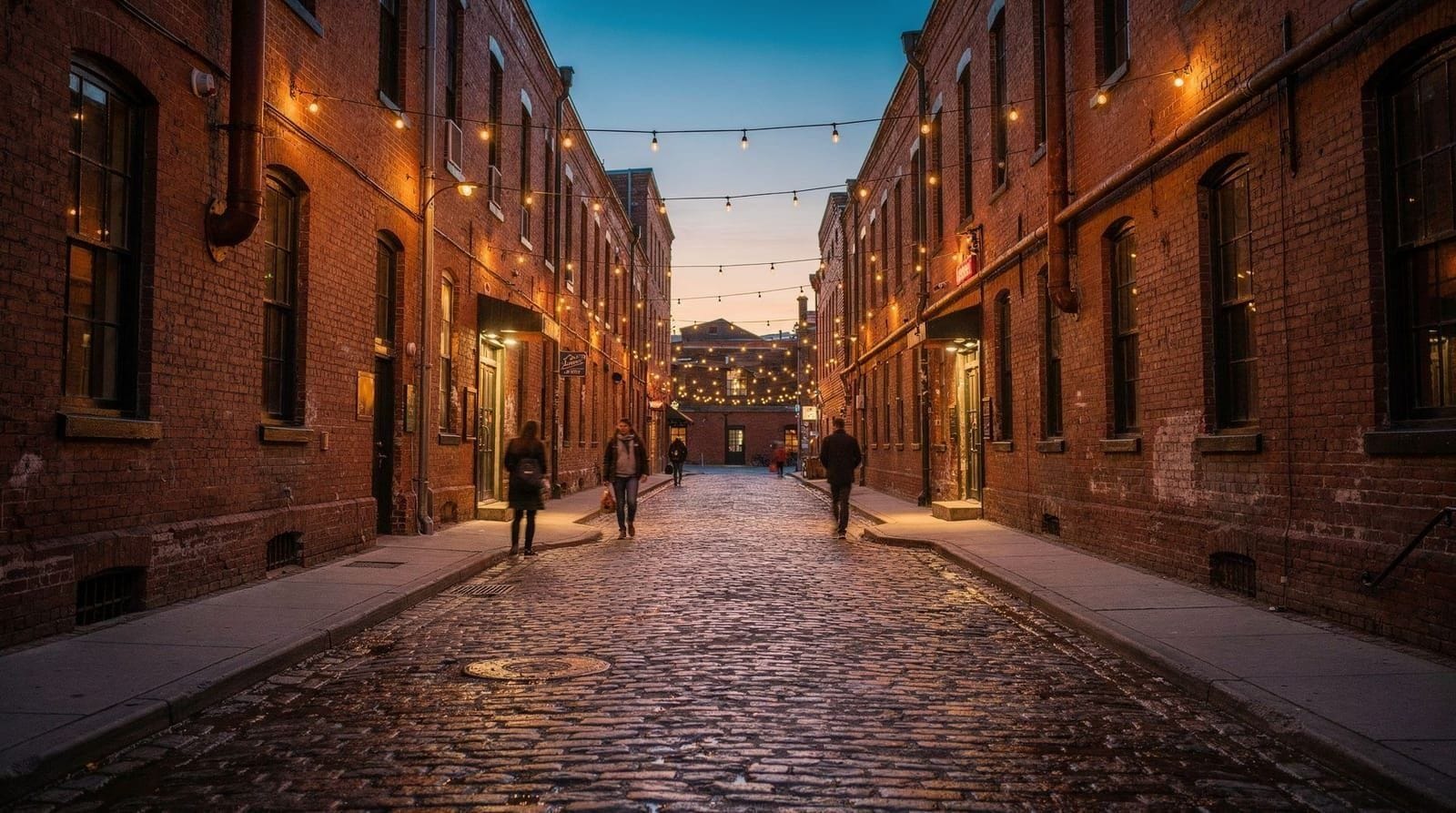
Sunday’s shorter window is well spent at the Distillery District, a 12-minute walk or short taxi from most downtown hotels. It’s compact enough to see thoroughly in 2–3 hours: cobblestone streets, converted 19th-century distillery buildings, galleries and cafés.
The Distillery District Historic Walking Tour is a good use of a limited Sunday morning if you want the site’s industrial history rather than just browsing — it runs about 90 minutes, leaving time for a coffee or brunch before you head to the airport or hit the road. The guide to the Distillery District has restaurant picks by price point if you want a sit-down brunch instead — Balzac’s Coffee (the original location is right in the district) is a solid, quick option if you’re pressed for time.
If your flight or departure isn’t until evening, St. Lawrence Market (closed Sundays and Mondays — confirm before counting on it) is not an option, but Kensington Market is a 20-minute streetcar ride away and worth a shorter add-on visit; see the guide to Kensington Market for a quick self-guided loop. If your departure is genuinely tight — a midday flight, say — it’s worth simply staying in the Distillery District’s immediate few blocks rather than adding a second neighborhood, since the transit time back to your hotel and on to the airport eats into the margin faster than it looks on a map.
Packing light for a two-day trip
Toronto’s weather swings enough between seasons that a one-line packing note is worth including: layers work better than a single heavy coat in spring and fall, when a 10–15°C temperature spread between morning and afternoon is common. Comfortable walking shoes matter more than anything else on this itinerary specifically, since nearly all of it is on foot or standing on a boat deck. If you’re traveling between November and March, budget extra time for each leg of the route — sidewalks and streetcar platforms move slower in snow, and the harbourfront cruise may be seasonally reduced or unavailable; check current schedules before building your Saturday around it in winter.
Day-by-day summary
| Day | Focus |
|---|---|
| Friday evening | Harbourfront sunset, dinner in the Entertainment District or King West |
| Saturday | Downtown walking tour, Nathan Phillips Square, harbour and islands cruise |
| Sunday | Distillery District, optional Kensington Market add-on |
If you’re traveling solo
This route works well solo, arguably better than as a couple in one respect: the walking tour and harbour cruise are both easy ways to be around other people without needing a travel companion, and neither downtown nor the Distillery District feels unsafe or awkward to explore alone during the day. Evenings are the one place to think ahead — Terroni and similar counter-service-adjacent spots on Adelaide are comfortable for a solo dinner, while a full sit-down restaurant on a busy Saturday night is more pleasant with a reservation or at the bar. The is Toronto safe for tourists post covers the specifics if personal safety is a genuine concern rather than routine caution.
Getting around
Everything on this route is walkable or a short streetcar ride, so skip the car entirely — parking downtown runs $20–40 CAD/day and adds friction you don’t need on a short trip. A TTC day pass ($13.50 CAD) covers unlimited streetcar, subway and bus rides and is worth it if you’re making more than four trips across the weekend. Pearson Airport connects to Union Station via the UP Express train (28 minutes, $12.35 CAD one-way), which is the fastest and most predictable way to get downtown regardless of traffic.
A rainy-weekend backup plan
If the forecast turns on you, the harbourfront cruise is the one piece of this itinerary that’s genuinely weather-dependent — a rough or heavily overcast day makes it a less worthwhile booking. Swap it for an indoor stop instead: the Hockey Hall of Fame, tucked into a restored bank building a few minutes from Union Station, is a strong wet-weather alternative that fits neatly into the same Saturday-afternoon window. The Eaton Centre, Toronto’s main downtown shopping mall, is another straightforward fallback if you just need a dry hour or two between outdoor stretches. Neither requires advance booking, which matters on a short trip where you don’t want to lock in plans days ahead of a weather forecast you can’t yet trust.
If you want more time
If two days feels too tight once you’re actually there, the natural extension is the 3-day Toronto itinerary, which adds Kensington Market and the Toronto Islands. If you’re set on staying just two days but want a different focus, the things to do in Toronto guide has a broader list to swap pieces of this route around.
Frequently asked questions about a Toronto weekend trip
Is two days enough for a first visit to Toronto?
It’s tight but workable if you accept you won’t see everything. This itinerary covers downtown’s core landmarks, the harbourfront, and the Distillery District — a genuine first impression of the city, even if Kensington Market, the Islands and Casa Loma have to wait for a return trip.
What should I cut if I only have one full day, not two?
Keep Saturday’s downtown walking tour and harbourfront cruise, and treat the Distillery District as optional rather than essential — it’s the piece that survives best being dropped if you’re down to one day.
Do I need to book the harbour cruise in advance?
Yes, especially May through September when Saturday afternoon departures sell out. Booking the day before, or the morning of, is usually enough outside peak summer weekends, but don’t leave it to the last hour if you have a specific departure time in mind.
Is Toronto walkable for a weekend trip?
The downtown core, harbourfront and Distillery District are all within a roughly 20-minute walking radius of each other, and TTC connects any gaps quickly. You genuinely don’t need a car for this itinerary.
Can I add the Toronto Islands if my Sunday departure is late enough?
It’s tight but possible if your flight isn’t until late evening — the ferry ride alone is 15 minutes each way, plus queue time that can run 30–60 minutes on a summer weekend. If you’re set on seeing the Islands, it’s more realistic to extend this trip to the full 3-day itinerary than to squeeze it into a tight Sunday.
What’s the best neighborhood to stay in for a short trip?
Near Union Station or the Financial District puts you closest to this entire route and to the UP Express train if you’re flying in or out of Pearson. King West and the Entertainment District are a close second if you want more nightlife within walking distance of your hotel.
Is this itinerary realistic if I’m arriving Saturday morning instead of Friday night?
Yes, though it compresses the trip into a genuine day-and-a-half rather than two full days. In that case, combine the Friday-evening and Saturday plans above into a single Saturday, prioritizing the downtown walking tour and harbourfront cruise, and treat Sunday’s Distillery District visit as originally planned.
How much does this two-day trip cost compared to the 3-day itinerary?
Roughly two-thirds of the 3-day trip’s total cost, since you’re paying for one fewer hotel night and one fewer full day of meals. Budget $220–320 CAD per person for this version versus $450–630 CAD for the full 3-day Toronto itinerary, both at a mid-range pace.
Is it worth renting a car for a two-day Toronto weekend?
No. Downtown parking runs $20–40 CAD/day at most hotels and public lots, and traffic congestion means driving between the stops on this route is often slower than walking or taking the streetcar. A car only becomes useful if you’re extending the trip beyond the city itself.
Is this itinerary safe to do solo?
Yes — downtown, the harbourfront and the Distillery District are all well-trafficked, well-lit areas that see plenty of solo travelers. Ordinary city precautions apply, but nothing about this specific route requires a travel companion.
What’s the single best thing to cut if the weather turns bad all weekend?
The harbour cruise — it’s the one outdoor, weather-dependent booking on this route. Swap it for the Hockey Hall of Fame or the Eaton Centre and keep the rest of the itinerary as planned, since the walking tour and Distillery District are both fine in light rain with an umbrella.
Top experiences
Bookable activities with verified prices and instant confirmation on GetYourGuide.