Toronto in spring guide
Is spring a good time to visit Toronto?
Yes, particularly for value-conscious travelers — temperatures range widely from 5 to 22°C, hotel rates sit well below summer peak, and High Park's cherry blossoms bloom in the narrow window from late April into early May. The trade-off is unpredictable weather, since a warm sunny stretch can be followed by a cold, rainy one within the same week.
The season the city spends waking itself back up
Spring in Toronto doesn’t arrive as a clean switch from winter to warm weather — it’s a genuinely uneven stretch where a mild, sunny week can be followed by a cold snap with lingering snow, sometimes within the same month. That unevenness is the defining feature of the season and shapes how a spring trip should be planned: less around a fixed expectation of good weather, more around flexibility and layering. What spring trades in weather predictability, it makes up for with noticeably lower prices than summer and one genuinely worthwhile, narrow-window event — the cherry blossom bloom in High Park — that doesn’t exist in any other season.
| When | April-May |
| Temps | 5°C (early April mornings) to 22°C (late May afternoons) |
| Highlight | High Park cherry blossoms, late April-early May |
| Hotel rates | Below summer peak; lowest in early-to-mid spring |
| Watch for | Sudden cold snaps, day-trip operators not fully open until May |
Early spring vs. late spring
| Early spring (April) | Late spring (May) | |
|---|---|---|
| Weather | Real winter risk, near-freezing possible | More reliably mild, up to 22°C |
| Cherry blossoms | Not yet in bloom | Late April-early May peak |
| Day trips | Muskoka/Algonquin not fully open | Closer to full seasonal readiness |
| Prices | Lowest of the season | Starting to climb toward summer |
What the weather actually does
Temperatures across April and May range from around 5°C on a cool early-April morning to 22°C on a warm late-May afternoon, and the month-to-month progression isn’t linear — a warm stretch in mid-April can be followed by a return to near-freezing overnight lows before climbing again. Rain is more frequent in spring than in summer, and it doesn’t always show up clearly in short-range forecasts, so packing a compact rain jacket or umbrella is worth doing regardless of what the week ahead looks like when you’re planning. Layering — a base layer, a light sweater, and a jacket that can come off as the day warms — handles the day-to-day swings better than committing to either full winter gear or summer clothing.
The cherry blossom window
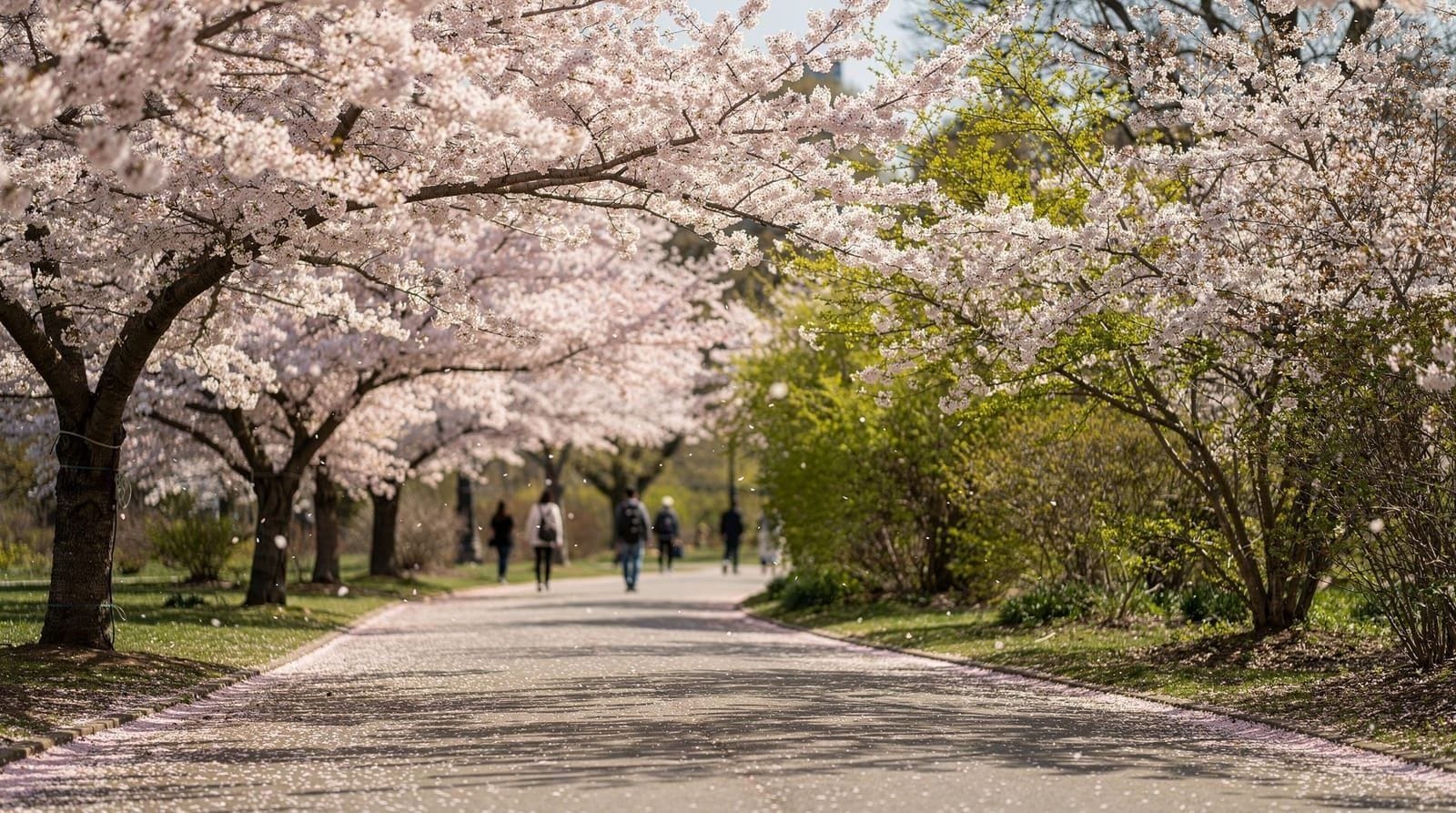
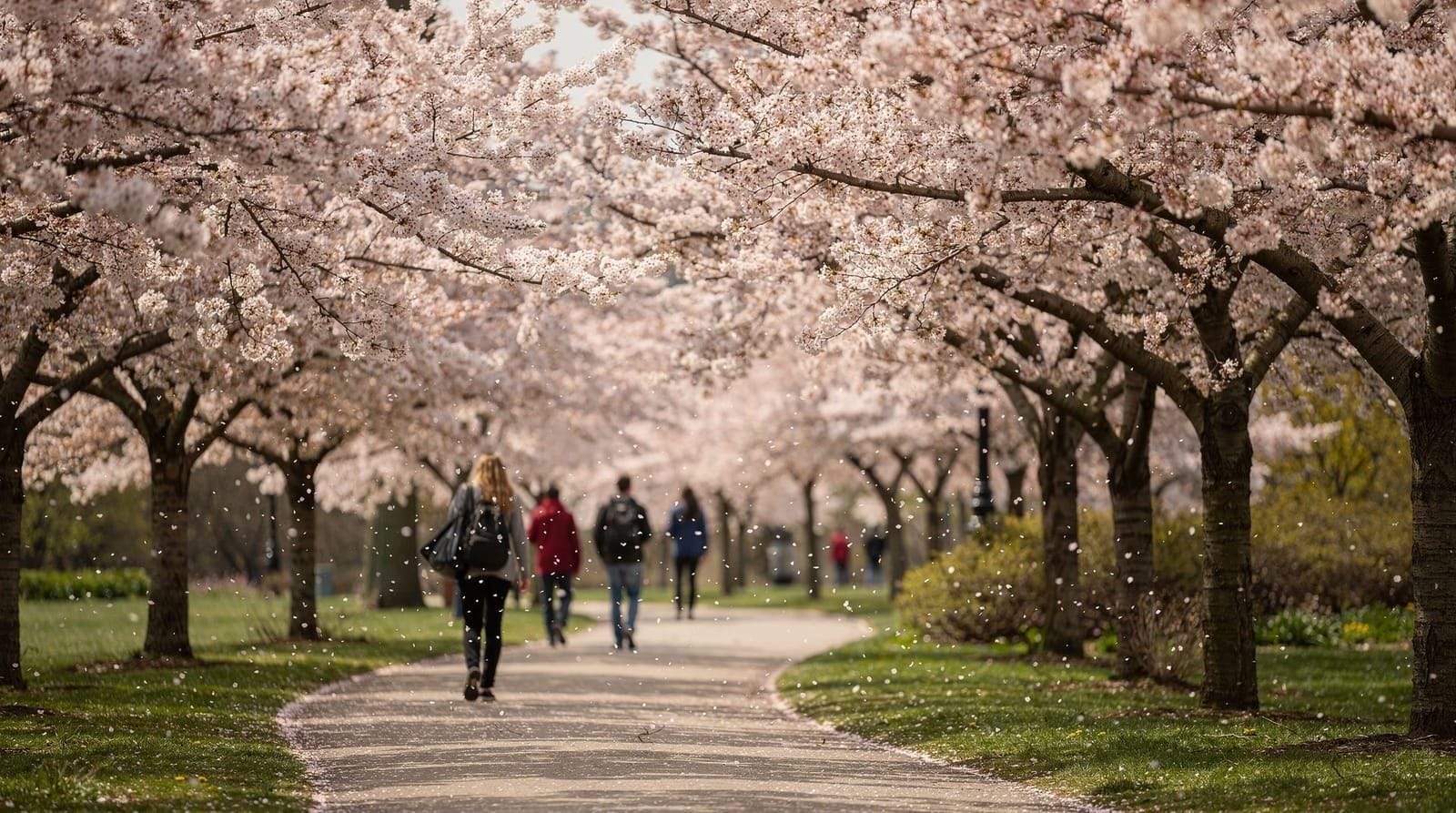
High Park’s cherry blossoms bloom in a narrow window that typically falls from late April into early May, and it’s genuinely one of the best reasons to visit specifically during spring rather than any other season. The window is short — often just five to ten days at full bloom before petals begin dropping — and shifts year to year depending on how mild or cold the preceding weeks have been, which means checking a current bloom forecast close to your actual travel dates matters far more than planning around a fixed calendar date months in advance.
The park gets genuinely crowded during peak bloom, particularly on weekends, with visitors and photographers converging on the same handful of tree-lined paths near the park’s Grenadier Pond side. For full detail on the bloom’s timing patterns, the best viewing spots within the park, and how to avoid the worst of the crowds, see the cherry blossoms in Toronto guide and the dedicated High Park cherry blossoms guide.
Patios, restaurants, and a city coming back outdoors
As temperatures climb through April and May, Toronto’s restaurant patios — closed or unused through winter — start reopening across the city, and there’s a genuine energy to the first warm weekends as people return outdoors after months indoors. Neighborhoods like Kensington Market, Ossington Avenue, and the Distillery District all lean into this shift, though patio weather itself remains unreliable enough in April that many restaurants keep indoor seating as the primary option well into May. It’s worth checking whether a specific restaurant’s patio is actually open before planning an outdoor meal around it early in the season.
Day trips: workable, but not fully ramped up everywhere
Niagara Falls is fully operational throughout spring, with the falls themselves running at strong volume from spring snowmelt and boat tours and attractions back on their full schedule. Muskoka and Algonquin are more uneven early in the season — many lakeside resorts, canoe rental operators, and seasonal restaurants in Muskoka don’t fully ramp up until May, and some remain closed or on reduced hours through April.
A late-May day trip to either region works close to full capacity; an early-April one risks finding some operators not yet open for the season. Blue Mountain’s ski season typically wraps by early spring, and its summer activities — hiking, the Scenic Caves suspension bridge, mountain coaster — aren’t yet in full swing either, making spring the region’s quieter in-between period.
Budget for a spring trip
Spring is one of the better value windows of the year outside of deep winter. Hotel rates in April and early May commonly sit below both summer peak and early fall pricing, and a mid-range daily budget that runs 130 to 200 CAD in summer often lands closer to 110 to 150 CAD during spring. Late May, as the season shifts toward summer pricing and the weather stabilizes, sees rates begin climbing back up, so early-to-mid spring is where the strongest value sits. Budget travelers can push costs further down by leaning on free attractions like High Park during bloom season and avoiding the narrow late-May stretch when pricing starts converging with summer.
Events beyond the cherry blossoms
Spring’s events calendar is thinner than summer’s, but a handful of smaller festivals and seasonal openings fill the gap — outdoor markets reopening, the start of patio season programming across neighborhoods, and early-season sporting events as local teams’ seasons get underway. It’s not a season defined by a dense festival calendar the way summer is (see the Toronto summer festivals guide for that comparison), which suits travelers who prefer a quieter, less programmed visit over one built around a specific event.
What a realistic spring day in the city looks like
A typical late-spring day might start with a mid-morning visit to High Park if the bloom is on, layered clothing adjusted as the day warms through the afternoon, lunch at a reopened patio in Kensington Market or along Ossington, and an afternoon spent between an indoor attraction like the Art Gallery of Ontario and outdoor time along the waterfront if the weather holds. Building in one indoor option per day as a weather contingency is a reasonable habit for the entire season, given how quickly a sunny morning can turn into an overcast, rainy afternoon.
Who spring suits
Spring suits travelers prioritizing value and willing to accept weather uncertainty in exchange for lower prices and thinner crowds outside the cherry blossom peak itself. It particularly suits photographers and nature-focused travelers chasing the bloom specifically, and budget-conscious visitors who don’t mind packing for both cool mornings and warm afternoons in the same bag. It suits less well travelers whose itinerary depends heavily on Muskoka or Algonquin being fully operational, or anyone unwilling to build flexibility into an itinerary in case of a rainy stretch.
What to expect from Toronto Islands in spring
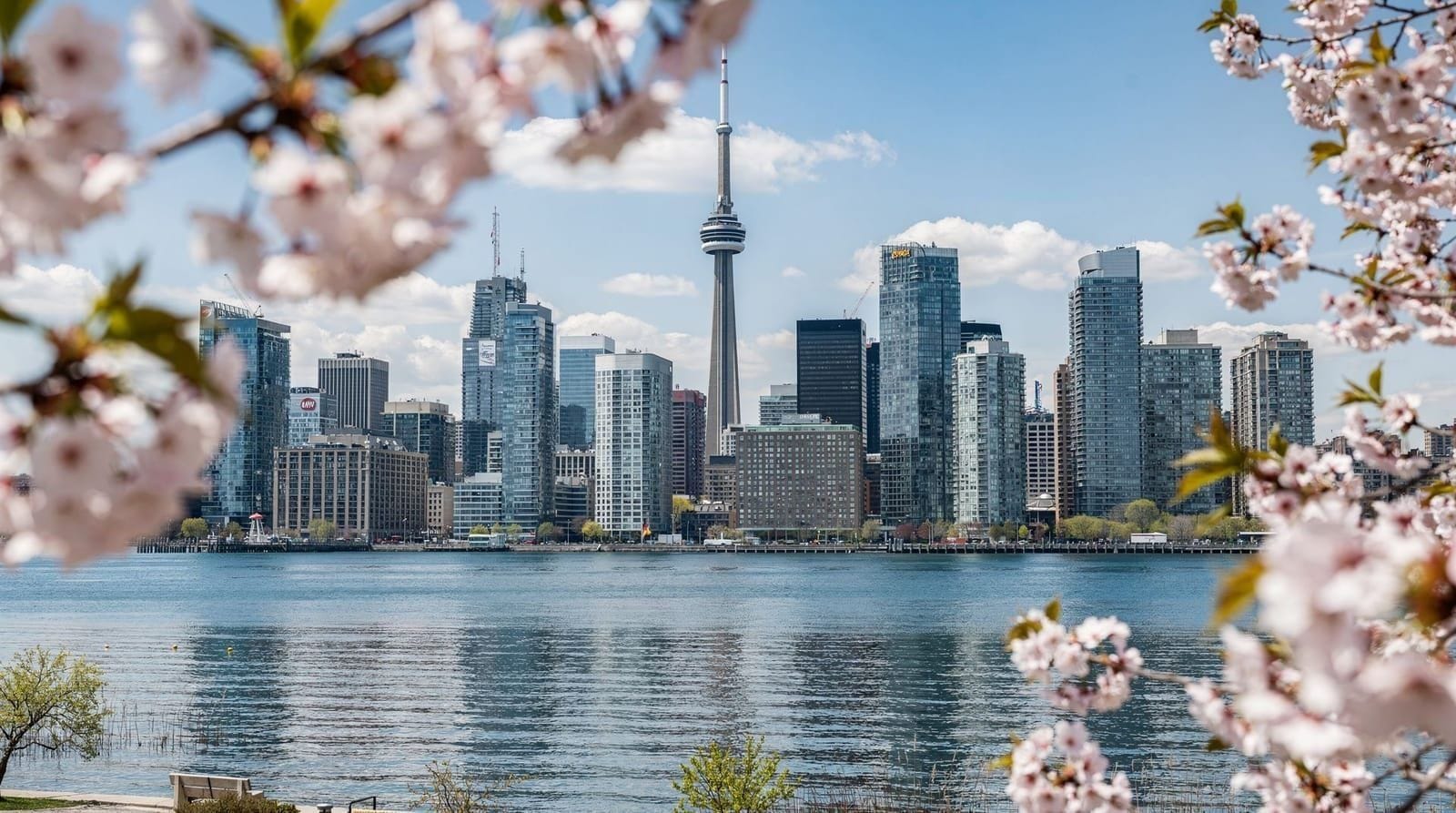
The Toronto Islands ferry runs through spring, though service and island amenities are noticeably scaled back compared to the full summer schedule, with some seasonal food vendors and rental operations not yet open in April and only partially operating through May. The islands themselves are still worth a visit for the views back toward the skyline and the quieter beaches, but travelers expecting the full summer version of the islands — busy beaches, all rental shops open, frequent ferries — should adjust expectations for an early-season visit. For a full look at what the islands offer across the year, see the guide to Toronto Islands.
Comparing spring to the rest of the year
Spring sits between winter’s cold-but-cheap extreme and summer’s warm-but-expensive one, without fully matching either. It shares winter’s lower pricing but without the extreme cold; it shares some of summer’s warmth by late May without the full festival calendar or peak pricing. Fall offers a more stable version of the same “cooler weather, lower prices” trade spring makes, but without the specific draw of the cherry blossom bloom. For a full season-by-season comparison, see the best time to visit Toronto guide, and for the fall side of that comparison specifically, the Toronto in fall guide.
Early spring versus late spring
The two halves of the season feel meaningfully different in practice. Early spring, through most of April, still carries real winter risk — a warm week is entirely possible but so is a return to near-freezing temperatures and even a late snow flurry, and most outdoor infrastructure beyond the city core hasn’t fully reopened for the season.
Late spring, from around the cherry blossom window through the end of May, feels considerably more like a genuine transition toward summer, with more reliable warmth, fuller patio operations, and Niagara and even parts of Muskoka closer to full seasonal readiness. Visitors with flexibility on timing generally get a smoother experience choosing late April or May over an early-April visit, unless a specific early-spring event or lower pricing is the priority.
Outdoor markets and neighborhood life returning
Spring is when Toronto’s seasonal outdoor markets and neighborhood street life start returning after winter — farmers’ markets that operate outdoors during the warmer months begin their season, and neighborhoods like Kensington Market see a noticeable uptick in outdoor vendor and street activity as the weather allows. This is a gradual process rather than a single reopening date, and early spring visitors will see a more subdued version of these neighborhoods than late spring or summer visitors, worth factoring in if a lively outdoor market atmosphere is specifically part of the appeal of a given neighborhood.
Allergies and pollen
Spring in Toronto brings a real pollen season as trees and early flowering plants — including the cherry blossoms themselves — release pollen, which can be a genuine consideration for visitors with seasonal allergies. Tree pollen typically peaks earlier in spring before grass pollen takes over later in the season, and visitors prone to allergies may want to pack appropriate medication given how central outdoor time, particularly in High Park during bloom season, is to a typical spring visit.
Spring sporting events
Spring marks the start of several local sporting seasons that add a mild layer of activity to the city’s calendar without approaching the scale of summer’s festival lineup. Toronto’s professional baseball season gets underway at the Rogers Centre downtown — see the Blue Jays game guide for tickets and seating — and it’s a reasonable evening activity for visitors wanting a taste of local sports culture during a spring trip, with tickets generally easier to secure and more reasonably priced early in the season than during a summer weekend series against a marquee opponent.
The city’s outdoor running and cycling culture also becomes more visible as the weather warms, with the waterfront trail and various park paths busier with local activity by May than they are during the colder months.
Frequently asked questions about visiting Toronto in spring
Is early April too cold to enjoy Toronto?
Early April can still feel closer to winter than spring, with daytime highs sometimes only reaching the 5 to 10°C range and occasional lingering snow. It’s not too cold to enjoy the city’s indoor attractions and restaurants, but outdoor day trips and patio time are better suited to late April and May.
What should I do if it rains during my spring trip?
Toronto’s indoor attractions — the Royal Ontario Museum, the Art Gallery of Ontario, St. Lawrence Market, and the PATH underground walkway system — all work well as rain-day backup plans, and a spring itinerary benefits from having at least one of these built in given how unpredictable the weather can be.
Is spring a good time for a Niagara Falls day trip?
Yes, Niagara is fully operational through spring and the falls run particularly strong with spring snowmelt adding volume. It’s a more reliable spring day trip than Muskoka or Algonquin, both of which are still ramping up seasonal operations in April.
How crowded does High Park get during cherry blossom season?
Very crowded on weekends during the peak bloom window, with the tree-lined paths near Grenadier Pond drawing large numbers of visitors and photographers. Weekday mornings offer a noticeably quieter experience of the same bloom.
Does spring have any festivals worth planning a trip around?
Spring’s events calendar is lighter than summer’s, without a single dominant festival on the scale of Pride or the CNE. The cherry blossom bloom functions as the season’s main draw rather than a traditional festival, alongside a broader sense of the city’s patio and market culture reopening for the year.
Is spring cheaper than fall for a Toronto trip?
They’re broadly comparable, both sitting well below summer peak pricing, though early-to-mid spring can edge out fall slightly since it comes right before the summer demand ramp-up rather than right after it. Weather stability tends to favor fall, while value slightly favors early spring.