Best time to visit Toronto
What is the best time to visit Toronto?
September through early October offers the best balance of comfortable weather (8 to 18°C), fall foliage in nearby Algonquin and Muskoka, the Toronto International Film Festival, and noticeably lower prices than peak summer. Late April into May is the best value window overall, with cherry blossoms in High Park and the lowest hotel rates of the non-winter months, though weather is less predictable.
Why “the best time” depends on what you’re actually optimizing for
Every season in Toronto trades something for something else, and the honest answer to “when should I visit” depends on whether price, weather, crowds, or a specific event matters most to a given trip. Summer has the best weather and the fullest events calendar, but also the highest prices and biggest crowds. Winter has the lowest prices, but the coldest weather and the fewest regional day trips available.
Spring and fall split the difference in different ways — spring trades unpredictable weather for the lowest non-winter prices and the cherry blossom bloom, while fall trades a shorter warm-weather window for genuinely comfortable temperatures, foliage, and TIFF. None of these is a wrong answer; the goal here is matching the trade-off to what actually matters for your trip.
| Best overall | September–early October (fall) |
| Best value | Late April–May (spring) |
| Cheapest | January–February (deep winter) |
| Busiest/priciest | June–July 2026 (FIFA World Cup window) |
| Avoid if | You need every attraction open — some close in winter |
Season-by-season at a glance
| Season | Temps | Best for | Watch out for |
|---|---|---|---|
| Fall (Sep–Oct) | 8–18°C | TIFF, foliage day trips, value | Narrowing window by late Oct |
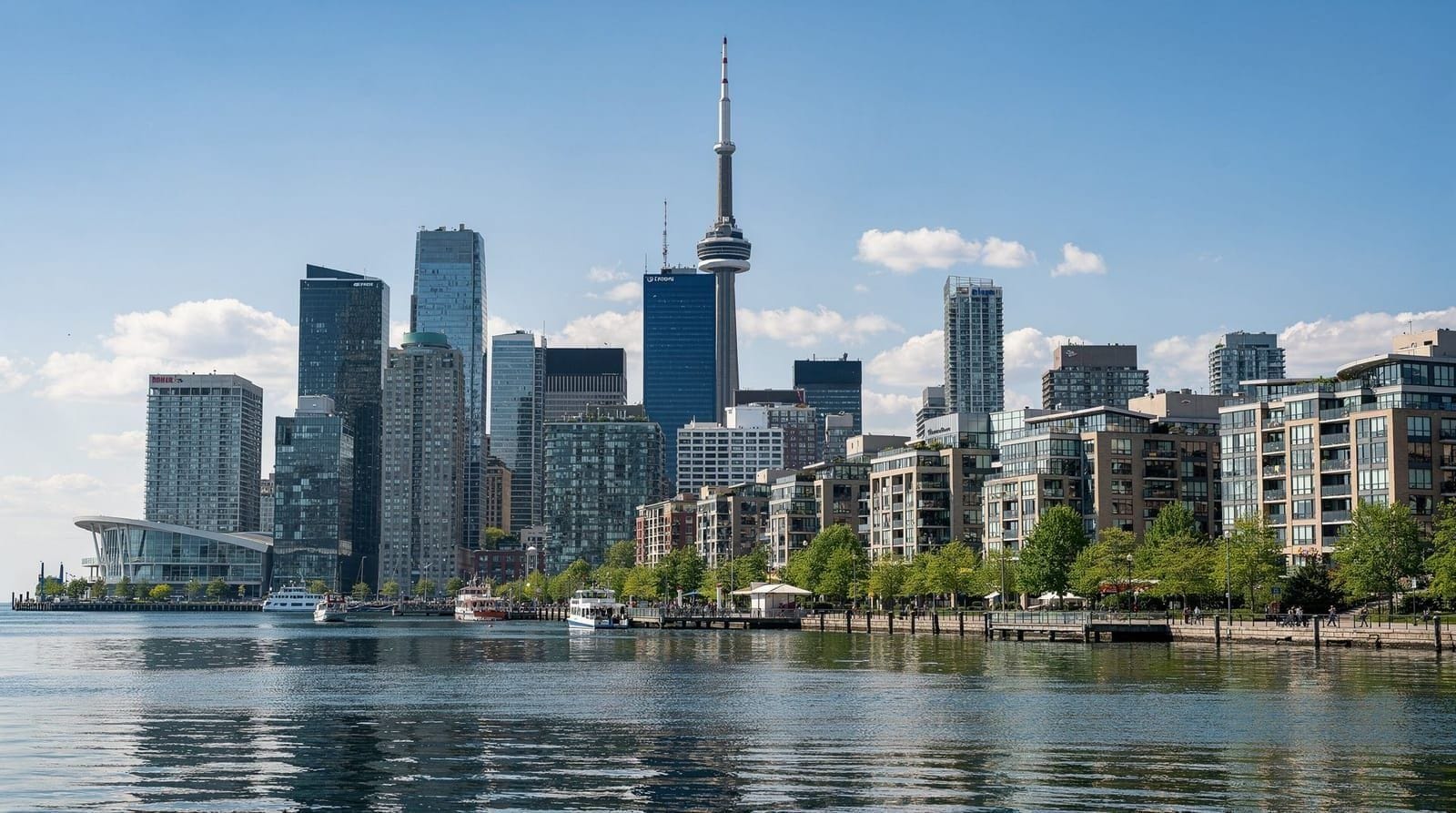
| Summer (Jun–Aug) | 20–30°C | Full events calendar, Islands, patios | Highest prices, longest queues |
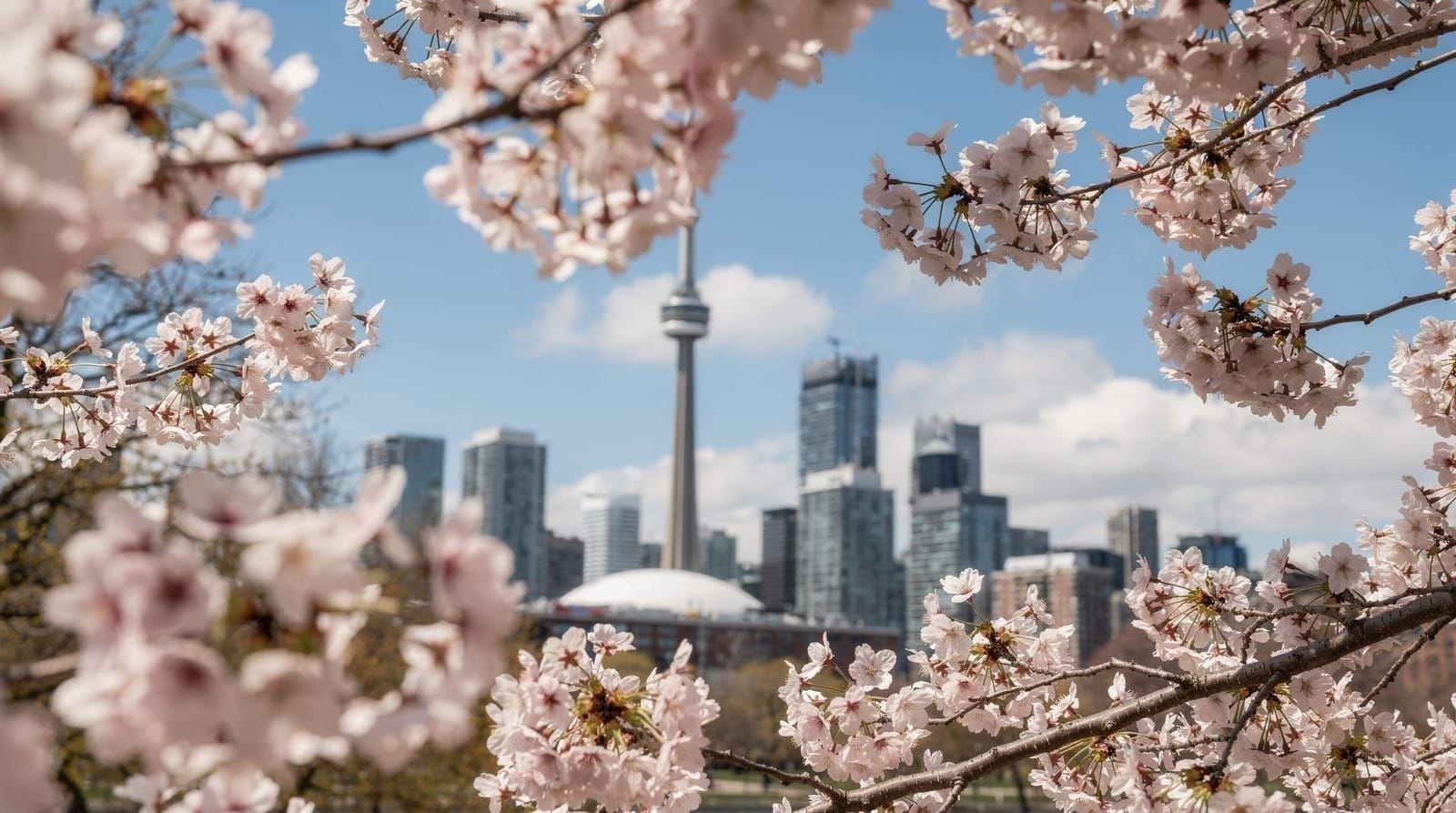
| Spring (Apr–May) | 5–22°C | Lowest non-winter prices, cherry blossoms | Unpredictable, rainy weeks |
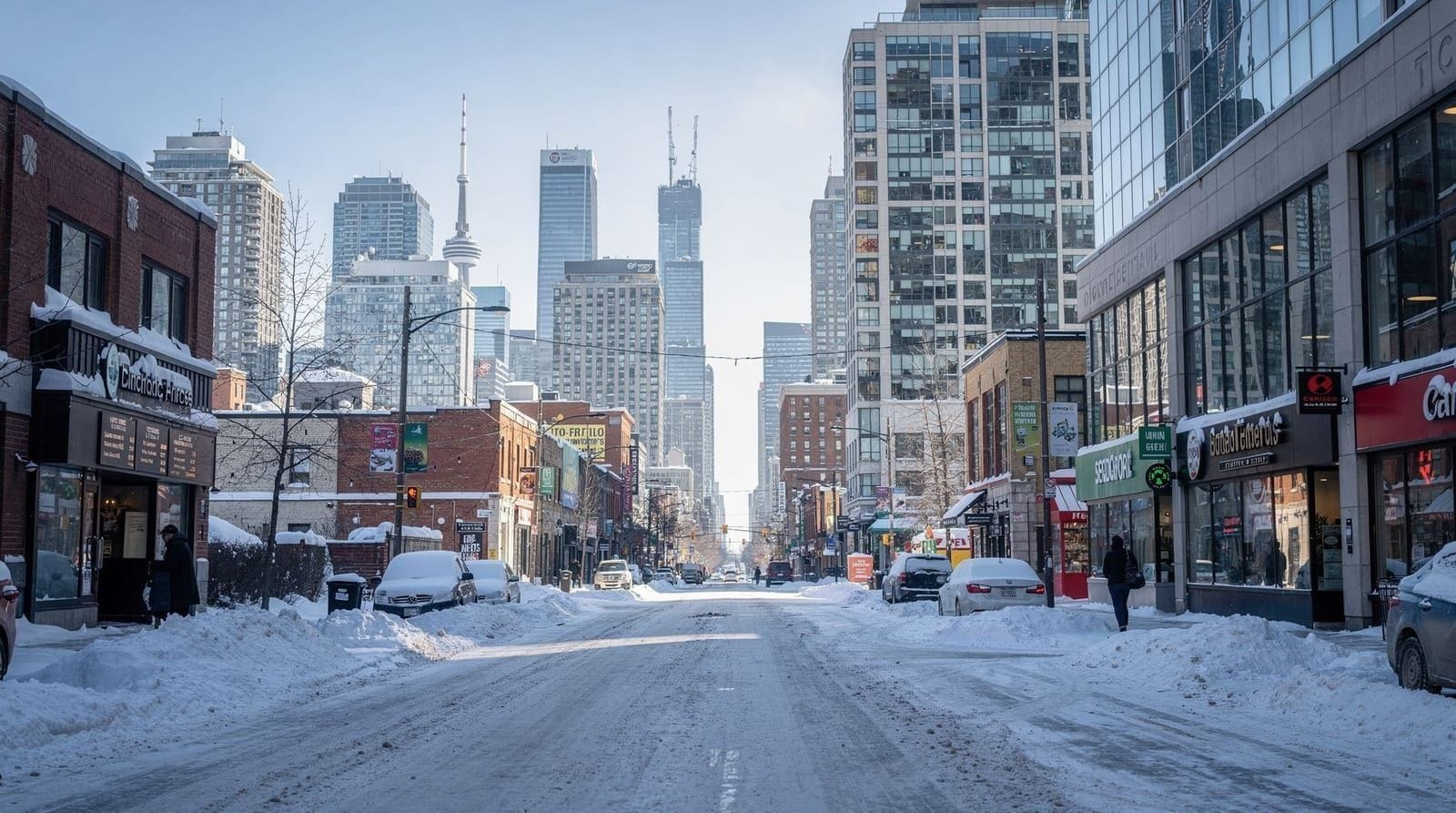
| Winter (Dec–Feb) | -10 to -20°C | Cheapest rates, skating, Blue Mountain skiing | Niagara/Muskoka closures |
Fall (September–October): the strongest all-around answer
Fall temperatures run 8 to 18°C, cool enough to require a jacket but comfortable for a full day of walking without the sweat-through-your-shirt heat of a July afternoon. The Toronto International Film Festival lands mid-September and turns the downtown core into a genuine industry and public event, with red-carpet premieres and public screenings drawing visitors specifically for the festival — see the TIFF Toronto guide for how to actually attend as a non-industry visitor.
Beyond the city itself, fall is when Algonquin Park and Muskoka hit peak foliage, typically the last week of September into the first week of October, giving a Toronto trip a genuinely strong day-trip option that doesn’t exist in the same form during summer. Crowds thin out noticeably once TIFF wraps in late September, and hotel rates drop from their summer peak without falling all the way to winter lows. The trade-off is a narrowing window — by late October, weather turns more unpredictable and some outdoor attractions begin winding down for the season.
Summer (June–August): the most expensive, most crowded, most complete
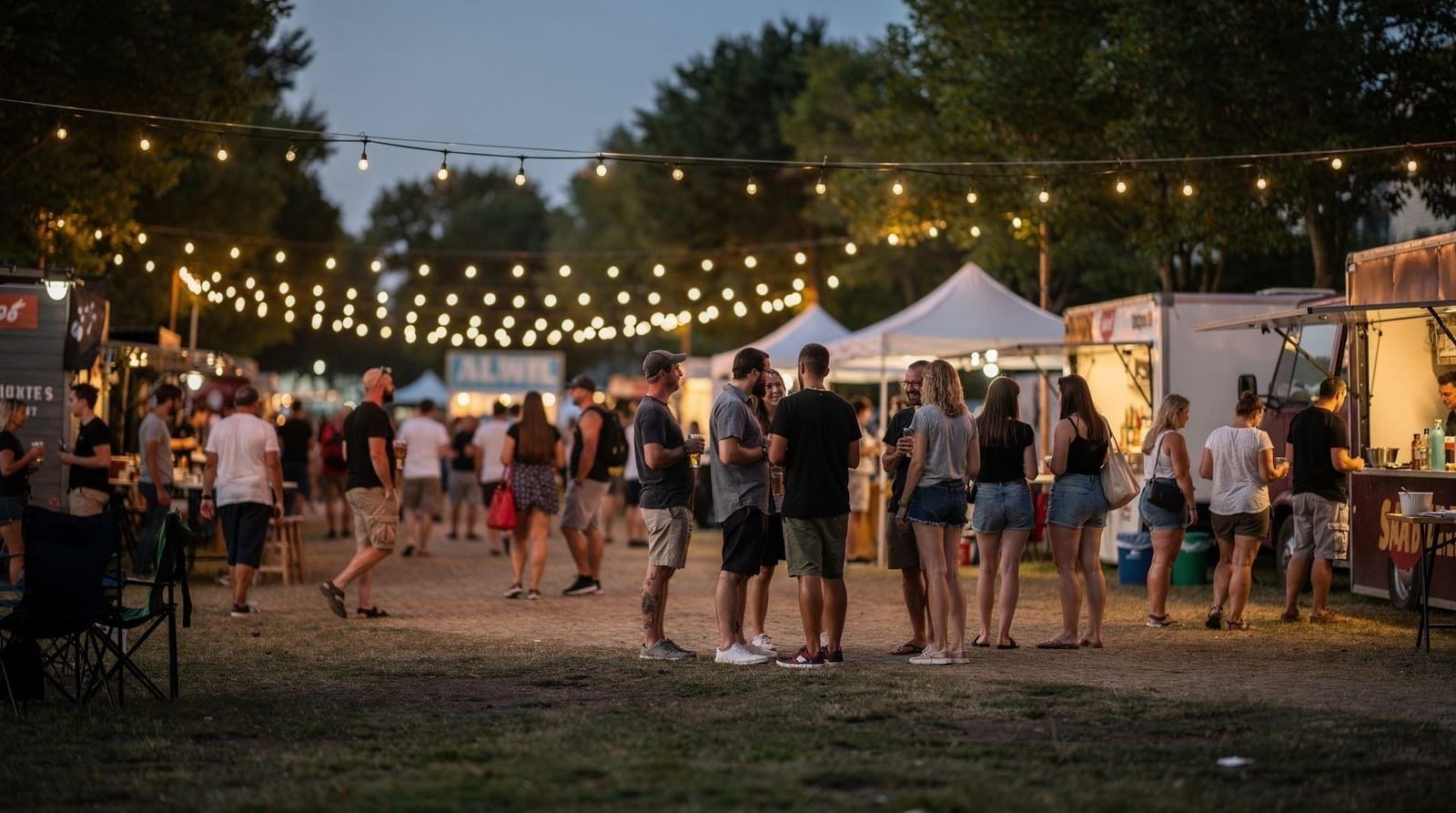
Summer delivers Toronto’s best weather at 20 to 30°C and its fullest events calendar by a wide margin. Pride Toronto runs June 25 through 28 with a parade and citywide programming; the Canadian National Exhibition, a mix of midway rides, food vendors, and exhibits, runs from August 21 through September 7 at Exhibition Place; and 2026 specifically adds Toronto’s hosting of FIFA World Cup matches at BMO Field during the June-July window, which will push demand and pricing in that particular stretch beyond a typical summer peak — see the FIFA World Cup 2026 Toronto guide for how it affects planning.
The Toronto Islands, the beaches along the eastern waterfront, and every rooftop patio in the city are at their best during these months. The cost of all this is real — hotel rates hit their annual high, restaurants require reservations further in advance, and popular attractions see their longest queues of the year. For a full breakdown of the summer events calendar and how to plan around it, see the Toronto summer festivals guide.
Spring (April–May): the best value window, with a weather caveat
Spring temperatures range widely, from 5 to 22°C, and the season is defined as much by unpredictability as by any single number — a warm sunny week can be followed by a cold, rainy one, sometimes within the same visit. What spring offers in exchange is the lowest pricing of the non-winter months and one specific, genuinely worthwhile event: the cherry blossom bloom in High Park, typically landing in the narrow window from late April into early May.
Patios reopen across the city as temperatures climb, and the general sense of a city waking up from winter gives spring a distinct, if less polished, character compared to the more fully-operational summer and fall seasons. Some attractions, particularly outdoor ones tied to regional day trips, are still ramping up for the season in early spring, so a late-April or May visit works better than an early-April one.
Full detail on timing the bloom and the rest of the season is in the Toronto in spring guide and the dedicated cherry blossoms in Toronto guide, plus the High Park cherry blossoms guide for exact viewing spots.
Winter (December–February): the cheapest, and the most limited
Winter runs -10 to -20°C with frequent snow and short daylight, and it’s genuinely the toughest season for a first-time visitor building a trip around outdoor activities and regional day trips. Niagara Falls’ Journey Behind the Falls and Hornblower boat cruises both close from November through April, Muskoka’s resort season ends after Thanksgiving weekend, and cottage-country roads can turn treacherous in poor conditions.
What winter does deliver is the cheapest hotel rates of the year by a wide margin, free outdoor skating at Harbourfront Centre and Nathan Phillips Square, and — for visitors specifically interested in it — ski season at Blue Mountain, about two hours north, which is arguably better in winter than at any other time.
December specifically layers a holiday season on top of the general winter cold, with the Cavalcade of Lights and the Distillery District’s Toronto Christmas Market giving the month a distinct identity from the quieter, genuinely off-season stretch of January and February. Full detail is in the Toronto in winter guide and the Christmas in Toronto guide.
How the seasons compare on price
Price moves in a fairly predictable arc across the year: summer and the FIFA World Cup window in 2026 sit at the top, fall and late spring sit in the middle, and deep winter (January–February) sits at the bottom. A mid-range daily budget — covering accommodation, food, transport, and activities — commonly runs 130 to 200 CAD in summer, drops to something closer to 110 to 160 CAD during fall and late spring, and can fall to 100 to 150 CAD in deep winter once hotel rates hit their annual low.
Budget travelers willing to lean on free attractions and travel in the off-season can push costs down further; travelers prioritizing a full events calendar and warm-weather day trips should expect to pay toward the top of that range regardless of season chosen.
Matching the season to the trip
A trip built around Niagara, Muskoka, or Algonquin day trips is best planned for late spring through fall, when these regions are fully operational and accessible without the closures and road conditions that define winter. A trip built around festivals and events benefits most from summer’s dense calendar or fall’s TIFF window. A trip prioritizing budget above all else points toward winter, accepting the trade-off of cold weather and limited regional day trips. A trip built around photography and a quieter city points toward the narrow spring bloom window or the similarly narrow fall foliage window, both of which reward planning a visit around a specific, dated natural event rather than a general season.
Seasonal considerations for families with kids
Summer is the easiest season for a family trip logistically — long daylight, warm weather, and outdoor attractions like the Toronto Islands and the beaches all fully operational — but it also concentrates the highest prices and biggest crowds into the exact weeks that align with school holidays, meaning most families don’t have much flexibility to dodge the peak pricing even if they wanted to.
Spring and fall both work well for families able to travel outside the summer school break, offering more manageable crowds and lower costs, though fall’s shorter days and spring’s less predictable weather require a bit more planning around indoor backup activities. Winter is workable for families specifically drawn to skating and holiday events but requires realistic expectations about how much outdoor time young children can comfortably manage in -10 to -20°C conditions.
How neighborhoods feel different across seasons
Toronto’s neighborhood character shifts more with the seasons than a first-time visitor might expect. Kensington Market and the Distillery District both lean heavily into outdoor patio and street life in summer, drawing crowds that spill onto sidewalks and public squares, while the same neighborhoods in winter shift toward their indoor shops, cafés, and — in the Distillery District’s case — the ticketed Winter Village.
The Toronto Islands are effectively a summer-and-early-fall destination, with ferry service and island amenities scaling back significantly once the warm season ends. Downtown’s PATH-connected core, by contrast, is arguably at its most useful in winter, when its indoor connectivity becomes a genuine asset rather than just a convenience.
Booking windows by season
How far ahead to book shifts by season as much as the destination itself does. Summer, and 2026’s FIFA World Cup window specifically, both call for booking accommodation two to three months out at minimum for anything reasonably priced in the downtown core. Fall’s TIFF period requires similar lead time for hotels near the festival’s screening venues. Spring and winter, outside the narrow cherry blossom window and the December holiday week respectively, are considerably more forgiving — three to four weeks’ notice is usually sufficient to find good availability at a reasonable rate, which suits more spontaneous trip planning better than the tighter summer and fall windows allow.
Solo travelers and seasonal safety considerations
Toronto is a generally safe city to explore solo across all four seasons, but the practical considerations shift with the calendar. Winter’s short daylight hours mean more of a solo evening walk happens in the dark, which isn’t inherently unsafe in most well-trafficked downtown areas but is worth factoring into route planning, particularly for a first-time visitor unfamiliar with which streets stay busy after dark.
Summer’s long daylight and dense festival crowds create the opposite consideration — safety concerns shift more toward crowd navigation and petty theft vigilance in packed areas like Pride weekend or the CNE grounds than toward darkness or isolation. Spring and fall split the difference, with moderate daylight hours and generally thinner crowds than summer’s peak.
Planning around the 2026 FIFA World Cup specifically
Toronto’s June-July 2026 FIFA World Cup window is a genuine outlier on this calendar, not just a busier version of a normal summer. Hotel rates across nearly every neighborhood are expected to spike well beyond typical peak-summer pricing during match windows at BMO Field, and downtown transit and restaurants will be running at a noticeably higher baseline load than even TIFF or Pride produce individually.
If your trip isn’t specifically built around attending a match, deliberately timing a visit for late August or September instead avoids both the World Cup crowds and the tail end of peak summer pricing, while still landing close enough to fall’s TIFF window and foliage season to keep the trip interesting. Travelers who do want to combine sightseeing with a match should book accommodation as early as possible — 2026 is shaping up as the single most-constrained accommodation year Toronto has seen in some time.
Frequently asked questions about timing a Toronto trip
What’s the single most crowded time to visit Toronto?
The peak of summer combined with the 2026 FIFA World Cup matches at BMO Field will produce the most crowded and expensive stretch the city has seen in years, concentrated in the June-July window. Outside of that specific event, late July and August during the Canadian National Exhibition and general summer peak are the most consistently crowded period in a typical year.
Is it better to visit for cherry blossoms or fall foliage?
They’re different experiences rather than a strict either-or — cherry blossoms are a single-location, narrow-window event confined mainly to High Park, while fall foliage spans the wider Algonquin and Muskoka regions over a slightly longer window. Fall generally offers more to build a full trip around; spring’s bloom is better suited to travelers specifically chasing that one event.
How far in advance should I book for TIFF or Pride?
Both events draw significant crowds and should be booked at least two to three months ahead for reasonably priced accommodation, and further ahead if a specific downtown hotel or a screening ticket is part of the plan. Pride weekend and TIFF’s opening days see the sharpest price spikes of their respective windows.
Does the weather ever ruin a trip regardless of season?
Any season can produce a stretch of bad weather — spring rain, summer thunderstorms, or an early winter cold snap — and building flexibility into an itinerary with indoor backup options (museums, markets, restaurants) protects against this better than choosing a “safe” season. Winter is the most weather-dependent season for regional day trips specifically, since road conditions can force last-minute changes.
Is shoulder season really cheaper, or just marginally so?
The difference is meaningful, not marginal — hotel rates in shoulder months like May and late September commonly run 15 to 25 percent below summer peak, and that gap widens further heading into deep winter. For budget-conscious travelers, shifting a trip by even a few weeks out of peak summer can produce a noticeably lower total cost.