Cherry blossoms in Toronto guide
When do cherry blossoms bloom in Toronto?
The main bloom, concentrated in High Park, typically falls in the narrow window from late April into early May, lasting roughly five to ten days at full bloom before petals begin dropping. The exact dates shift year to year depending on spring temperatures, so checking a current bloom forecast within a week or two of your trip is more reliable than planning around a fixed date months out.
A short, unpredictable window that draws a disproportionate crowd
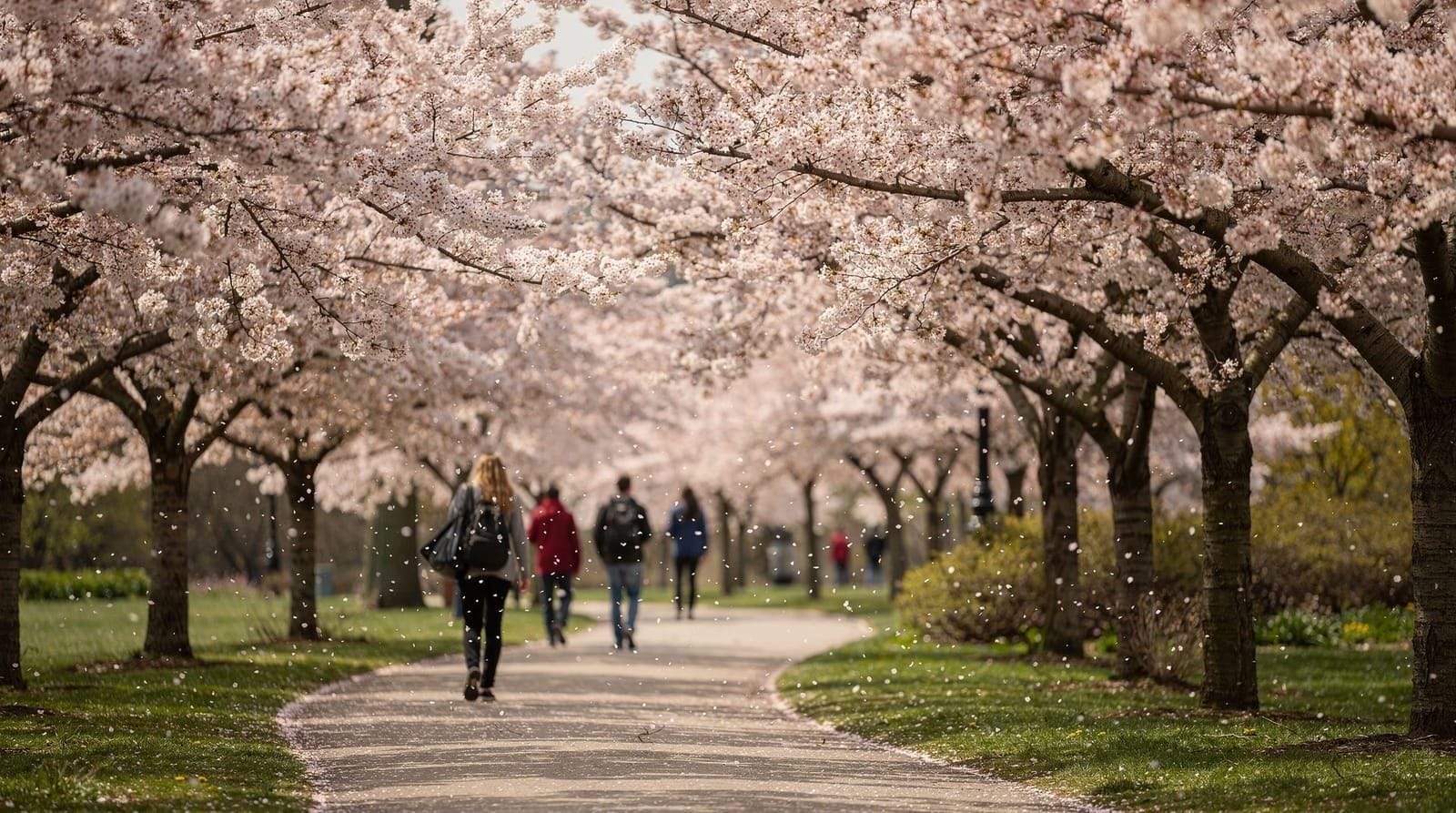
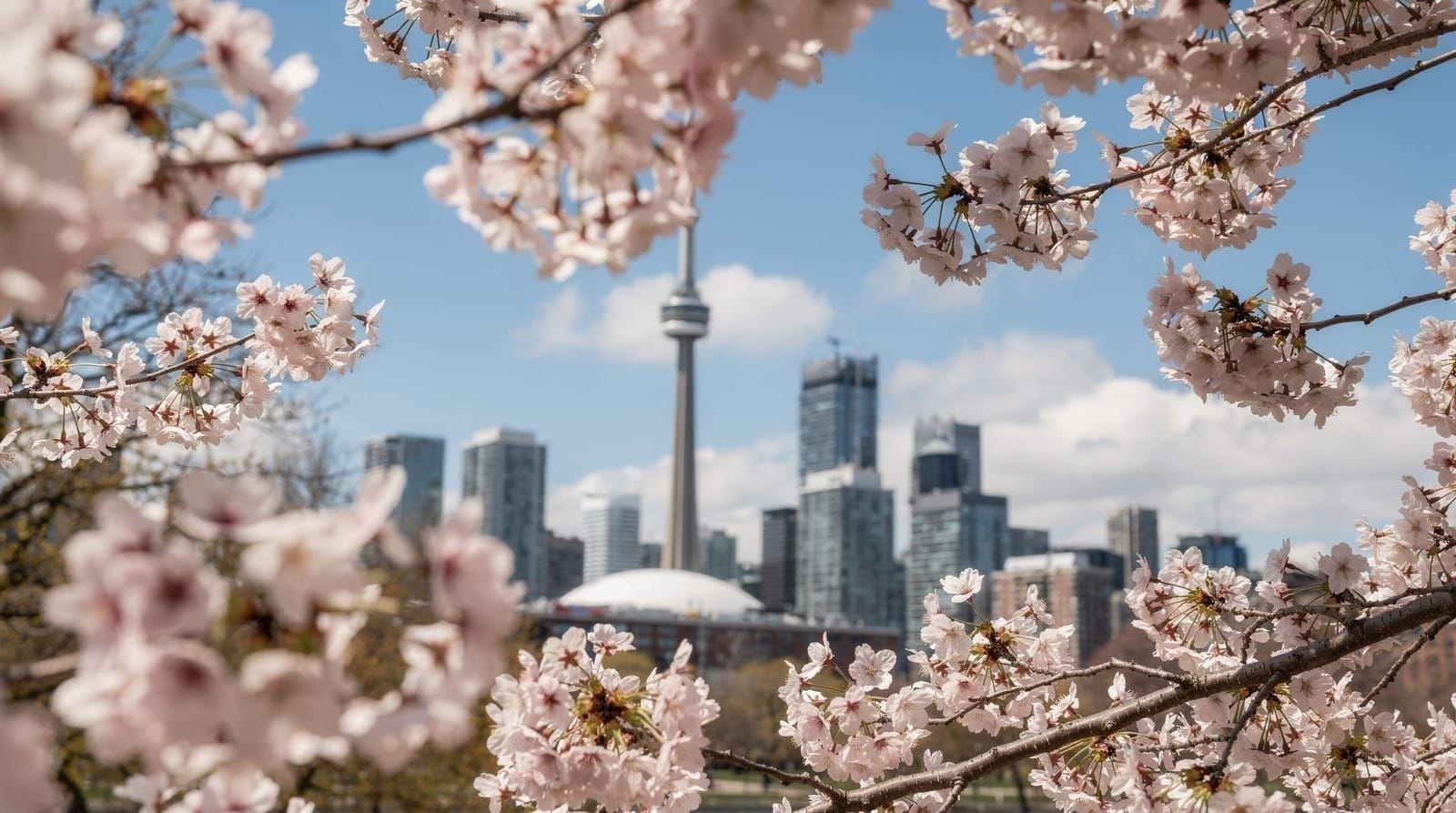
Toronto’s cherry blossom season lasts barely a week and a half at its peak, yet it’s become one of the most photographed and anticipated events on the city’s spring calendar, concentrated almost entirely in High Park’s stand of Somei-Yoshino cherry trees.
The appeal is straightforward — a burst of pale pink blossoms against a park still mostly bare from winter — but the logistics of actually seeing it well require more planning than most spring activities, given how narrow and unpredictable the timing is. Unlike a festival with a fixed date, the bloom is entirely weather-dependent, which means the single biggest mistake visitors make is planning a trip around last year’s dates rather than checking a current forecast close to their actual travel window.
| Where | High Park, near Grenadier Pond and the subway entrance |
| When | Late April to early May, peak lasts 5-10 days |
| Cost | Free — no admission to the park |
| Best time of day | Weekday mornings before 9am |
| Getting there | High Park subway station on Line 2 |
When the bloom actually happens
The bloom typically falls somewhere in the window from late April into early May, but the exact dates shift meaningfully year to year — a mild March and April can push peak bloom into mid-April, while a cold, slow spring can delay it into the second week of May.
Peak bloom itself, the few days when the trees are at their fullest and most photogenic, generally lasts only five to ten days before petals begin dropping, and a late cold snap or a heavy rain and wind event can shorten this window further by knocking blossoms down early. The City of Toronto typically tracks bud development and publishes bloom watch updates as the season approaches, and checking this within a week or two of a planned visit is a far more reliable planning method than relying on a fixed calendar date.
Where to actually go
High Park holds the city’s main concentration of cherry trees, clustered most densely near the Grenadier Pond side of the park and along the paths close to the High Park subway station entrance on Bloor Street. This concentration is both the appeal and the problem — it’s an easy, transit-accessible spot to see a genuinely large number of blossoming trees at once, which is exactly why it draws the biggest crowds on the city’s spring calendar. For a full breakdown of the park’s specific viewing spots, paths, and how to plan a visit around the crowds, see the dedicated High Park cherry blossoms guide.
Bloom timing by week, in a typical year
| Week | What to expect |
|---|---|
| Mid-April | Buds forming; trees still mostly bare |
| Late April | Bloom often starting; check the current forecast |
| Early May | Peak window most years; heaviest crowds |
| Mid-May | Petals dropping; a quieter, less photogenic visit |
This is a typical-year guide only — a warm spring can pull the whole schedule a week or two earlier, and a cold one can push it later, which is why checking a current bloom forecast close to your travel dates beats planning around any fixed calendar week.
Beyond High Park, a handful of smaller cherry blossom pockets exist around the city — Trinity Bellwoods Park has a modest cluster, the University of Toronto’s downtown campus has cherry trees scattered among its older buildings, and residential streets in a few neighborhoods have mature cherry trees planted decades ago. None approaches High Park’s scale, but they’re worth knowing about specifically as overflow options when the main park gets too crowded, or as a quieter alternative for visitors who’ve already seen High Park’s display on a previous trip.
Handling the crowds
High Park during peak bloom, particularly on a warm weekend, gets genuinely crowded — the paths near Grenadier Pond fill with both casual visitors and photographers, some with full tripod setups, and finding an uncrowded angle for a photo becomes a real challenge by mid-morning. Early weekday mornings, ideally before 9 a.m., see dramatically thinner crowds while the light is also generally better for photography than the flatter midday sun. If a weekend visit is the only option, arriving as early as the park opens and expecting the main viewing areas to fill in by late morning is the realistic expectation to plan around.
Parking near High Park is limited and competitive during peak bloom weekends specifically, making the subway — High Park station sits close to the main viewing area — the more reliable way to arrive rather than driving and searching for street parking.
What else is worth doing on a spring trip built around the bloom
High Park itself extends well beyond the cherry trees, with hiking trails, a small zoo, and Grenadier Pond all worth a longer visit than just the bloom viewing alone. Pairing a cherry blossom visit with a broader look at the rest of the park, or with a stop at nearby neighborhoods along Bloor Street West, turns a single narrow-purpose visit into a fuller half-day outing. For visitors building a longer spring trip around the bloom, see the Toronto in spring guide for how the season’s broader weather patterns and pricing compare to the rest of the year, and things to do in Toronto for a wider list of attractions to pair with a bloom-season visit.
Photography tips specific to the bloom
The densest, most photogenic clusters near Grenadier Pond work best in early-morning or late-afternoon light, when the low angle brings out the pink tones better than harsh midday sun. A slight breeze can add falling-petal shots that read as more dynamic than static tree photos, though it also signals the bloom is closer to ending — heavy wind and rain are the two conditions most likely to strip the trees early. Weekday visits not only mean fewer people in the frame but also more time to find an uncrowded composition before the paths fill in.
Budget and practical notes
Viewing the cherry blossoms in High Park is free — there’s no admission charge to the park itself, making it one of the better-value activities on a spring itinerary. The main costs are transit or parking to get there and any food or coffee purchased nearby, since High Park has limited on-site food options beyond a couple of small concession stands near the main entrances. Bringing a picnic is a reasonable and inexpensive way to extend a visit into a full afternoon once the bloom-viewing itself is done.
What locals do differently than visitors
Toronto residents who track the bloom closely tend to visit on a weekday lunch break or early before work specifically to beat the crowds, treating it as a quick, repeatable seasonal ritual rather than a single planned outing. Visitors without that flexibility can approximate the same strategy by treating the first couple of bloom days — rather than the single “peak” day announced in a bloom watch update — as the target window, since crowds build noticeably as word spreads that peak has arrived, while the trees themselves often look nearly as full a day or two before the official peak designation.
How this compares to fall foliage season
Toronto’s cherry blossom window and the fall foliage season in Algonquin and Muskoka are the two major “chase the timing” natural events on the site’s calendar, and they share the same core planning challenge — both are weather-dependent, narrow windows that shift year to year. The blossoms are a single-location, city-based event reachable by subway in twenty minutes; fall foliage is a regional, multi-location event requiring a two-to-three-hour drive. Travelers who enjoy timing a trip around a specific natural event but don’t want the drive that fall foliage requires will find the cherry blossom window the more convenient of the two.
Where High Park’s trees came from
High Park’s main cherry tree collection traces back to a gift of Somei-Yoshino cherry trees from Japan, part of a broader tradition of Japanese cherry tree gifts to cities around the world as gestures of friendship, a lineage similar to Washington D.C.’s better-known Tidal Basin collection. Additional trees have been planted over the following decades, growing the collection into its current scale, which is part of why the display has become progressively more substantial and more visited over recent years rather than being a fixed, unchanging feature of the park.
Other flowering trees worth noticing nearby
Cherry blossoms aren’t the only spring flowering display in High Park or the surrounding area — magnolia trees, which bloom in a similarly narrow window sometimes overlapping with the cherry blossoms, add large, showy white and pink flowers to several spots around the park and in nearby residential streets. Crabapple trees, blooming slightly later into May, offer another, less crowded wave of pink and white blossoms across the city’s parks and boulevards for visitors whose trip timing misses the cherry blossom window specifically but still falls within the broader spring bloom season.
Etiquette worth knowing before you go
High Park’s cherry blossom display draws enough photographers and visitors that some basic etiquette makes the experience better for everyone — staying on marked paths rather than stepping into planted areas or climbing on the lower branches of trees for a photo protects both the trees and the grass beneath them from the kind of wear that comes with heavy peak-season foot traffic. Tripods and larger camera setups are generally fine on weekdays but can become an obstruction on a crowded weekend path, worth being mindful of given how narrow some of the best-viewing paths near Grenadier Pond actually are.
Building a fuller day around the bloom
A cherry blossom visit works well as the anchor for a broader half-day or full-day itinerary rather than a standalone stop. High Park itself has enough beyond the cherry trees — a small zoo, Grenadier Pond, and a network of hiking trails — to fill several additional hours once the blossom viewing is done, and the park’s Bloor Street West edge connects easily by subway to other neighborhoods worth exploring the same day.
Visitors who time a trip specifically around the bloom often pair the morning at High Park with an afternoon at the Toronto Islands or a walk through a different neighborhood entirely, using the bloom as the fixed, weather-dependent centrepiece around which the rest of a flexible day gets built.
What to bring for a comfortable visit
Spring mornings in Toronto can still run cool even after the trees start blooming, so a light jacket is worth packing even if the afternoon warms up. Comfortable walking shoes matter more than usual since the best photo spots near Grenadier Pond involve a fair amount of walking between viewing angles, and a reusable water bottle is a good idea if you’re planning to combine the bloom with a longer walk through the rest of High Park.
Frequently asked questions about cherry blossoms in Toronto
How do I know if I’ve missed peak bloom?
Trees with mostly bare branches and a carpet of fallen petals on the ground beneath them indicate the peak has passed, typically within a week or so after the fullest bloom. Checking the city’s bloom watch update before traveling is the more reliable way to avoid arriving after the window has closed.
Is it worth visiting High Park if I arrive just before or after peak bloom?
Partial bloom still offers a worthwhile display, particularly in the days leading up to peak when trees are filling in but not yet at maximum crowd levels. Arriving well after peak, once most petals have dropped, is less rewarding and better spent on the rest of the park’s attractions instead.
Can I combine a cherry blossom visit with the Toronto Islands?
Yes, and it works well logistically — both are accessible without a car, and a morning at High Park followed by an afternoon ferry to the Toronto Islands makes for a full, low-cost spring day. See the guide to Toronto Islands for ferry timing and what to do once there.
Do the cherry blossoms attract the same crowds as major festivals like Pride or the CNE?
The scale is smaller and more concentrated in both time and space — a festival like Pride spans a full weekend across a wider area, while peak cherry blossom crowds concentrate into a roughly week-long window in one section of one park. Weekend midday crowds at High Park during peak bloom can still feel comparably dense within that smaller footprint.
Is there an admission fee to see the cherry blossoms?
No, High Park is a free public park with no admission charge, making the cherry blossom display one of the lowest-cost attractions on a spring Toronto itinerary.