Guide to Toronto Islands
Toronto Islands: Voyageur Canoe Tour
How do you get to the Toronto Islands?
By ferry from the Jack Layton Ferry Terminal at the foot of Bay Street, a 15-minute ride to Ward's Island, Centre Island, or Hanlan's Point. Round-trip tickets run around $10 CAD ($7 USD) for adults, and no cars are allowed on the islands themselves.
Fifteen minutes from downtown, no cars allowed
Most people picture Toronto as a dense downtown skyline and not much else, which is why the Toronto Islands surprise first-time visitors. A cluster of small connected islands sits just offshore in Lake Ontario, a 15-minute ferry ride from the foot of Bay Street, and the whole place bans private cars. What’s left is 800 acres of parkland, beaches, boardwalks, and a genuine residential neighborhood — Ward’s Island — where a few hundred people live year-round in small cottages with no roads to speak of, just gravel paths and bicycles.
The islands formed as a sandbar peninsula that separated from the mainland after a major storm in 1858, and they’ve spent the century-plus since as Toronto’s escape valve — the place locals go on a hot Saturday to avoid the downtown crowds while still being 15 minutes from downtown.
| Where | Lake Ontario, 15 min ferry from the Jack Layton Ferry Terminal |
| Cost | Round-trip ferry around $10 CAD/adult; bike rental around $10 CAD/hour |
| Time needed | Half a day for a loop, a full day with Centreville or a picnic |
| Best dock for first-timers | Centre Island |
| Best time | Late May–June or September for fewer crowds; July–August for warmest water |
The three docks, and which one to pick
Ferries run to three separate docks, and they’re different enough that picking the right one matters:
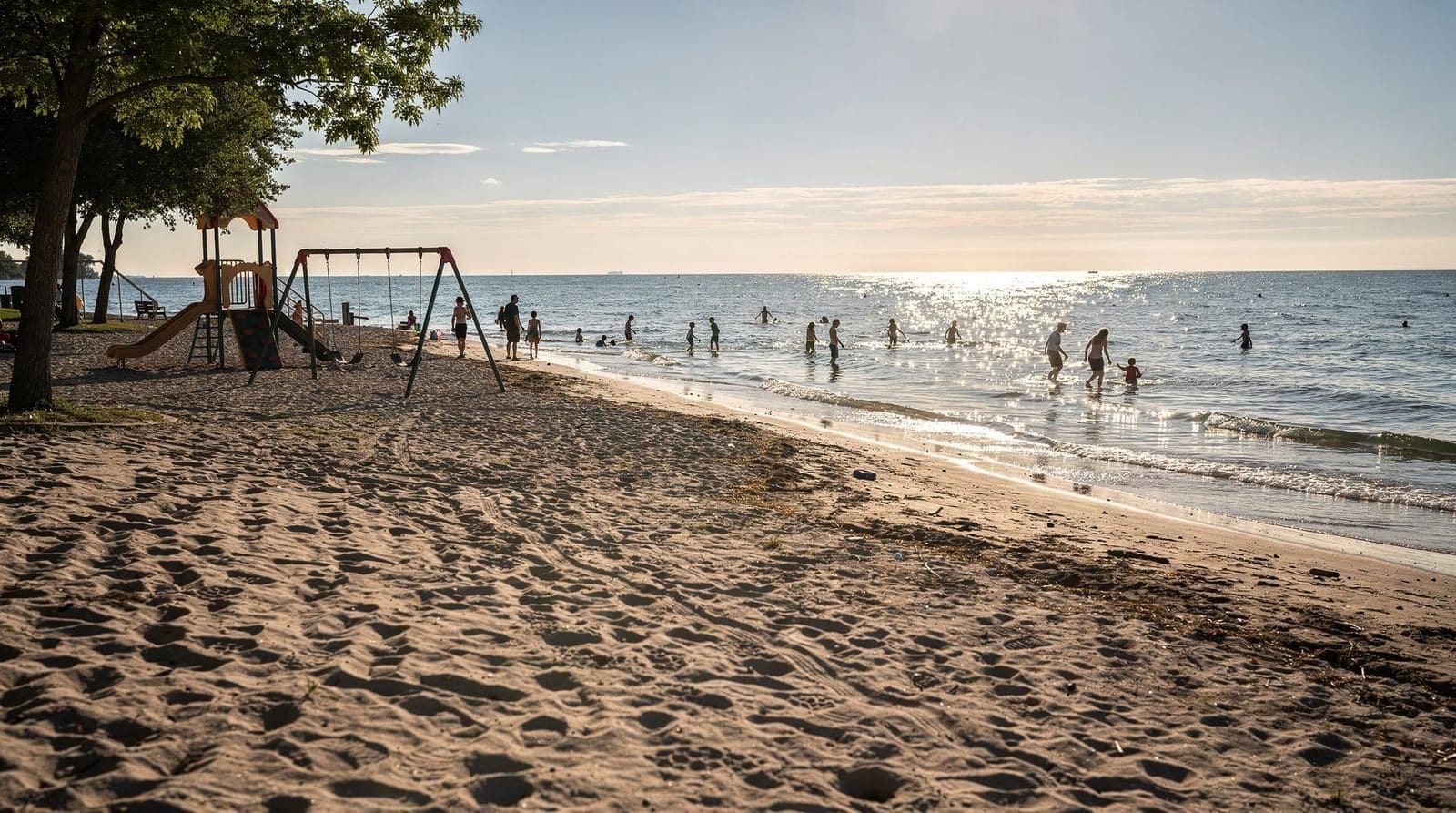
Centre Island is the default choice and the busiest. It’s home to Centreville Amusement Park (a low-key, kid-scaled amusement park with a carousel, a small Ferris wheel, and a petting farm — no giant coasters, which is the point), the widest sand beaches, and the most food and rental concessions. First-time visitors and families should start here.
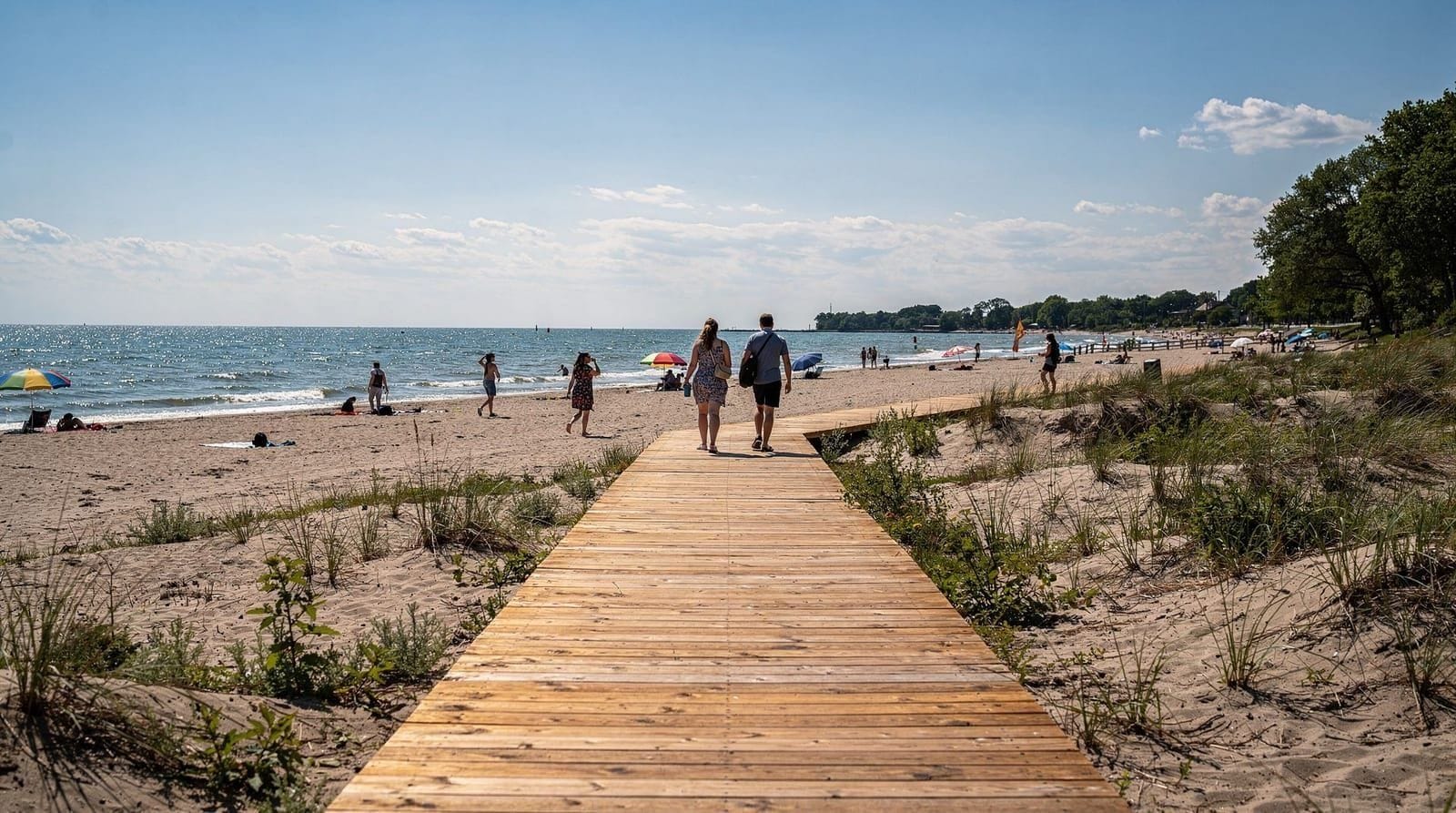
Ward’s Island is the residential, low-key option — narrow paths between cottages, a community garden, and a quieter beach. It’s the best choice if you want a walk rather than an amusement-park afternoon, and it connects to Centre Island by a walkable boardwalk if you want to see both.
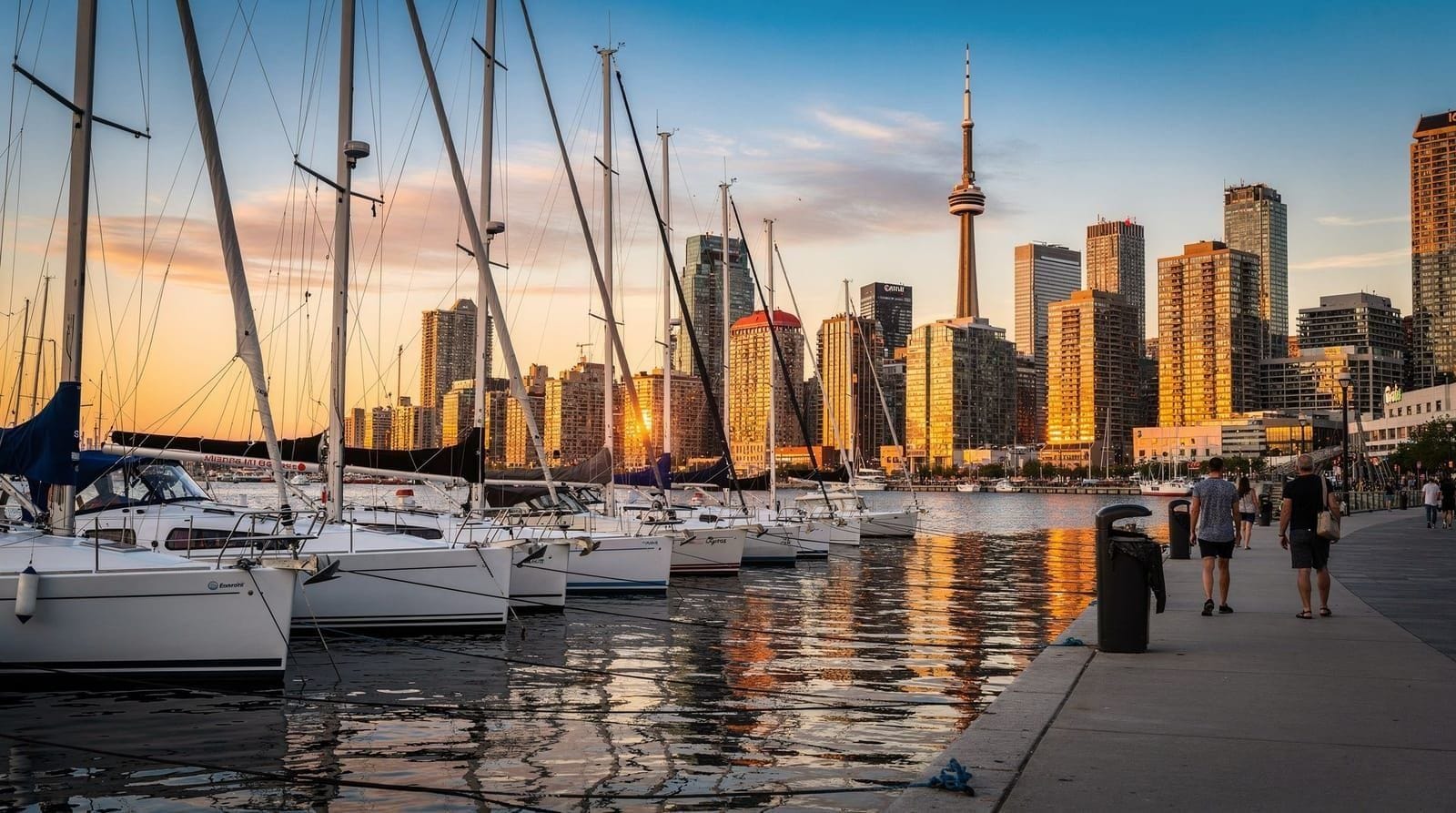
Hanlan’s Point has the most open lake views and the least foot traffic of the three main docks. Its beach includes Toronto’s officially designated clothing-optional section, and the point has long been one of the city’s most LGBTQ+-frequented beaches. It also has the clearest unobstructed sightline back to the downtown skyline — the photo everyone’s after.
All three docks connect via a shared network of paths and a small bridge system, so you can walk or bike between them in under an hour if you want to cover more than one. If a self-guided walk isn’t your style, our downtown Toronto walking guide covers how to fold a Harbourfront-and-islands morning into a broader downtown route.
Hanlan’s Point has its own layered history beyond the beach. It sits near the site of Toronto’s first airport, which opened in the 1930s as a predecessor to today’s Billy Bishop Airport on the western tip of the islands — a working airfield that’s separate from the beach and park areas most island-day visitors actually walk to, though the planes taking off and landing are visible from parts of the shoreline.
Decades earlier, Hanlan’s Point was also home to a wooden baseball stadium where a young Babe Ruth, then playing for a minor-league Providence team on a road trip through Toronto, hit his first professional home run in 1914, reportedly landing the ball in the lake. The stadium is long gone, but the point’s baseball history is a small, frequently overlooked footnote to a place now best known for its clothing-optional beach and skyline views.
Getting on the water instead of just looking at it
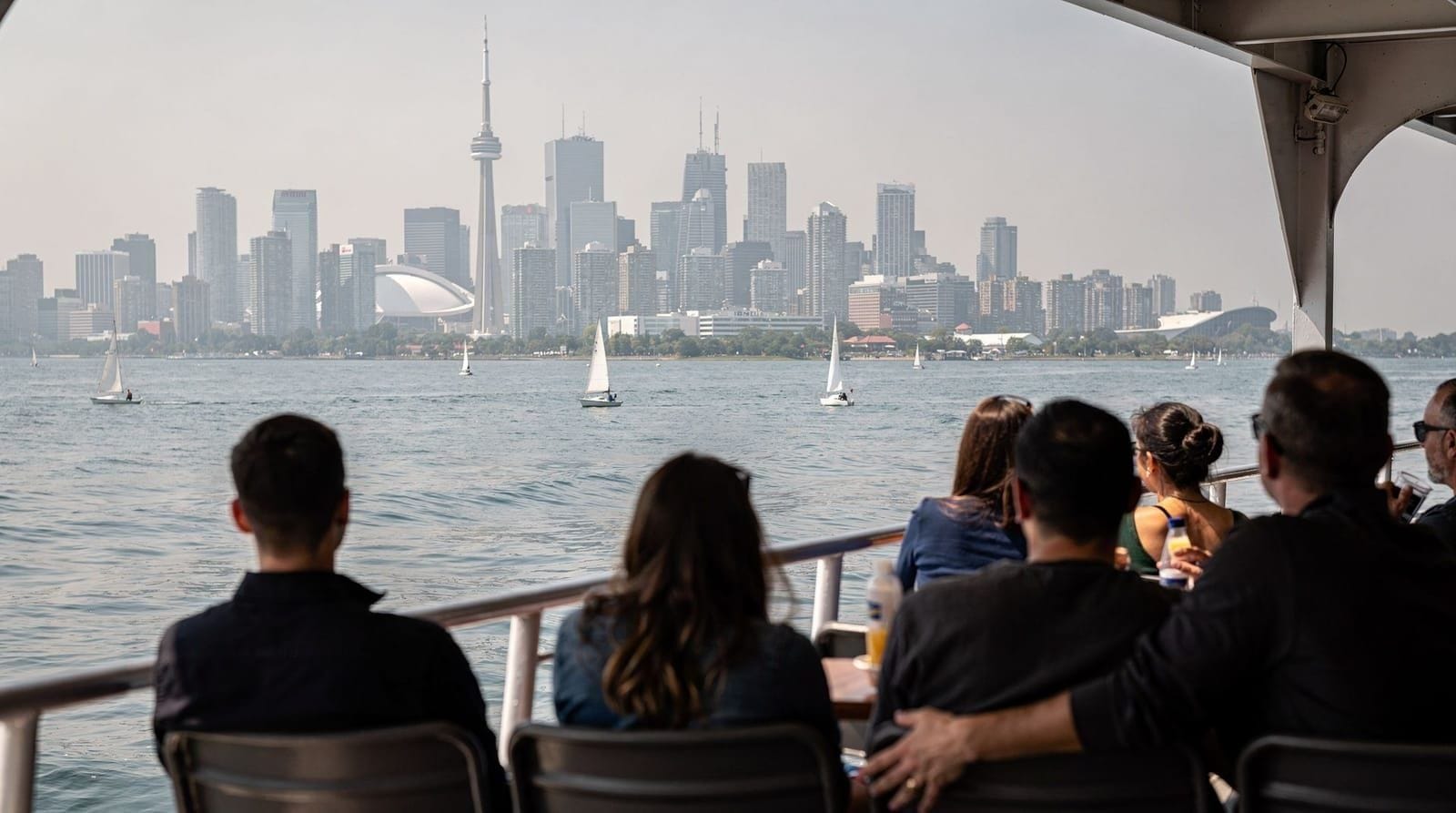
The skyline view from a beach is good; the skyline view from the water is better, and it’s the one thing you can’t replicate from any island dock. The Toronto Islands Voyageur canoe tour puts a small group in a large, stable traditional canoe and paddles through the islands’ inner lagoons — calm, sheltered water that’s forgiving even for people who’ve never canoed before, with a guide steering and narrating. It’s a different pace than the ferry-and-beach routine and worth building into a half-day if you want more than a walk on the sand.
Beaches, and what to know before you go
Toronto’s Blue Flag-certified beaches (an international standard for water quality and safety) include several island beaches, and city water-quality testing posts daily results at each beach during summer — worth a glance if you’re planning to swim rather than just sunbathe, since heavy rain can temporarily trigger advisories. Bring your own umbrella or shade; the islands have limited natural tree cover directly on the sand, and rental options are inconsistent between docks.
Food on the islands is mostly concession-stand level — burgers, fries, ice cream — priced a bit above downtown for the convenience of being on an island. Packing a picnic is common practice among locals and meaningfully cheaper; there are picnic tables and grassy areas throughout, especially around Centre Island.
Ferries: tickets, timing, and crowds
Ferries depart from the Jack Layton Ferry Terminal at the foot of Bay Street, a short walk from Union Station. Round-trip tickets run roughly $10 CAD ($7 USD) for adults, less for children and seniors, and can be bought at the terminal or in advance online during peak summer weekends when lines form early — our Toronto tourist traps guide covers a few honest notes on where the ferry queue is worth the wait and where it isn’t.
On the hottest summer Saturdays, expect a wait of 30-60 minutes for the ferry itself — arriving before 11am or after 4pm avoids the worst of it. Service runs less frequently and to fewer docks outside the summer season (roughly May through September), so check current schedules if you’re visiting in shoulder season.
When to go
Peak season is July and August, when the water is warmest and Centreville is in full swing — also when crowds and ferry lines are at their worst. Late May, June, and September offer a genuinely better trade-off: fewer people, still-pleasant weather, and shorter ferry waits, though the water will be cooler for swimming. Winter visits are possible (a limited ferry schedule continues year-round) and offer a completely different, near-empty experience of the skyline view, but Centreville and most concessions close for the season.
Getting there and around
The ferry terminal sits at the foot of Bay Street, a 10-minute walk from Union Station or a short ride on the 509 or 510 streetcar to Queens Quay — see our TTC transit guide for how the streetcar and PRESTO fare system work. Once on the islands, walking and biking are the only options — no cars, and no ride-share pickup is possible. Bike rentals are available near Centre Island’s main dock for around $10 CAD ($7 USD) per hour if you didn’t bring your own and want to cover more ground than walking allows.
Pairing the islands with the rest of your trip
The islands sit directly across the harbour from Harbourfront, making it easy to combine a morning at the islands with an afternoon along the waterfront promenade — our Harbourfront Toronto guide covers that stretch in detail, including where the ferry terminal fits into a longer waterfront walk. Families building a beach-focused day should also check our guide to the best beaches for families in Toronto, which compares the islands against The Beaches neighborhood on the east side of the city — a genuinely different vibe with its own boardwalk and none of the ferry logistics.
If you’re mapping out a full day trip rather than a half-day add-on, our Toronto Islands day trip guide breaks down a complete itinerary with timing for ferries, Centreville, and lunch. And if the skyline photo is your main goal, note that Hanlan’s Point delivers a cleaner shot than the more crowded Centre Island dock area. Families in general should also see our Toronto with kids guide for how the islands fit into a broader family itinerary.
The fight to save Ward’s Island
The cottages on Ward’s Island didn’t start out as permanent housing — most were built as inexpensive summer camps in the early 1900s, rented from the city on annual leases to Toronto families looking for a cheap lakeside escape without leaving the city limits. Over the following decades, a growing number of leaseholders began living there year-round, converting seasonal cabins into insulated, full-time homes even though the leases still technically classified the arrangement as recreational rather than residential.
That mismatch became a serious problem starting in the 1950s, when Metropolitan Toronto’s parks authority decided the islands should be converted entirely into public parkland, with residential leases phased out and the remaining cottages demolished. Over the following three decades, the city gradually cleared most of the island homes — entire blocks of cottages on Algonquin Island and Centre Island were torn down through the 1950s, 60s, and into the 1970s, leaving Ward’s Island as the last significant residential pocket standing.
Residents organized to fight the final demolition order, forming a tenants’ association, staging public campaigns, and eventually taking their case to the provincial government rather than the city alone. The fight dragged on for close to two decades before Ontario passed the Toronto Islands Residential Community Stewardship Act in 1993, provincial legislation that permanently protected the remaining Ward’s Island homes from demolition and converted year-to-year leases, subject to cancellation, into long-term security of tenure.
Today, a few hundred households remain under that protection, making Ward’s Island one of the only intact car-free residential communities left in North America — residents get around on foot or by bicycle, receive mail through a small island post office, and send their children to a small island school.
It’s not a recreated historic village; it’s an ordinary, if unusually located, Toronto neighborhood, and part of what makes a walk through Ward’s Island worthwhile is that you’re passing actual front porches and gardens rather than a curated attraction. Longtime residents are generally used to visitors passing through and are typically friendly if approached respectfully, though it’s worth remembering these are private homes, not part of the public park, even though the paths running past them are open to everyone.
Practical notes
- Cost: Ferry tickets are the only mandatory expense; everything else (Centreville rides, bike rentals, food) is optional and separate.
- Weather dependency: This is an outdoor destination almost entirely — a rainy or cold day sharply reduces what there is to do, so check the forecast before committing a full afternoon.
- Accessibility: Paved paths connect the main dock areas and are stroller- and wheelchair-friendly; some of the narrower Ward’s Island footpaths are less consistent.
- Bathrooms: Public washrooms are available near each ferry dock and at Centreville.
The islands are one of the few places in Toronto where the honest advice is simply: go on a clear day, bring a picnic, and don’t over-plan it.
Packing for a day on the islands
Because so much of the islands experience is outdoors and weather-dependent, packing right matters more here than at most Toronto stops. Bring sunscreen and a hat regardless of forecast, since shade is limited on the beaches themselves; a light layer for the return ferry, since the breeze off the lake picks up noticeably in the evening even on warm days; and cash alongside cards, since a few of the smaller concession stands and bike rental counters are slower to process card payments during peak summer crowds. A dry bag or waterproof pouch is worth it if you’re doing the canoe tour or bringing a phone near the beach, and comfortable walking shoes matter more than sandals if you’re planning to cover more than one dock on foot.
Which dock fits your trip
| Dock | Best for | Crowd level | Standout feature |
|---|---|---|---|
| Centre Island | First-timers, families | Busiest | Centreville Amusement Park, widest beaches |
| Ward’s Island | A quiet walk, seeing real island life | Quietest | Residential cottages, community garden |
| Hanlan’s Point | Skyline photos, LGBTQ+-frequented beach | Low | Clothing-optional section, cleanest downtown sightline |
If you’re only picking one and want a balance of activity and calm, Centre Island connects on foot to Ward’s Island via the boardwalk, so a loop covering both in half a day is entirely realistic without needing to pick just one.
Toronto harbour and islands guided cruiseFrequently asked questions about the Toronto Islands
Which Toronto Island ferry dock should I choose?
Centre Island is best for first-timers and families — it’s closest to Centreville Amusement Park and the widest beaches. Ward’s Island is quieter and more residential, good for a relaxed walk, while Hanlan’s Point has the clothing-optional beach and the best unobstructed skyline views, and tends to be the least crowded of the three.
Are the Toronto Islands worth visiting?
Yes, especially on a clear summer day — it’s the only place to see the Toronto skyline from the water without booking a boat cruise, and the beaches are genuinely good by Great Lakes standards. It’s a lower priority in cool or overcast weather since most of the appeal is outdoors.
Do people live on the Toronto Islands?
Yes, a small residential community of a few hundred people lives on Ward’s Island year-round in a car-free neighborhood of cottages — one of the last of its kind in North America, and it survived a decades-long fight against city demolition plans that ran from the 1950s into the early 1990s.
How long should I spend on the Toronto Islands?
Half a day covers a relaxed loop — ferry over, walk or bike between docks, beach time, ferry back. A full day makes sense in summer if you’re combining the beach with Centreville Amusement Park or a picnic, and canoe-tour visitors should add roughly two hours for the paddle itself.
Can you bring bikes on the Toronto Island ferry?
Yes, bikes are allowed on the ferries (sometimes with a small surcharge on the busiest summer days) and are the easiest way to cover the islands’ 800 acres, which stretch nearly 5 kilometers end to end.
Is Hanlan’s Point Beach really clothing-optional?
Yes, the northern section of Hanlan’s Point has been an officially recognized clothing-optional beach since 1999, and it’s also historically one of Toronto’s most LGBTQ+-frequented beaches. The southern section and other island beaches operate as standard beaches, so it’s easy to choose the version you’re more comfortable with.
Can I visit more than one dock in a single trip?
Yes — Centre Island and Ward’s Island connect by a walkable boardwalk, so covering both in half a day is realistic on foot. Reaching Hanlan’s Point from the other two takes longer on foot; renting a bike is the more practical way to cover all three docks in one visit.
Is it worth taking the ferry to the islands on a cool or cloudy day?
It’s a lower priority then, since the beaches and Centreville are the main summer draws, but the skyline view from the water and a quiet walk on Ward’s Island still hold up reasonably well even in cooler weather, just without the swimming.
Top experiences
Bookable activities with verified prices and instant confirmation on GetYourGuide.