Blue Mountain skiing guide
Is Blue Mountain worth skiing if you've skied bigger mountains before?
It depends on expectations — Blue Mountain's vertical drop and terrain are modest compared to the Rockies or the Alps, but it's the most complete ski resort within a two-hour drive of Toronto, with a genuine village base area, night skiing, and reliable snowmaking. For a weekend trip without a long flight, it's a legitimate option; for skiers chasing big-mountain terrain specifically, it will feel limited.
The closest real ski resort to Toronto, with real limitations
Blue Mountain is the ski resort most Toronto-area skiers default to for a weekend or day trip, and understanding why requires being honest about both its strengths and its limits. It’s roughly two hours from the city, close enough for a genuine day trip, with a fully built-out village base area, reliable snowmaking that compensates for Southern Ontario’s less consistent natural snowfall, and night skiing that extends a day’s skiable hours well past sunset.
What it isn’t is a big-mountain destination — the vertical drop is modest, and skiers used to the Rockies, the Alps, or even the Laurentians near Montreal will find the terrain limited in scale. Judged on its own terms, as the practical, close-to-home option it actually is, Blue Mountain does what it’s supposed to do well.
| Distance | ~150 km / ~2 hours from Toronto |
| Lift ticket | Around CAD $80-130/day, higher on weekends/holidays |
| Terrain | Mostly beginner/intermediate, some black diamond |
| Extras | Night skiing, on-site rental, village base area |
| Season | Early December–late March, conditions permitting |
If you’d rather not drive yourself, especially with unpredictable winter conditions on Highway 26, the Blue Mountain RV-motorhome tour from Toronto handles the transport for a group.
What the terrain actually offers
Blue Mountain’s slopes lean toward beginner and intermediate terrain, with a good spread of green and blue runs and a smaller but real selection of black diamond options for more advanced skiers. It’s not a mountain that will challenge an experienced skier for a full multi-day trip, but it’s genuinely well-suited to learning, to family groups with mixed skill levels, and to a single strong day of varied but not extreme skiing.
The resort’s snowmaking capacity matters more here than at many larger mountains, since Southern Ontario’s natural snowfall is less reliable than the Rockies or even Quebec’s Laurentians — Blue Mountain compensates with extensive man-made snow coverage that generally keeps the season consistent regardless of a given week’s weather.
Lift ticket pricing
Full-day lift tickets typically run somewhere in the 80 to 130 CAD range, with the exact price depending heavily on the day of the week, how far ahead you book, and where in the season you’re visiting — weekday tickets and advance online purchases sit toward the lower end, while peak weekend and holiday-period tickets, particularly over the Christmas and New Year stretch or during a busy February weekend, land toward the top. Multi-day passes and season passes bring the effective per-day cost down meaningfully for anyone planning more than a single visit across a winter, and buying online in advance rather than at the ticket window is worth doing both for the modest discount and to avoid a line on a busy morning.
Night skiing
A portion of Blue Mountain’s terrain stays lit and open into the evening, and this is one of the resort’s genuinely useful differentiators for a Toronto-based day trip — leaving the city in the morning, skiing through the afternoon, and continuing into a night session extends the value of a single day’s lift ticket considerably rather than ending the day at sunset the way most smaller hills do. Night skiing also tends to draw a different, generally thinner crowd than the daytime rush, giving it a quieter, more relaxed atmosphere on the slopes even during a busy weekend.
Rental equipment and lessons
Blue Mountain runs an on-site rental shop covering skis, snowboards, boots, and helmets, a reasonable option for occasional skiers or visitors without the space or inclination to bring their own gear on a day trip. Lesson programs cover everything from first-timers to more advanced technique clinics, and the resort’s beginner-friendly terrain layout makes it a genuinely sensible place to actually learn rather than get overwhelmed on a first visit. Frequent skiers who already own equipment will generally find ownership more cost-effective than repeated rentals across multiple trips in a season, but for a single trip or an occasional visitor, renting on-site removes the hassle of transporting gear.
The village base area
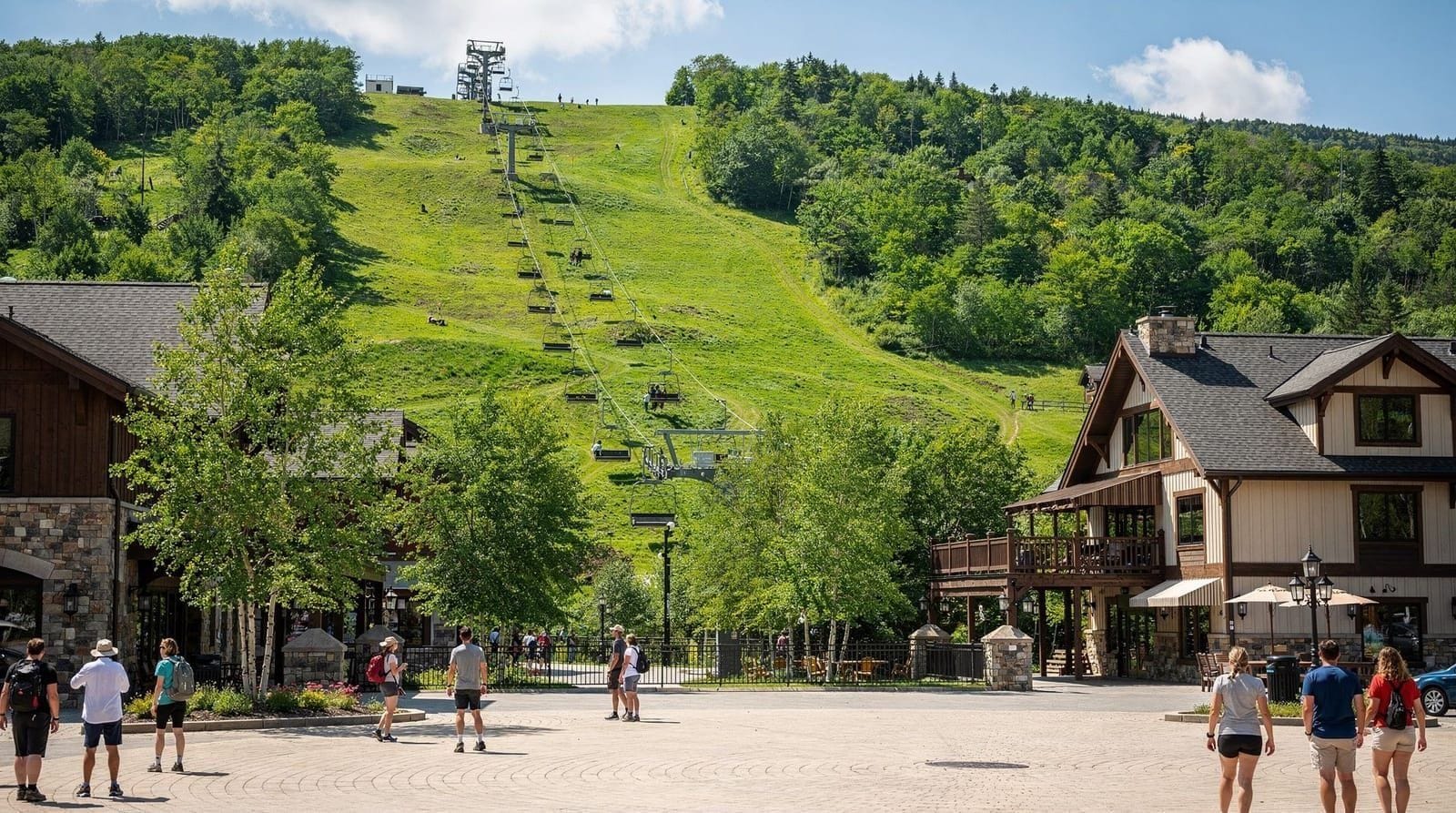
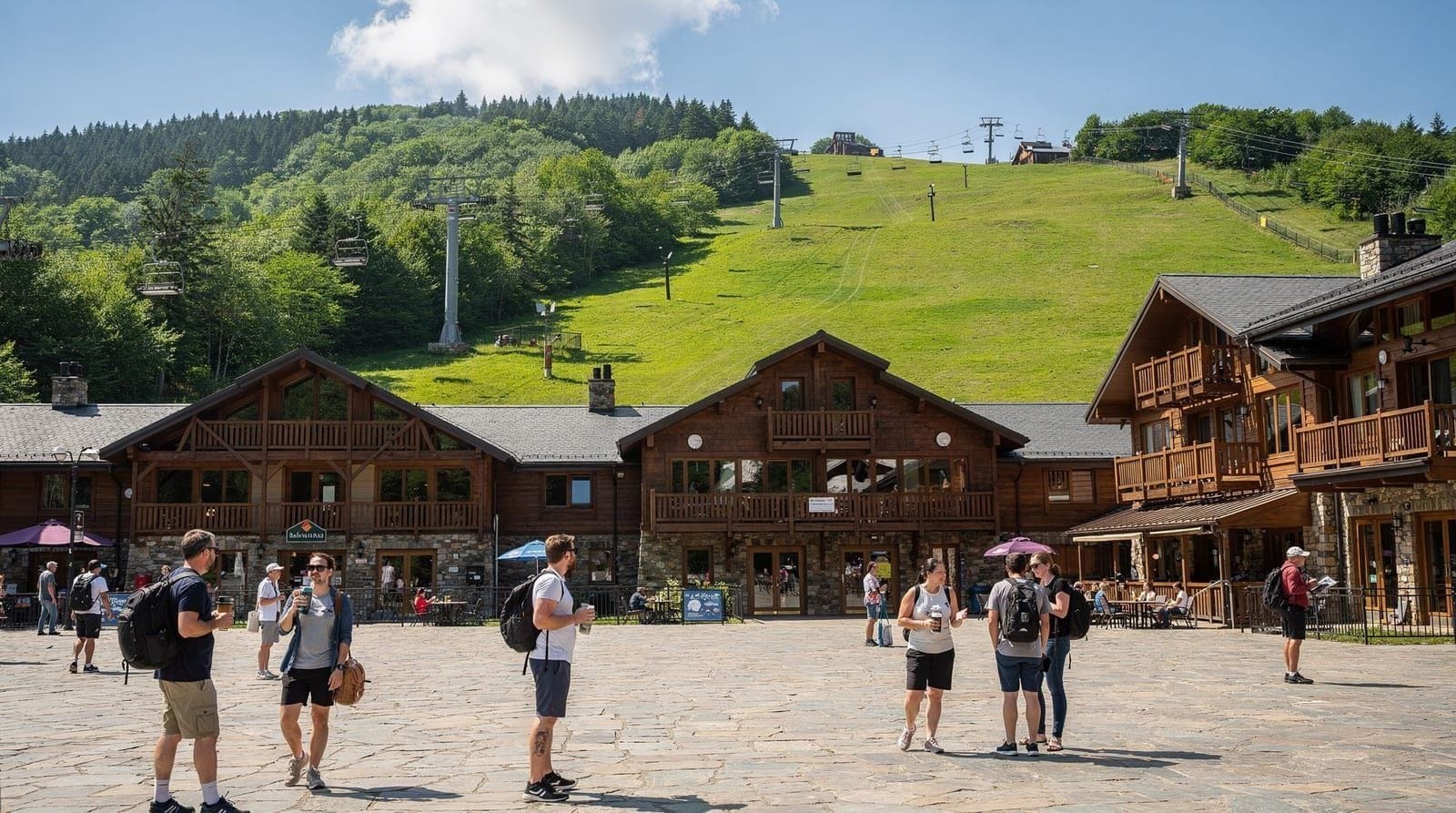
Unlike a bare parking-lot-and-lift setup, Blue Mountain has built out a genuine pedestrian village at its base, with restaurants, shops, and accommodation options clustered together in a way that supports a full weekend trip rather than just a single day of skiing. This matters for anyone considering an overnight stay — the village gives a reason to linger after the lifts close rather than driving straight back to Toronto, and it’s part of what distinguishes Blue Mountain from smaller regional hills that offer skiing but little else.
Getting there from Toronto
The drive from Toronto to Blue Mountain covers roughly 150 kilometres and typically takes about two hours, similar in distance to a Muskoka day trip but oriented northwest toward Collingwood rather than north. Winter driving conditions can add time to this estimate on a snowy day, and leaving with a buffer rather than cutting timing close to the lifts opening is a reasonable precaution given how weather-dependent the route can be. For a full breakdown of the drive, timing, and whether a day trip or overnight stay makes more sense for a given visit, see the Blue Mountain day trip from Toronto guide.
Is a day trip enough, or should you stay overnight?
A single day trip works fine for a straightforward ski day — arrive by mid-morning, ski through the afternoon and into a night session if desired, then drive back. An overnight stay in the village makes more sense for a group wanting a fuller weekend, access to the village’s restaurants and nightlife without a late drive home, or simply more skiing time across two days without the round-trip drive eating into a single day’s hours. Given the roughly two-hour drive each way, a day trip does lose a meaningful chunk of the day to travel that an overnight stay avoids.
How it compares to other regional day trips
Blue Mountain fills a specific niche in the region’s day-trip lineup — it’s the only one of Toronto’s classic day-trip destinations genuinely built around a winter activity, in contrast to Niagara, Muskoka, and Algonquin, all of which lean toward summer and fall. During the ski season itself, it’s arguably the strongest regional day trip option precisely because most competing destinations are either closed or operating at reduced capacity through the same winter months, as covered in the Toronto in winter guide.
Booking lift tickets and lessons together
Booking lift tickets and lesson packages together in advance, rather than separately, often works out more cost-effective for first-time skiers, and it guarantees an instructor slot on busy weekends when walk-up lesson availability can be limited. Families planning a first ski trip together are generally better served booking well ahead of a peak weekend or holiday date specifically, since both lesson availability and rental equipment sizes for children can run short during the busiest stretches of the season.
Beyond skiing: summer and shoulder-season Blue Mountain
Outside ski season, Blue Mountain shifts to a different lineup of activities — hiking, the Scenic Caves suspension bridge, and a mountain coaster among them — covered in the things to do in Blue Mountain guide, and the broader village and surrounding Collingwood area remain worth visiting even without snow on the ground.
How Blue Mountain compares to other Ontario ski hills
Blue Mountain isn’t the only ski option within reach of Toronto, though it’s generally the most complete. Horseshoe Valley and Mount St. Louis Moonstone, both closer to Toronto than Blue Mountain at roughly 90 minutes to two hours depending on the specific route, offer smaller-scale but still legitimate skiing, generally at a lower price point and with shorter lift lines given their smaller overall visitor draw. What they lack, compared to Blue Mountain, is the built-out village base area and the broader roster of non-skiing activities, which makes Blue Mountain the stronger pick for a full weekend trip and the smaller hills a reasonable option for a quicker, more budget-focused single day of skiing.
What to pack for a Blue Mountain day
Beyond the standard ski or snowboard equipment (or rental gear picked up on-site), proper layering matters more here than the cold-weather clothing needed for a purely sightseeing-focused winter day, given the sustained exposure and physical activity involved. A moisture-wicking base layer, an insulating mid-layer, and a waterproof, windproof outer shell handle the temperature swings between chairlift waits and active runs better than a single heavy coat.
Goggles rather than sunglasses are worth bringing specifically for the lift rides and any wind exposure on the upper terrain, and hand and toe warmers are a low-cost addition worth packing for anyone skiing through a full day, particularly during night skiing sessions when temperatures drop further after sunset.
Weather variability across a season
Ontario’s ski season weather varies more than a big mountain’s does, given the region’s dependence on a mix of natural snowfall and snowmaking rather than consistent deep natural snowpack. A warm mid-winter thaw can temporarily soften conditions before a cold snap restores them, and checking current conditions the morning of a planned trip — rather than assuming a fixed “great skiing” window based on the calendar month alone — is worth doing given how much day-to-day variability the resort’s snow report can show across a single season.
Apres-ski and evening options
Blue Mountain’s village base area supports a genuine apres-ski scene, with restaurants and bars clustered around the pedestrian village offering a place to warm up and eat after a day on the slopes without needing to drive anywhere. This is one of the clearer advantages Blue Mountain holds over the smaller regional hills, which generally lack a comparable built-out base area, making an overnight stay at Blue Mountain feel more like a resort weekend than simply a ski day with a hotel attached.
Terrain parks and snowboarding
Blue Mountain maintains dedicated terrain parks with a range of features suited to different skill levels, from smaller beginner-friendly boxes and rails to more advanced jump lines, making it a reasonable destination for snowboarders specifically rather than only alpine skiers. The resort’s generally beginner-and-intermediate-leaning terrain overall extends to its terrain park offerings too — strong, experienced park riders looking for large-scale features will find more limited options than at a dedicated big-mountain terrain park, but the variety on offer covers casual and intermediate riders well.
Blue Mountain vs. the smaller Ontario hills
| Blue Mountain | Horseshoe Valley / Mt. St. Louis Moonstone | |
|---|---|---|
| Distance from Toronto | ~2 hours | ~90 min–2 hours |
| Village base area | Yes, full pedestrian village | Limited |
| Price | Higher | Generally lower |
| Best for | A full weekend trip | A quicker, budget-focused day |
Frequently asked questions about skiing at Blue Mountain
Is Blue Mountain too crowded on weekends to be worth it?
Weekends, particularly during the December-January holiday stretch and February, do see meaningfully larger crowds and lift lines than weekdays. Skiing on a weekday, or leaning on the night skiing session even on a weekend, are both reasonable ways to reduce the crowding without avoiding the resort entirely.
How does Blue Mountain’s snow quality compare to natural-snow resorts?
Blue Mountain relies heavily on snowmaking to maintain consistent coverage, given Southern Ontario’s less reliable natural snowfall compared to the Rockies or Quebec’s Laurentians. The snowmaking generally keeps conditions skiable and consistent, though it doesn’t replicate the deep natural powder days a bigger, more northern mountain can occasionally deliver.
Is it worth bringing kids to Blue Mountain for their first ski trip?
Yes — the resort’s beginner-friendly terrain layout, dedicated learning areas, and lesson programs make it a sensible choice for a first ski experience, and the village base area gives families a place to warm up and take breaks between runs.
Can I combine a Blue Mountain ski day with other activities in the area?
The village itself has enough restaurants and shops to fill an evening after skiing, and nearby Collingwood offers additional dining and shopping options a short drive away. Combining skiing with significant additional sightseeing in the same day is difficult given how much of the day the lifts themselves occupy.
How far in advance should I buy lift tickets?
Buying online at least a few days ahead, and ideally a week or more for a peak weekend or holiday date, typically secures a lower price than buying at the ticket window and avoids the risk of a sold-out day during the busiest stretches of the season.