Blue Mountain day trip from Toronto
Blue Mountain RV-Motorhome Tour from Toronto
Can you visit Blue Mountain as a day trip from Toronto?
Yes — Blue Mountain Village is about 2 hours from Toronto by car via Highway 400 and Highway 26. It works well as a day trip for skiing in winter or hiking, biking, and the Scandinave Spa in summer, though the resort's full range of activities is easier to enjoy over a longer stay.
A ski resort that works just as well in summer
Blue Mountain is Ontario’s largest ski resort, and for a lot of Toronto skiers and snowboarders, it’s the default winter day trip — close enough to reach and return in a single day, with genuine (if modest by Rocky Mountain standards) vertical drop and a well-developed base village. What surprises a lot of first-time visitors is how well the resort works outside ski season too: mountain biking trails, an open-air gondola ride, a mountain coaster, and the Scandinave Spa’s Nordic-style outdoor baths keep Blue Mountain Village busy from spring through fall, with a genuinely different but equally legitimate day-trip case in summer.
The resort sits on the Niagara Escarpment near Collingwood, on the shore of Georgian Bay, about 165 km and 2 hours from Toronto. That distance puts it in the same general range as Muskoka, and like Muskoka, this is a car-dependent trip with no meaningful public transit connecting Toronto to the resort.
| Distance | ~165 km / 2 hours via Highway 400 and 26 |
| Winter budget | Around CAD $130-190/person (lift ticket + rental) |
| Summer budget | Around CAD $50-90/person (gondola + coaster) |
| Best for | Winter skiing, summer gondola/coaster/hiking |
| Getting there | Car required — no reliable public transit |
Winter vs. summer: what you get for the drive
| Winter | Summer | |
|---|---|---|
| Main draw | Skiing/snowboarding, 40+ runs | Gondola, mountain coaster, biking, hiking |
| Typical cost | CAD $130-190/person | CAD $50-90/person |
| Busiest | Weekends, holiday periods | June-September |
| Add-on | Blue Mountain skiing guide | Scandinave Spa, Wasaga Beach |
Getting there
By car, the drive runs via Highway 400 north to Highway 26 west, typically taking about 2 hours in normal traffic. Winter Saturday mornings during peak ski season see the heaviest congestion, as the corridor fills with day-trippers and weekend cottage traffic heading the same direction; an early departure (before 8 a.m.) avoids much of it.
There’s no direct train or reliable bus route from Toronto to Blue Mountain. If you’d rather not drive, a guided option like the Blue Mountain RV-motorhome tour from Toronto handles the transport, a practical choice particularly in winter when driving conditions on Highway 26 can turn unpredictable with lake-effect snow off Georgian Bay.
Winter: skiing, snowboarding, and the Village at its busiest
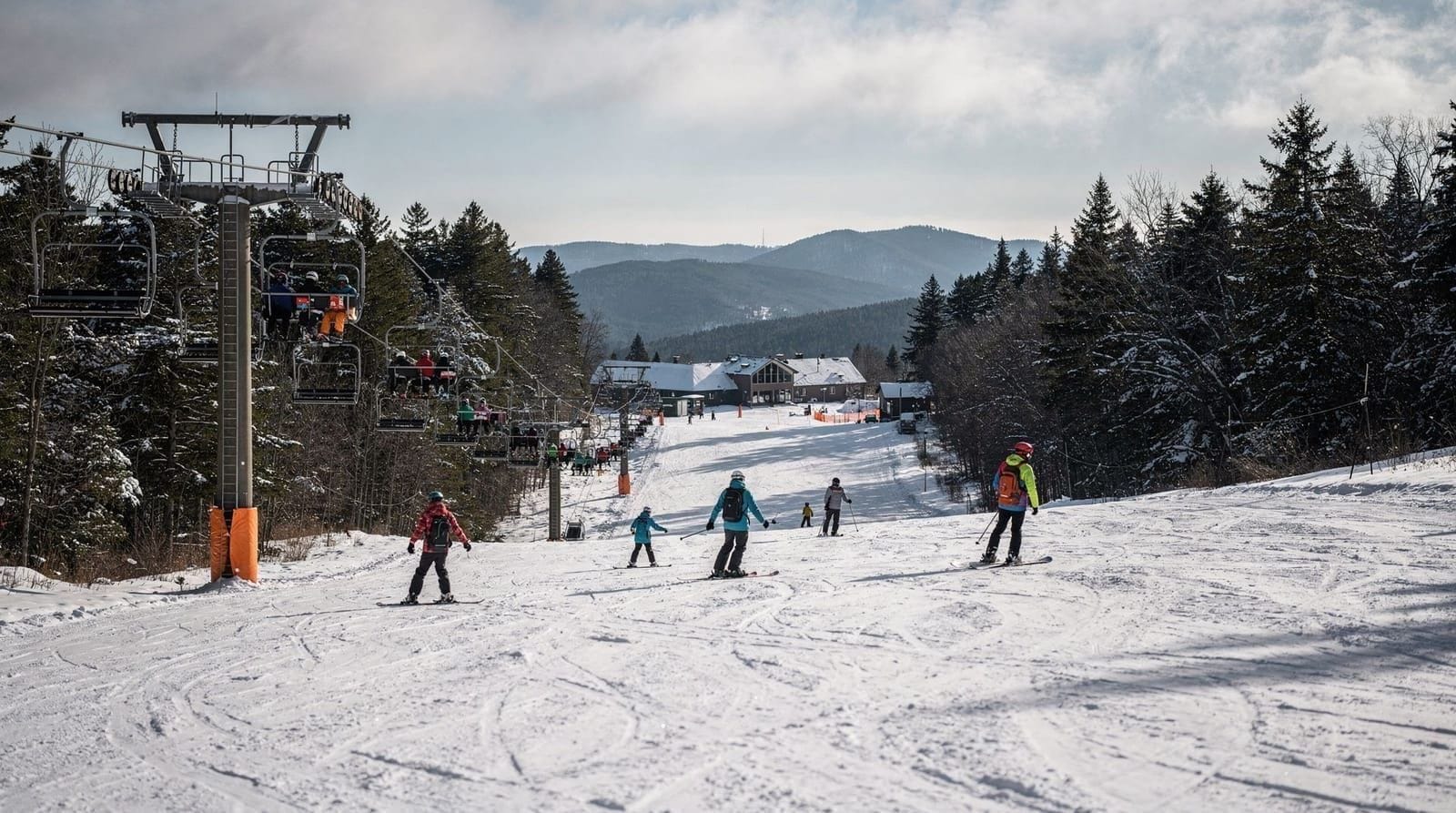
Blue Mountain’s ski season typically runs from early December through late March, conditions permitting, with 40-plus runs spread across the resort’s roughly 220-metre vertical drop — modest compared to western Canadian resorts but a genuine, well-groomed day of skiing within a two-hour drive of a major city, which is a rare combination in Ontario. A single-day lift ticket generally runs 90 to 130 CAD depending on the day and how far ahead you book, with equipment rental adding another 40 to 60 CAD if needed.
For a day trip, arrive as early as the lifts allow — first tracks matter more here than at larger resorts, since a two-hour drive already eats into your skiing time and the runs get tracked out faster on a modest-sized mountain. Blue Mountain Village at the base is a genuinely lively pedestrian plaza with restaurants, bars, and shops, worth a wander even if you’re not staying overnight, and a reasonable spot to warm up with a hot chocolate or lunch between runs.
Summer: hiking, biking, the gondola, and the mountain coaster
Blue Mountain’s summer operation has grown substantially in recent years and now rivals the winter season for activity variety. The Open Air Gondola carries visitors to the top of the escarpment for panoramic views over Georgian Bay, a straightforward, low-effort way to get the mountain’s best vista without hiking. The Ridge Runner Mountain Coaster, a gravity-powered sled track winding down the hillside, is a genuine crowd-pleaser for families and one of the more distinctive summer attractions in the region. Mountain biking trails, ranging from beginner-friendly to genuinely technical, cater to a serious regional biking community, with bike and gear rental available at the base if you’re not bringing your own.
Hiking is also an option, both on marked resort trails and on the broader Bruce Trail, which runs along the Niagara Escarpment and passes near Blue Mountain — a good add-on for visitors who’d rather walk than ride the gondola or bike the trails.
Scandinave Spa: worth planning your whole day around
The Scandinave Spa, a short drive from the main Village, offers a Nordic-style hydrotherapy circuit of hot baths, cold plunges, saunas, and relaxation areas set in a forested outdoor setting along the escarpment. It’s a genuinely different pace of activity from the rest of Blue Mountain’s offerings and, unlike the ski hill or mountain coaster, works best as the sole focus of your day rather than one stop among several — most visitors budget a half-day minimum for the full circuit experience, and the spa itself recommends arriving with no fixed departure time in mind. Advance booking is required, and it operates year-round, including winter, when the contrast between hot pools and cold outdoor air is part of the appeal.
How Blue Mountain compares to driving further for skiing
Ontario skiers occasionally debate whether it’s worth driving past Blue Mountain to Quebec’s Laurentians or further afield for a bigger mountain experience, and the honest answer depends entirely on what you’re optimizing for. Blue Mountain’s modest vertical drop means it doesn’t compare to genuine mountain-range skiing in terms of run length or terrain variety, but its two-hour proximity to Toronto is unmatched by any larger alternative, most of which require a multi-hour drive or a flight. For a single day trip specifically, Blue Mountain remains the only genuinely practical option close to the city; longer resort destinations belong to a different kind of trip entirely, one built around a multi-day stay rather than a same-day return.
The Georgian Bay connection
Blue Mountain’s setting on Georgian Bay, part of Lake Huron, adds a dimension beyond the ski hill and Village itself that summer visitors in particular sometimes overlook. Wasaga Beach, roughly a 20-minute drive from the Village, holds the title of the world’s longest freshwater beach and is a worthwhile add-on for a summer day trip if the itinerary has room, offering a genuinely different beach experience than anything closer to Toronto on Lake Ontario. The bay’s clear, cold water and sandy shoreline give this stretch of Georgian Bay a reputation distinct from the rest of cottage-country Ontario, closer in feel to a maritime coastline than a typical inland lake.
What a realistic one-day itinerary looks like
Winter (skiing focus): Depart Toronto by 7:30 or 8 a.m. to be on the lifts by 10 a.m. Ski or ride through midday, break for lunch in the Village, continue in the afternoon, and plan to leave by mid-to-late afternoon to avoid the worst of the return-drive traffic and any early winter darkness on Highway 26.
Summer (activity focus): A comfortable day covers the gondola ride, a session on the mountain coaster, and either a shorter hike or a wander through the Village’s shops and restaurants, without needing an especially early start given the longer daylight hours. This pace leaves the Scandinave Spa as a separate trip focus rather than an add-on — trying to combine a full gondola-coaster-hiking day with the spa’s relaxation-oriented pacing tends to undercut both.
Combining with Collingwood
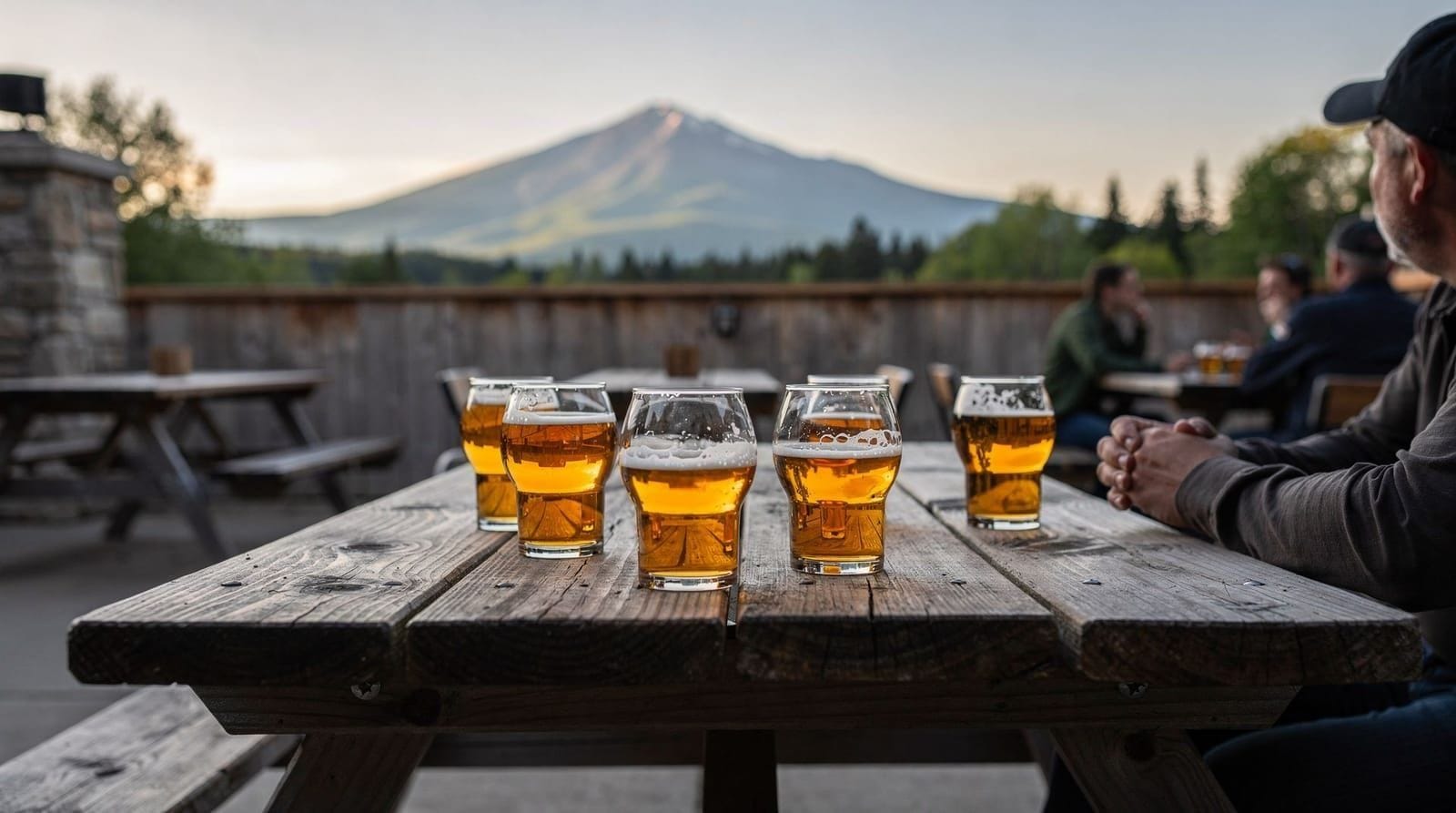
Collingwood, the town adjacent to Blue Mountain, has developed a genuine food and craft beverage scene worth a stop, particularly its growing cluster of craft breweries and cideries — our best breweries in Collingwood guide covers the specific spots worth prioritizing. A short drive or, in some cases, a walkable stretch from the Village connects to downtown Collingwood’s harbourfront and main street shops, a good way to round out a day trip that doesn’t need the ski hill or the full summer activity roster to justify the drive.
Seasonal notes
Ski season (December through March) is Blue Mountain’s peak and priciest period, with the Village and lift lines busiest on weekends and holiday periods. Summer (June through September) has become an increasingly strong second season, with the gondola, coaster, and biking trails drawing a different but comparably sized crowd. Spring and late fall are genuinely the quiet, lower-cost windows — many activities scale back or close between the ski and summer seasons, roughly April into May and again in October into November, so check operating status directly if visiting in a shoulder period.
Budget for a day trip
A winter ski day with a lift ticket and rental runs roughly 130 to 190 CAD per person, plus food. A summer day with the gondola and mountain coaster is considerably cheaper, typically 50 to 90 CAD per person for activity passes, plus a meal in the Village. The Scandinave Spa is a separate line item, generally in the 80 to 100 CAD range for day access to the baths circuit, not including any additional treatments.
How Blue Mountain’s ownership has shaped its recent growth
Blue Mountain Resort’s operations have been part of Alterra Mountain Company’s portfolio in recent years, an ownership structure shared with a number of larger North American ski destinations, and that connection has brought noticeably increased investment into the resort’s infrastructure — lift upgrades, expanded snowmaking capacity, and the growth of the summer activity roster that now includes the mountain coaster and expanded biking trails. For repeat visitors who remember Blue Mountain from a decade or more ago, the scale of recent development, particularly around the Village and summer programming, represents a genuine shift from what was historically a more purely winter-focused, comparatively modest regional ski hill.
Practical notes before you go
Book lift tickets and, if applicable, Scandinave Spa slots in advance — both operate at capacity limits on peak days and same-day availability isn’t guaranteed. Winter driving on Highway 26 can be affected by lake-effect snow squalls off Georgian Bay, so check road conditions before departing and allow extra buffer time. The Village itself is walkable and doesn’t require a car once you’ve parked, but reaching Collingwood or Scandinave Spa involves a short additional drive.
Craft beverages as a shoulder-season draw
Beyond skiing and summer activities, Blue Mountain and neighbouring Collingwood have developed a genuinely strong craft brewery and cidery cluster in recent years, giving the region a reason to draw day-trippers even during the quieter spring and late-fall shoulder seasons when the ski hill and summer attractions are between operating windows.
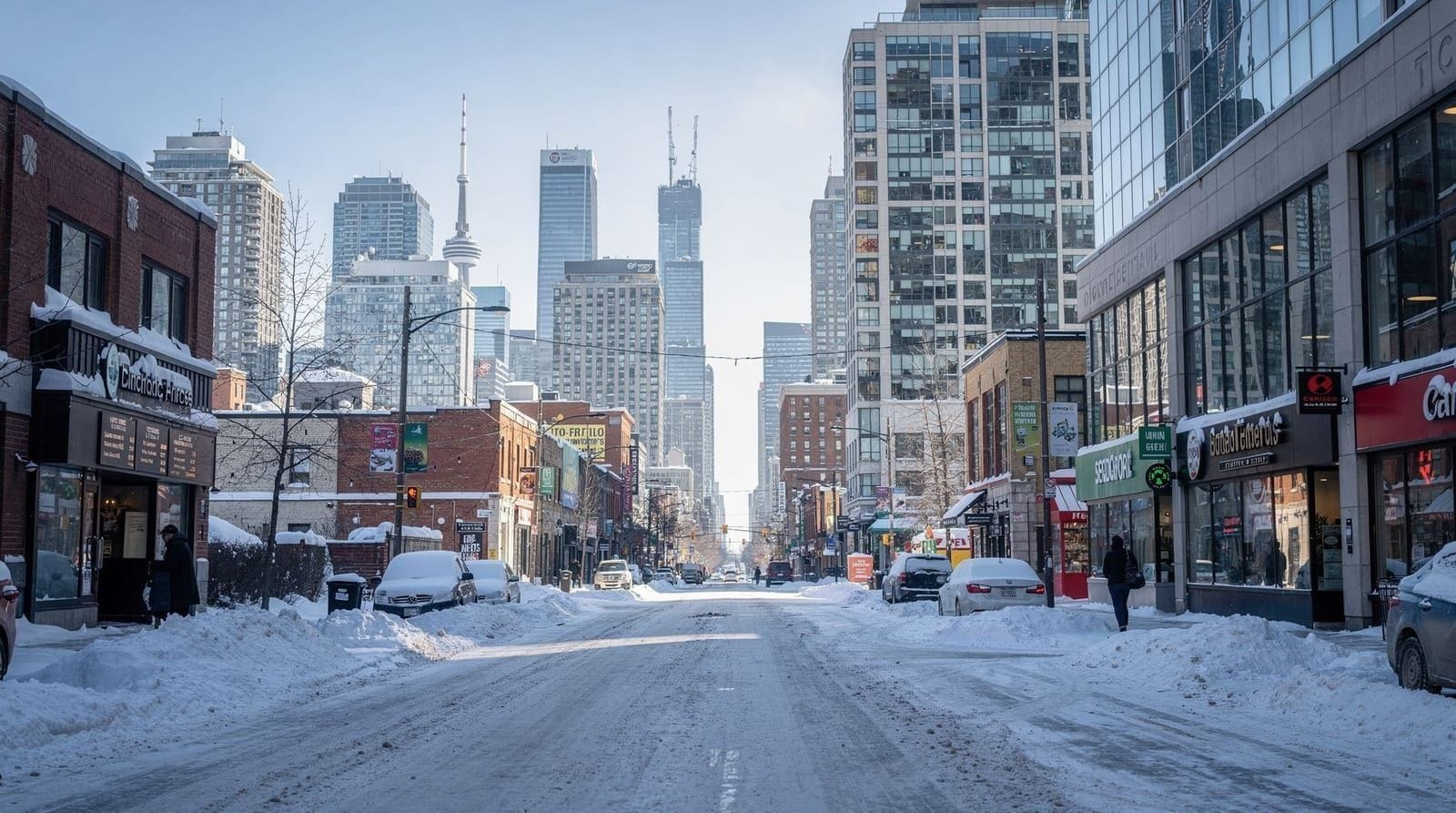
A day built around two or three brewery or cidery stops — our Ontario craft cider guide covers the region’s cidery scene specifically — without needing the mountain itself to be the draw, is a reasonable alternative itinerary worth considering if your visit happens to fall in one of these lower-activity windows. For the rest of what a Toronto winter looks like beyond a single Blue Mountain day, see the Toronto in winter guide.
Frequently asked questions about a Blue Mountain day trip
Is Blue Mountain better as a day trip or an overnight stay?
A day trip works well for a focused activity — a day of skiing, or a summer gondola-and-coaster visit — but the resort’s full range, especially combined with the Scandinave Spa and Collingwood’s food scene, rewards an overnight stay if your schedule allows it.
What should I pack for a winter day trip?
Beyond standard ski gear, pack layers for temperature swings between the Village and the slopes, and bring a change of dry clothes for the drive home if you’re not staying overnight — wet ski gear on a two-hour drive back is a common complaint from day-trippers.
Can I visit the Scandinave Spa without visiting the ski hill or Village activities?
Yes, and many visitors do exactly that, treating the spa as a standalone day trip destination rather than an add-on to skiing or summer activities. Book directly with the spa, which operates on its own schedule separate from lift tickets.
Is Blue Mountain Village free to visit?
Yes, walking around the base Village — its shops, restaurants, and pedestrian plaza — doesn’t require any ticket. You only pay for specific activities: lift tickets, the gondola, the mountain coaster, bike rentals, or spa access.
How does Blue Mountain compare to other Ontario ski options?
Blue Mountain is the largest and most developed ski resort in Ontario, with more runs and a more built-out base village than smaller regional hills. It’s a genuine ski destination by Ontario standards, though visitors used to larger mountain ranges elsewhere should expect a comparatively modest vertical drop.
Top experiences
Bookable activities with verified prices and instant confirmation on GetYourGuide.