Toronto in fall guide
Is fall a good time to visit Toronto?
Yes — September and early October bring 8 to 18°C days, clear skies, and noticeably lower hotel rates than summer, plus the Toronto International Film Festival in mid-September. Fall foliage peaks later here than in Algonquin or Muskoka, and by late October the weather turns unpredictable, so the sweet spot is roughly the first three weeks of the season.
Why September through mid-October is Toronto’s most underrated stretch
Summer gets the marketing budget, but fall is when Toronto is arguably at its most livable. The heat and humidity that make late July and August uncomfortable break by early September, hotel rates drop from their summer peak, and the patios stay open without the crowds that make July reservations a headache. The trade-off is that it’s a compressed window — roughly Labour Day to the third week of October before temperatures start dropping fast and the light thins out. Understanding the shape of that window, rather than treating “fall” as one undifferentiated season, is the difference between a good trip and one where you pack for the wrong weather.
| When | Labour Day through the third week of October |
| Temps | 8-18°C early Sept, down to near-freezing mornings by late Oct |
| Best window | Late September to mid-October (post-TIFF, pre-cold) |
| Hotel rates | 15-25% below August peak outside TIFF week |
| Watch for | TIFF (mid-Sept), shortening daylight, more frequent rain |
Fall month by month
| Early September | Mid-September (TIFF) | Late Sept-mid Oct | Late October | |
|---|---|---|---|---|
| Weather | Warm, low 20s°C possible | Mild, 8-18°C | Crisp, comfortable | Cool, 5-12°C, raw mornings |
| Crowds | Moderate | High downtown | Low | Low |
| Hotel rates | Near summer levels | Spikes near festival strip | Best value of the season | Low, but weather less reliable |
| Best for | Late patio season | Film festival, star-spotting | Foliage day trips, calm sightseeing | Budget stays, indoor focus |
What the weather actually does
September in Toronto runs 8 to 18°C (46 to 64°F) on the cool end of that scale, but early September can still hit warm afternoons in the low 20s Celsius, a holdover from summer. By mid-October, mornings regularly dip close to freezing and you’ll want a proper jacket, not just a sweater. Rain is more frequent than in summer but rarely lasts all day — a light layer that handles wind and the occasional shower serves better than an umbrella you’ll forget in a coat-check room.
Daylight shortens noticeably: sunset moves from around 7:30pm in early September to before 6pm by late October, which matters if you’re planning an evening walk along the harbourfront or through the Distillery District.
TIFF changes the downtown core for ten days
The Toronto International Film Festival runs in mid-September and is the single biggest disruptor of the fall calendar. King Street West around the TIFF Bell Lightbox turns into a partial pedestrian zone, hotel rates in the entertainment district spike, and restaurants in that pocket book out weeks ahead. If you’re not attending screenings, it’s worth either timing a downtown stay to avoid the festival’s first weekend or simply budgeting for it — a full breakdown of what’s open to the public versus industry-only is in the TIFF guide. Once TIFF wraps, the city noticeably quiets down; the last week of September through mid-October is the calmest, best-value stretch of the entire year for downtown hotels.
Fall foliage is a day-trip story more than a downtown one
Toronto’s own tree canopy — High Park, the Beltline ravines, the Rosedale valley — does turn color, but it’s patchy compared to the more dramatic hardwood forests north of the city. If foliage is the actual goal, Algonquin Park typically peaks in the last week of September to the first week of October, while Muskoka runs about a week behind that, into mid-October.
A common mistake is visiting Toronto in early October expecting Algonquin-level color in the city; the ravines look pleasant but not spectacular. If a day trip is on the itinerary, Niagara Falls also holds decent fall color around the escarpment through most of October, and the falls themselves run at full capacity right through the season — unlike winter, when several of the boat and behind-the-falls attractions close.
What’s open and what’s winding down
Most of Toronto’s outdoor attractions stay fully operational through fall, including the Toronto Islands ferry and Centreville Amusement Park, though Centreville’s operating hours shrink after Thanksgiving (Canadian Thanksgiving, the second Monday in October) and the park typically closes for the season shortly after. Harbourfront’s outdoor programming winds down by late October ahead of the ice rink opening in November — see the ice skating in Toronto guide for exact rink opening dates. Patio season effectively ends by late October across the city as restaurants pull outdoor seating before the first hard frost.
Where fall sits on price
Fall is the best value season paired with genuinely comfortable weather — better on both counts than winter, which is cheaper but cold, and cheaper than summer, which is warmer but crowded and expensive. Downtown hotel rates in late September and early October typically run 15 to 25% below August peak pricing outside of TIFF week. On a budget-to-mid-range breakdown, a traveler spending 130 to 200 CAD per day in July can often find the same standard of hotel and dining for 100 to 160 CAD per day in the first half of October, before ski-season and holiday demand starts pushing winter city-break prices back up in December.
What to pack
Layers matter more than any single garment. A base layer, a mid-weight sweater, and a wind- and water-resistant shell cover the range from a mild 20°C afternoon in early September to a raw 6°C morning in late October. Waterproof shoes are worth it by mid-October, when rain turns cold rather than refreshing. If you’re planning outdoor time on the Toronto Islands or a walk through High Park, check the forecast the morning of rather than packing generically — Toronto’s lake-effect weather can shift a forecast by several degrees within a day.
What families should know about fall specifically
Fall’s cooler, drier weather and thinner crowds make it a genuinely strong season for a family visit, provided the itinerary accounts for shorter daylight and the occasional cold snap by late October. The Toronto with kids guide and the broader things to do with kids in Toronto guide both hold up well as fall references, since most of the major family attractions they cover are indoor or only lightly weather-dependent, unlike a summer trip built more heavily around beach days and outdoor festivals.
Fall festivals and events beyond TIFF
The Canadian National Exhibition technically straddles summer and fall, wrapping around Labour Day — see the CNE guide for exact dates and what’s worth the admission. After Labour Day, the festival calendar thins out considerably compared to summer’s packed roster covered in the summer festivals guide, which is part of what makes fall feel calmer. Nuit Blanche, Toronto’s overnight contemporary art event, typically runs in early October and turns several downtown streets into free, all-night installation walks — worth checking current dates if that overlaps your trip.
Downtown neighborhoods that suit a fall visit
Neighborhoods with a strong indoor-outdoor mix work best in fall, since you’re not counting on patio weather to carry an evening. The Distillery District’s cobblestone lanes and gallery spaces read well in crisper light, and downtown core neighborhoods stay walkable without summer’s heat slowing you down — the downtown walking guide lays out a route that works well once the weather cools.
For where to actually stay, the best Toronto neighborhoods to stay guide breaks down options by budget and access to transit, which matters more once daylight shortens and you’re relying less on long outdoor walks between sights.
Fall as a transition into winter planning
If your trip straddles the season boundary, it’s worth reading ahead into what changes once the calendar flips — the Toronto in winter guide covers the closures and cold-weather logistics that start kicking in from late November. Late October is genuinely the last comfortable outdoor window before that shift, which is part of why it’s worth prioritizing over waiting for “off-season” winter pricing if outdoor time matters to your trip.
Building a fall itinerary around indoor and outdoor balance
Fall’s cooler, more unpredictable weather rewards an itinerary with built-in flexibility rather than a schedule locked entirely around outdoor plans. Mornings tend to be the more reliable window for outdoor time — a walk through High Park or along Harbourfront — while afternoons, when rain is statistically more likely, work well for museums, galleries, or a stop at Casa Loma, whose interior rooms and tunnel hold up regardless of what’s happening outside.
Families traveling with kids in the fall shoulder season should read the Toronto with kids guide for pacing advice that applies just as much to a cooler-weather visit as a summer one, since attention spans don’t change with the season even if the wardrobe does.
Fall as a wine country window
Fall is also a strong season for a Niagara wine country day trip, since the region’s vineyards are mid-harvest through September and the crush continues into October, giving visitors a working, active landscape rather than the dormant vines of winter or the still-growing vines of early summer. Combined with the region’s own foliage and comfortable driving weather, early-to-mid fall is arguably the best single window for a Niagara Falls day trip that includes a wine stop, before the falls’ own attractions start their winter closures in November.
How fall compares to spring as a shoulder season
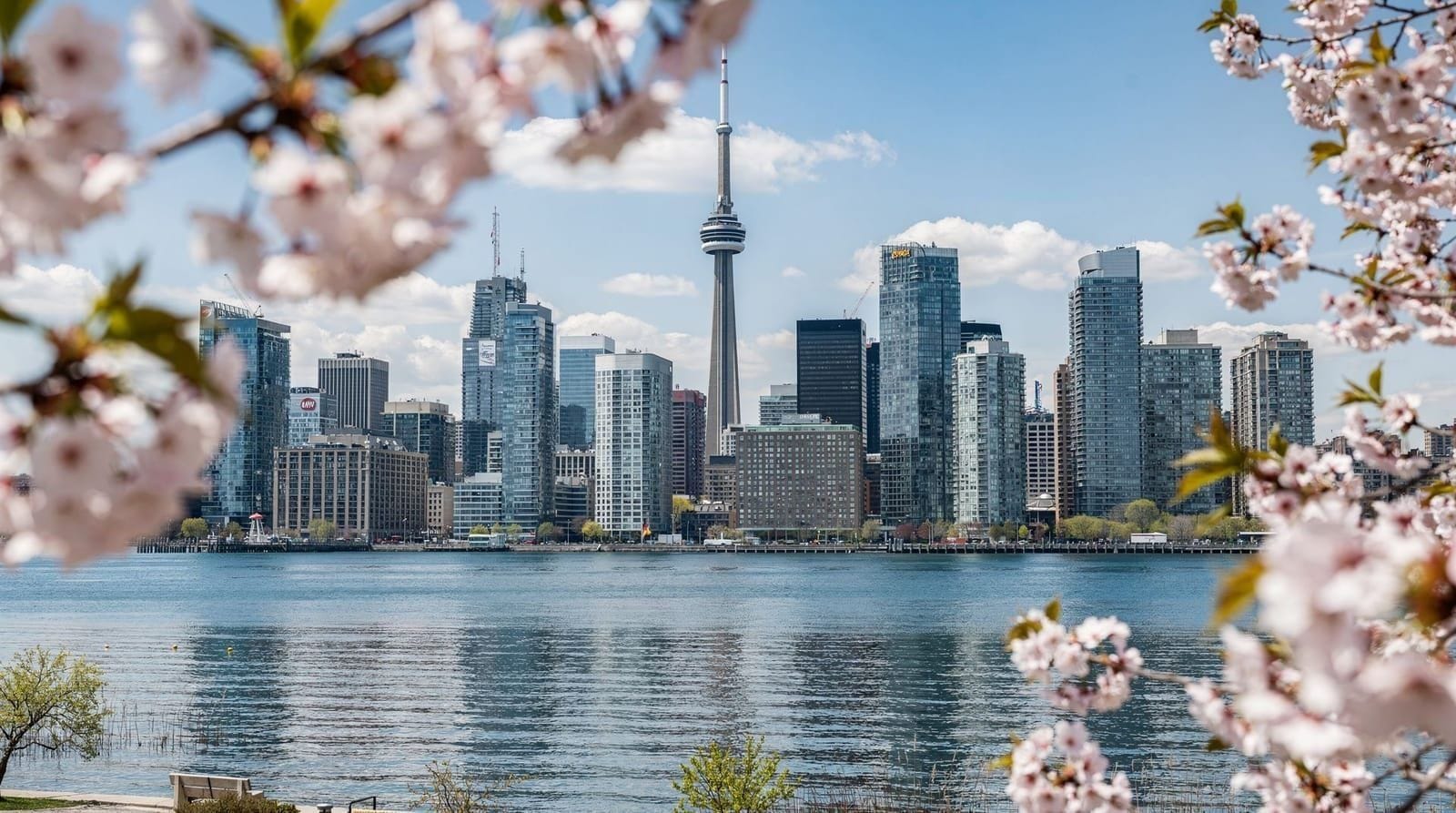
Toronto has two shoulder seasons worth weighing against each other: fall (September–October) and spring (April–May). Fall tends to offer more reliably comfortable temperatures and a packed cultural calendar anchored by TIFF, while spring’s main draw is the cherry blossom bloom and slightly lower prices earlier in the season. Neither is objectively better — a traveler prioritizing cultural events and stable weather should lean fall, while one prioritizing budget and willing to accept more variable temperatures might prefer spring, covered in more detail in the Toronto in spring guide.
A realistic three-day fall itinerary
A first-time fall visitor with three days might reasonably spend day one downtown around Harbourfront and the CN Tower area, day two split between a museum or gallery in the morning and a walk through the Distillery District in the afternoon once temperatures have warmed slightly, and day three as a day trip to Niagara Falls or a shorter excursion to see foliage closer to the city. This kind of loose structure — one full downtown day, one culture-and-neighborhood day, one day trip — tends to hold up better against fall’s variable weather than a schedule packed with fixed-time outdoor commitments.
Museums and indoor backup for rainy fall afternoons
Fall’s more frequent rain makes an indoor contingency worth building into any multi-day itinerary — the Toronto museums guide covers the ROM and AGO’s current hours and free-admission windows, both of which hold up as full-afternoon options regardless of what the sky is doing outside.
Frequently asked questions about visiting Toronto in fall
When does fall foliage peak in Toronto specifically?
Toronto’s own trees peak later and less dramatically than the regions north of the city, typically mid-to-late October in parks like High Park and the Beltline ravines. For a more vivid display, a day trip to Algonquin Park or Muskoka in late September to early October is the better bet.
Does TIFF make Toronto more expensive in September?
Yes, specifically in the entertainment district and downtown core during the roughly ten-day festival window in mid-September. Hotel rates outside that footprint and outside those dates are largely unaffected, and prices drop noticeably once TIFF ends.
Is late October too cold for outdoor sightseeing in Toronto?
It’s cool rather than cold — typically 5 to 12°C — but manageable with layers, and it’s still well before winter’s -10 to -20°C range. Rain is the bigger factor than temperature; check the forecast day-of rather than assuming clear skies.
Are the Toronto Islands worth visiting in fall?
Yes, through most of October, though Centreville Amusement Park’s hours shrink after Thanksgiving and the ferry schedule reduces frequency compared to summer. Early October still offers full access with far smaller crowds than a July weekend.
Is fall cheaper than summer for a Toronto trip?
Generally yes, outside of TIFF week — hotel rates in late September and early October typically run 15 to 25% below August peak pricing. It’s not as cheap as deep winter, but the weather trade-off strongly favors fall for most travelers.
What should I pack for a Toronto trip in fall?
Layers: a base layer, a sweater, and a wind- and water-resistant shell cover the range from a mild early-September afternoon to a raw late-October morning. Waterproof shoes are worth adding by mid-October.
What’s the single best week to visit Toronto in fall?
The last week of September into the first week of October, generally — TIFF has wrapped, hotel rates have dropped from their festival-week peak, and the weather is typically still comfortable before late-October’s cold mornings set in.