Chinatown Toronto guide
Toronto: 2-Hour Kensington Market Chinatown Walking Tour
Where is Chinatown in Toronto?
Toronto's main Chinatown runs along Spadina Avenue and Dundas Street West, directly bordering Kensington Market to the west. It's one of the largest and oldest Chinese communities in North America, though the city now has several satellite Chinatowns further from downtown, including in Scarborough and Markham.
A century-plus of continuous history on Spadina
Toronto’s Chinatown traces back to the early 1900s, when the first Chinese-Canadian businesses established themselves along Elizabeth Street near City Hall. That original cluster was largely demolished in the 1950s and 60s during a wave of urban redevelopment (including construction of the current City Hall), pushing the community west to its current home along Spadina Avenue and Dundas Street West — where it’s remained one of the largest and most established Chinatowns in North America ever since.
| Where | Spadina Avenue & Dundas Street West |
| Vibe | Dense, working commercial strip, not a boutique district |
| Cost | Full plate around $12-16 CAD |
| Getting there | 510 Spadina streetcar or St. Patrick station |
| Pair with | Kensington Market, Queen West |
It’s worth knowing that Toronto’s Chinese-Canadian population has grown well beyond this downtown footprint over the past few decades, with larger newer commercial hubs developing in Scarborough and Markham. Downtown Chinatown, though, remains the most walkable and visitor-friendly version, dense enough to explore thoroughly in an afternoon without a car.
What the neighborhood looks like
Spadina Avenue is the spine — wide, busy, lined with restaurants whose windows display hanging roast ducks and glazed barbecue pork, produce stalls spilling fruit onto the sidewalk, herbal medicine shops, and a dense scattering of bubble tea counters that have multiplied significantly over the past decade. Dundas Street West crosses through the middle, adding another commercial stretch running east-west. It’s louder and more visually dense than neighboring Kensington Market, with a faster, more transactional energy — this is a working commercial district, not a browsing-oriented boutique strip.
What to eat
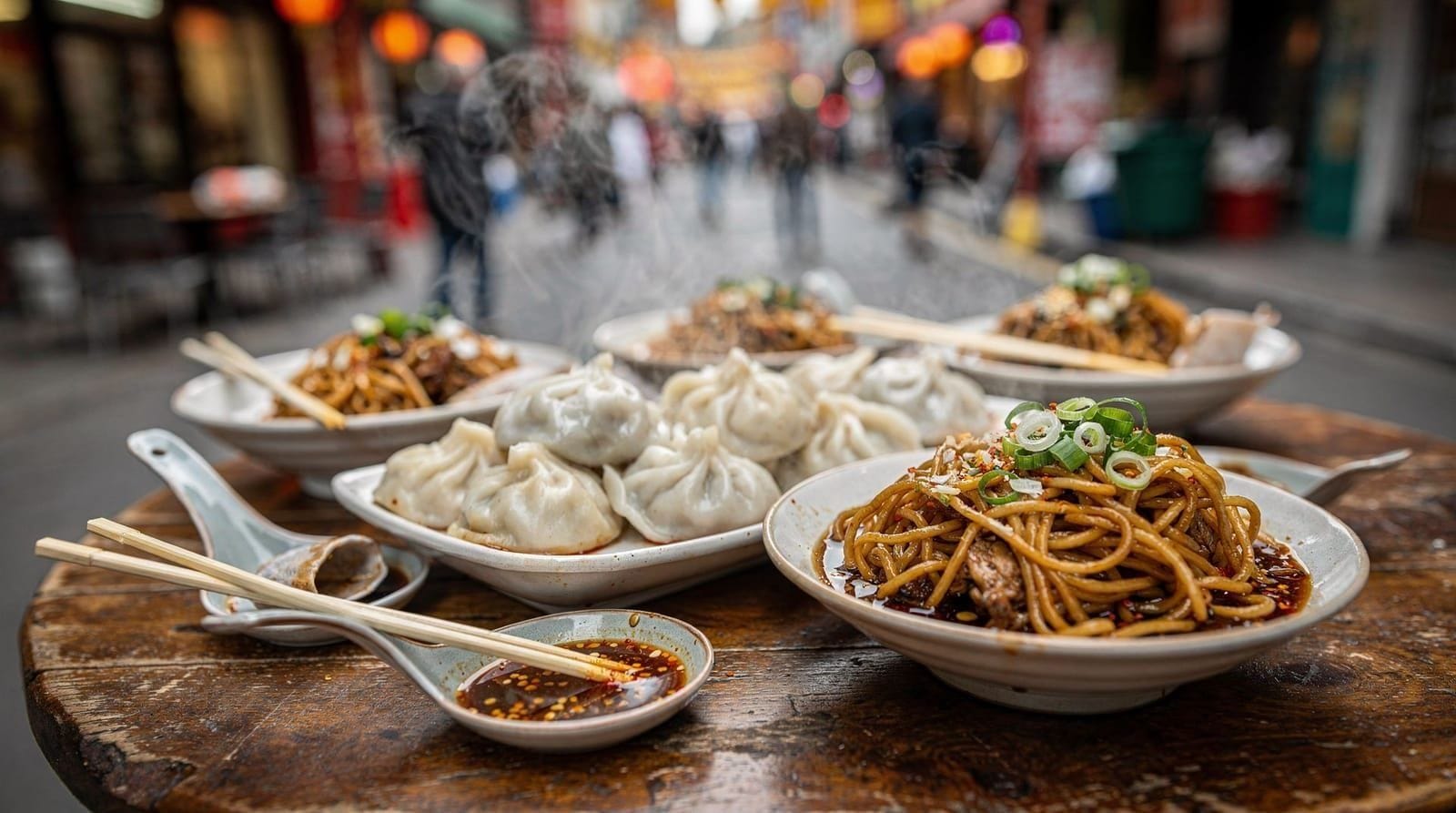
Cantonese barbecue is the neighborhood’s calling card. Roast duck, char siu (barbecued pork), and soy sauce chicken are the classics, typically served over rice at lunch counters that have operated for decades — look for the restaurants with the barbecued meats visibly hanging in the front window, generally a reliable sign of a kitchen that specializes in exactly that.
Beyond barbecue, the neighborhood has a strong dim sum scene (weekend mornings are the classic time, with rolling carts at the more traditional spots and order-sheet service at newer ones), a growing cluster of Vietnamese restaurants doing pho and banh mi, and enough bubble tea shops that picking one mostly comes down to which line is shortest. Prices run well below downtown-tourist-zone restaurants — a full barbecue rice plate typically costs $12-16 CAD ($9-12 USD), noticeably cheaper than a comparable meal in the Entertainment District a few blocks east. Our Toronto budget travel guide covers more of the city’s better-value eating options.
Exploring with a guide
Chinatown’s history and its overlap with neighboring Kensington Market aren’t always obvious from a straightforward walk-through — which storefronts are decades-old institutions, which streets marked the boundary of the original 1900s community, how the two neighborhoods’ identities blend along Baldwin Street. The 2-hour Kensington Market and Chinatown walking tour covers both neighborhoods together with a guide who threads that history and points toward specific food stops along the way — a useful option if you want the two neighborhoods’ combined story rather than piecing it together separately.
Beyond food
For a broader look at how Toronto’s immigrant communities have shaped its food scene beyond Chinatown alone, see our piece on Toronto’s food scene and immigrant cuisine on the blog. The neighborhood has a handful of non-food stops worth knowing about. Dragon City Mall, a multi-level Asian shopping center on Spadina, holds a mix of small retailers, a food court, and a supermarket, useful for browsing on a rainy day.
Traditional Chinese medicine and herbal shops line several blocks and are worth a look even if you’re not buying, for the sheer density of dried goods on display. The neighborhood’s grocery stores — significantly larger and more comprehensive than a typical downtown corner store — are also a good stop if you’re staying somewhere with a kitchen and want ingredients you won’t find at a standard Toronto supermarket.
Getting there
The 510 Spadina streetcar runs directly through the neighborhood’s main strip and is the most direct transit option. St. Patrick subway station on Line 1 sits about a 10-minute walk east, connecting easily if you’re coming from elsewhere on the subway line. Chinatown borders Kensington Market directly to the west, and most visitors combine the two into a single afternoon rather than treating them as separate trips.
When to go
Chinatown is busy most days of the week given its role as a working commercial district rather than a purely tourist attraction, but weekend afternoons — especially for dim sum — bring the heaviest crowds and the longest waits at the more popular spots. Weekday lunch hours offer a calmer, faster experience if you’re mainly there to eat rather than browse. Many restaurants stay open later into the evening than much of downtown, making the neighborhood a reliable late-dinner option after an evening event elsewhere in the core.
Pairing it with the rest of your trip
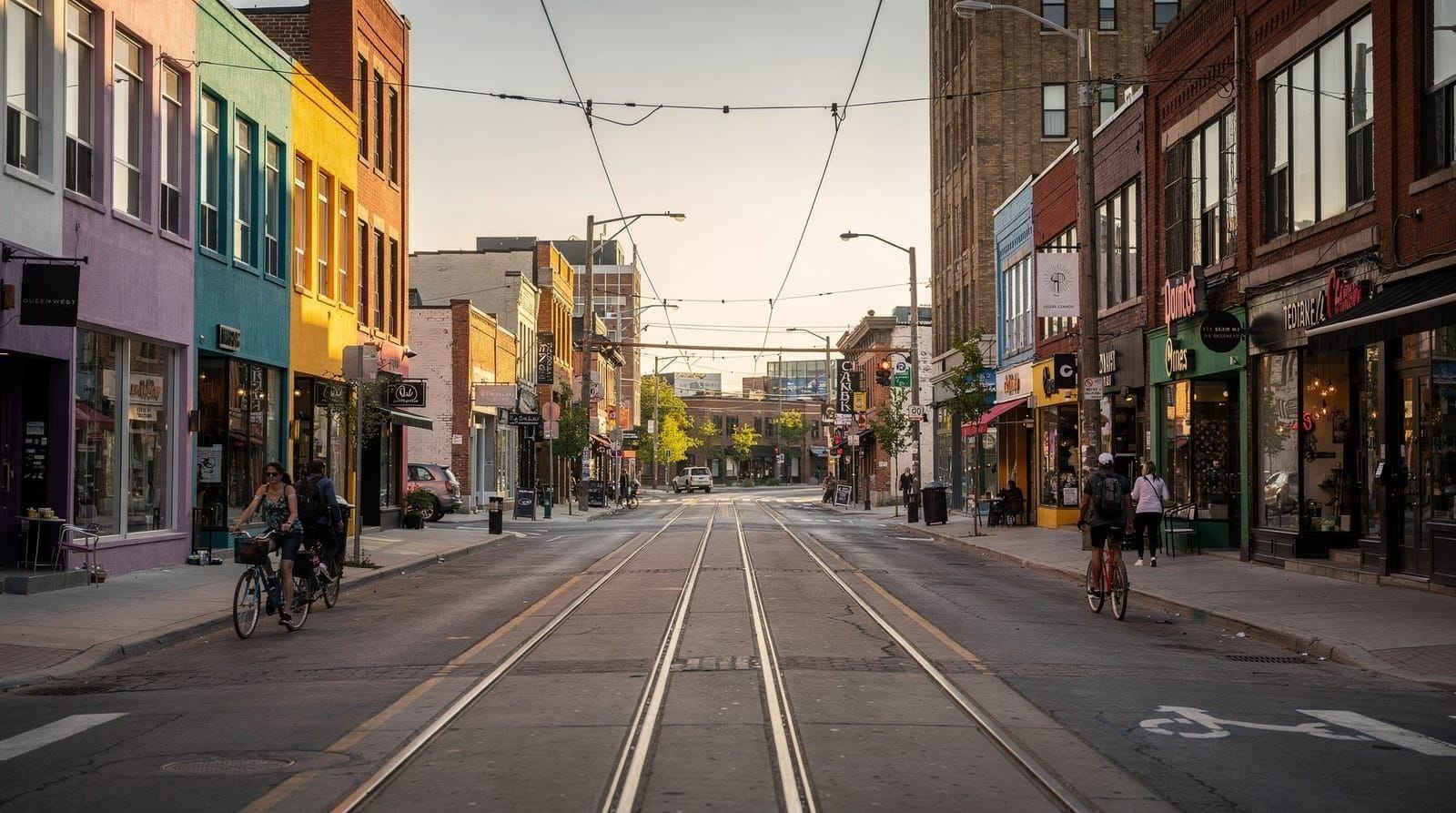
Chinatown pairs most naturally with Kensington Market, sharing a border along Spadina Avenue and Baldwin Street — our guide to Kensington Market covers that side of the visit in detail. It also sits within a reasonable walk of Queen West to the south, making a three-neighborhood afternoon (Chinatown, Kensington, Queen West) a realistic full-day route for visitors with the stamina, one also covered in our downtown Toronto walking guide. For a deeper, food-specific breakdown of the neighborhood’s best restaurants, our Chinatown Toronto food guide goes further than this general overview.
Institutions that trace back generations
A handful of Chinatown’s businesses have operated long enough to count as neighborhood institutions in their own right, predating much of what’s now considered classic Toronto Cantonese dining. Several of the roast-meat counters along Spadina Avenue have run under the same families since the 1970s and remain the reference point for what a no-frills, do-one-thing-well barbecue shop should look like — locals still debate which counter’s roast pork edges out the others, a genuinely contested and long-running local rivalry.
Newer, more polished additions to the neighborhood’s food scene represent the other direction Chinatown has taken in recent decades: contemporary Chinese-Canadian cooking in proper sit-down settings, evidence that the area’s food identity isn’t frozen in its mid-century form even as the classic barbecue counters remain the anchor.
Tea culture has its own long-running fixtures too. Ten Ren Tea, part of a Taiwanese chain but present in the neighborhood for decades, sells loose-leaf tea by weight alongside bubble tea, predating the current bubble tea boom by a wide margin — it was doing serious tea service here well before the drink became a citywide fixture on nearly every block.
A number of the neighborhood’s herbal medicine shops have similarly multi-decade histories, run by the same families since the 1970s and 80s, stocking dried goods, ginseng, and traditional remedies for a mostly local, non-tourist clientele. They’re worth a look even if you’re not buying, since they’re some of the least-changed retail interiors in the entire downtown core, largely untouched by the renovation and turnover that’s reshaped most other Toronto commercial strips.
The original Elizabeth Street Chinatown, demolished in the 1950s and 60s for City Hall and the surrounding civic redevelopment, doesn’t survive as a physical place, but its displaced businesses and families are directly responsible for seeding the Spadina Avenue community that exists today. Several of the families who relocated west in that period built businesses that operated for decades afterward, and some of their descendants still run storefronts in the neighborhood now.
A small plaque and periodic historical markers near Nathan Phillips Square note the original site, though there’s little else visibly left of it beyond the historical record — worth a mental footnote if you’re doing the downtown Toronto walking guide route past City Hall, since you’re walking directly over what was once Chinatown’s first home in the city.
That mid-century displacement wasn’t unique to Chinatown — it was part of a broader pattern of postwar Toronto urban renewal that also reshaped Kensington Market’s edges and cleared other working-class immigrant neighborhoods downtown in the name of civic modernization. What makes Chinatown’s story distinct is how completely the community rebuilt on Spadina Avenue rather than dispersing outward, re-establishing grocers, restaurants, and community associations within roughly a decade of the Elizabeth Street demolition.
That rebuilding effort is part of why the Spadina strip feels so established today, with businesses that have now themselves been operating continuously for 40 or 50 years — the neighborhood has effectively completed a second full generational cycle since its forced relocation, which is a genuinely unusual level of continuity for a downtown commercial strip that’s had to compete with rising rents and redevelopment pressure the entire time.
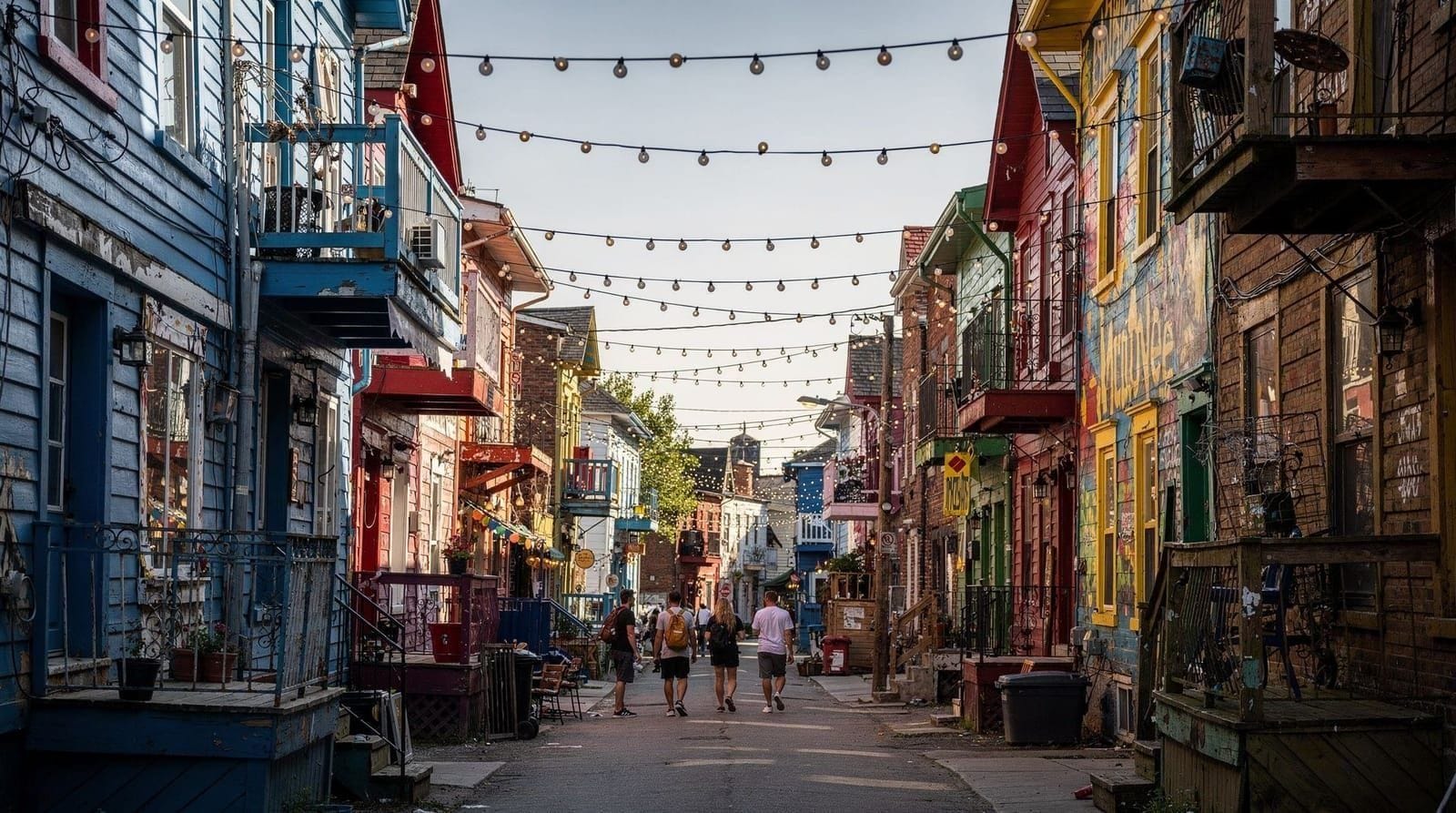
Chinatown’s relationship with the rest of downtown has also shifted as the surrounding streets have changed around it. Kensington Market to the immediate west has leaned increasingly into vintage retail and tourism over the past two decades, and Queen West to the south has become a nightlife and gallery corridor, but Chinatown’s core commercial identity along Spadina Avenue has stayed comparatively stable — still overwhelmingly food-and-grocery focused, still serving a genuinely local, multigenerational customer base alongside visitors, rather than pivoting toward a more curated, Instagram-driven retail mix the way some of its neighboring districts have.
That stability is arguably the neighborhood’s most distinctive trait relative to the rest of downtown: it has resisted becoming primarily a tourist attraction even as tourism around it has grown substantially.
Practical notes
- Cost: Among the most affordable dining neighborhoods downtown — a full meal typically runs less than a comparable restaurant in the Financial District or Entertainment District.
- Cash and cards: Most restaurants take cards, though some of the smaller, more traditional spots and market stalls remain cash-preferred.
- Accessibility: Sidewalks are busy and sometimes narrow with produce displays spilling out; manageable but not spacious for wheelchairs or strollers during peak hours.
- Language: Signage is often bilingual or Chinese-only at smaller, more traditional businesses — a phone translation app is genuinely useful here more than in most Toronto neighborhoods.
Chinatown rewards showing up hungry and picking whichever restaurant has the busiest lunch counter — in a neighborhood this dense with genuinely good, inexpensive food, a crowded room is usually the best recommendation you’ll get.
A note for first-time visitors
If it’s your first visit and the density of storefronts feels overwhelming, the guided walking tour mentioned above or simply walking the full length of Spadina Avenue once before doubling back to actually eat is a reasonable way to get oriented. Most first-timers find the neighborhood easier to navigate on a second pass, once the initial density of signage and options has stopped feeling like a barrier. For a food-specific deep dive once you’re oriented, the Chinatown Toronto food guide covers specific dishes and price points in more detail than this neighborhood overview.
Frequently asked questions about Toronto’s Chinatown
Is Toronto’s Chinatown the biggest in Canada?
It’s one of the largest and most established, alongside Vancouver’s Chinatown, though newer, larger Chinese-Canadian commercial hubs have grown in Toronto’s suburbs, particularly Markham and Scarborough, drawing more of the city’s Chinese-Canadian population than the downtown core in recent decades. Downtown Chinatown remains the most historically significant and the most walkable for a visitor without a car.
What should I eat in Toronto’s Chinatown?
Cantonese barbecue — roast duck, char siu pork, and soy sauce chicken hanging in shop windows — is the neighborhood’s signature. Beyond that, dim sum, Vietnamese pho, and bubble tea are all well represented, and prices run noticeably below downtown-tourist-zone averages, especially compared to the Entertainment District a few blocks east.
How do you get to Chinatown in Toronto?
The 510 Spadina streetcar runs directly through the neighborhood along Spadina Avenue. St. Patrick subway station on Line 1 is about a 10-minute walk east, and it’s an easy combined visit with adjacent Kensington Market since the two neighborhoods share a border.
Is Chinatown safe to visit?
Yes, it’s a busy, well-populated commercial neighborhood at most hours. Standard city awareness applies, and the area is generally considered safe by local standards, including in the evening when restaurants stay busy well past when other downtown food districts have quieted down.
What’s the difference between Chinatown and Kensington Market?
They border each other along Spadina Avenue and Baldwin Street, but Chinatown is more commercially dense and specifically Chinese and Vietnamese food-focused, while Kensington is a smaller, more residential market with a broader multicultural mix of vendors and vintage shops.
Is Chinatown open late?
Many restaurants stay open into the late evening, later than much of downtown’s other dining districts, making it a reliable option for a late dinner after a show or a night out elsewhere downtown — a useful thing to know if you’re coming from a TIFF screening or a night at one of the Entertainment District venues.
Top experiences
Bookable activities with verified prices and instant confirmation on GetYourGuide.