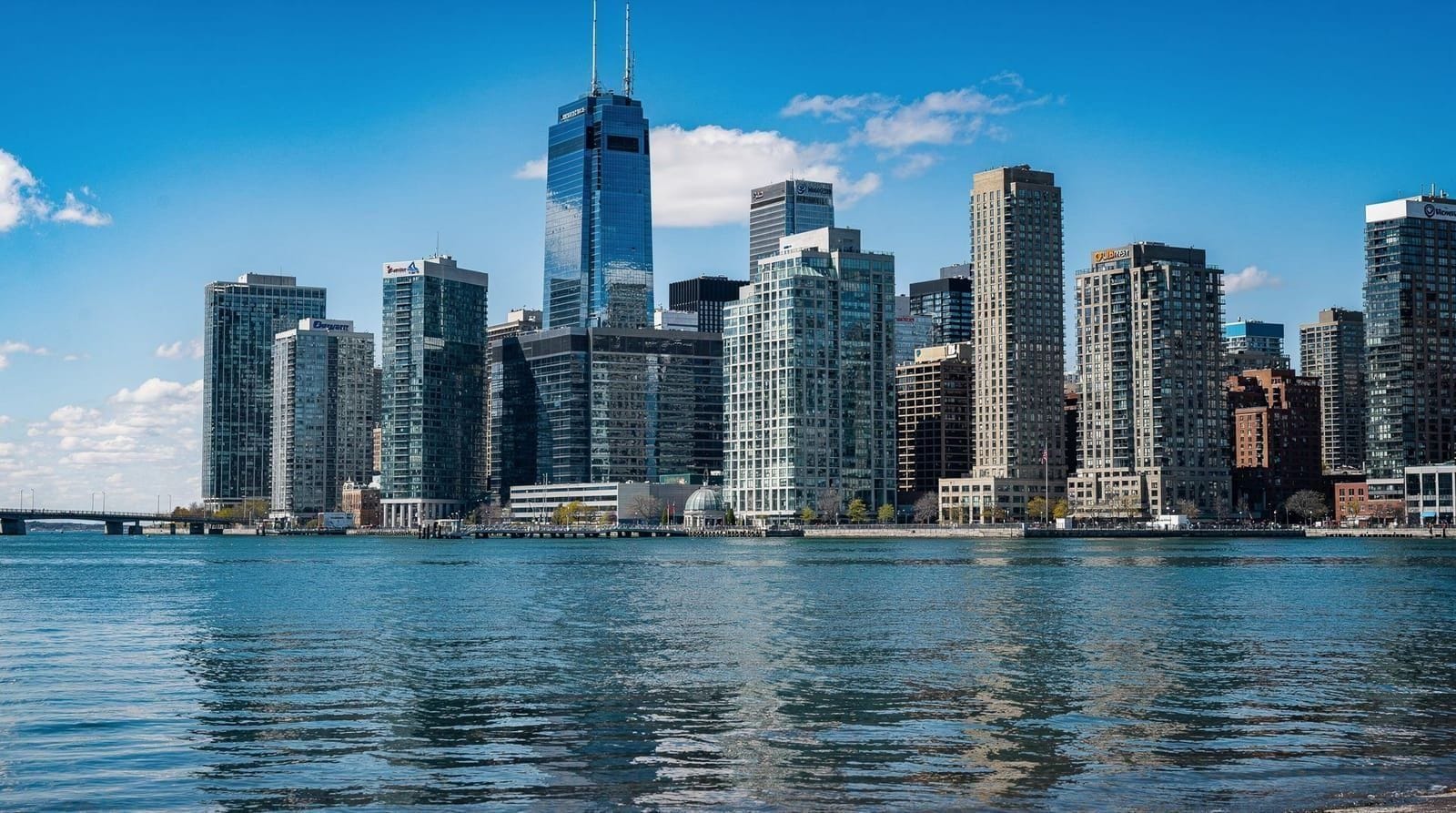
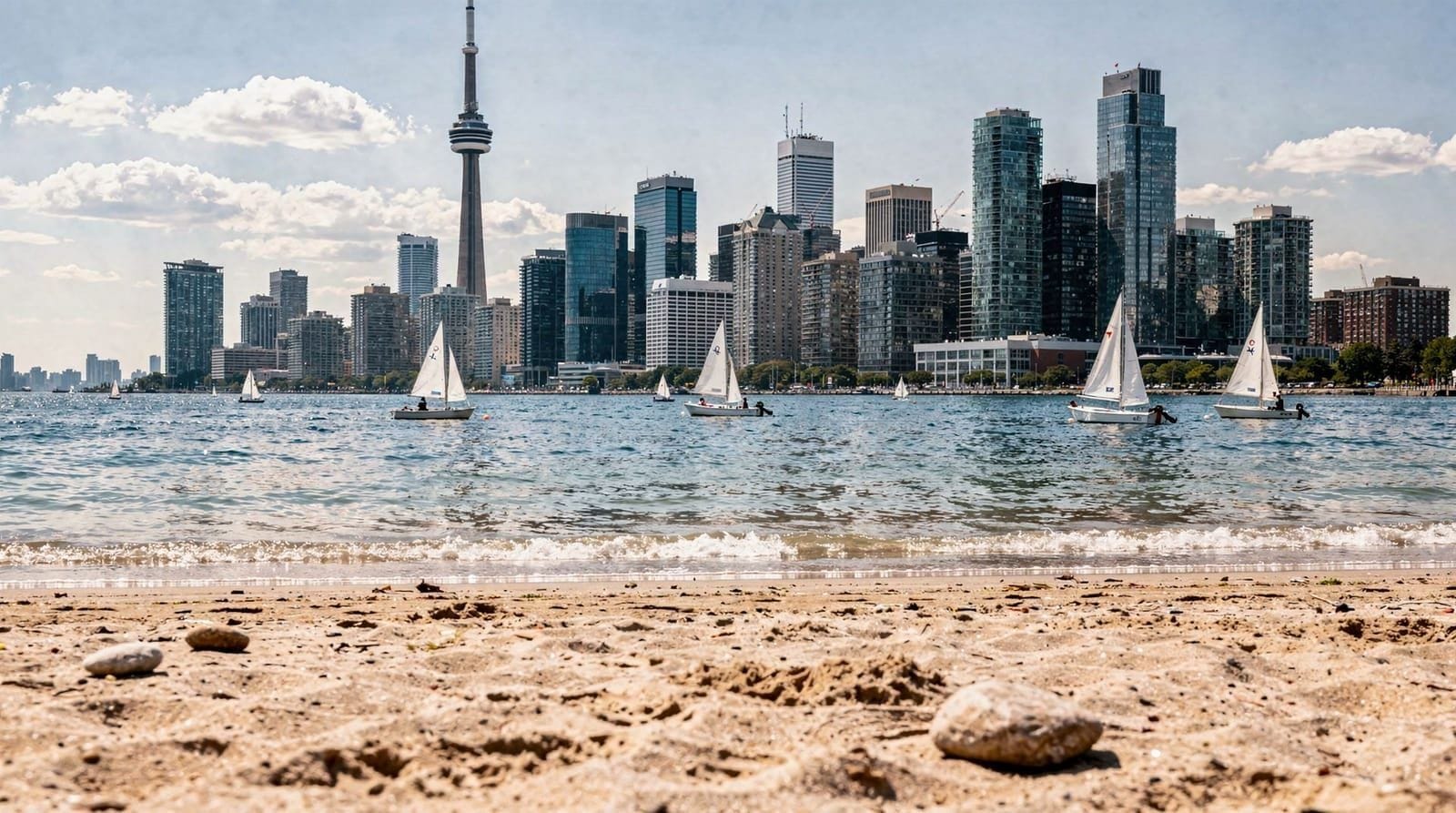
Toronto vs Vancouver comparison
Different coasts, different trips
Toronto and Vancouver rarely come up as true alternatives to each other on the same trip — they’re on opposite sides of the country, roughly a 4.5-hour flight apart — but they’re constantly compared as “which major Canadian city should I visit,” especially by international travelers picking a single Canada stop. The honest comparison isn’t close on some things (scenery) and genuinely close on others (cost, food quality), so it’s worth breaking down rather than picking a blanket winner.
| Choose Toronto for | Cost, urban variety, day trips, flight connectivity |
| Choose Vancouver for | Mountain/ocean scenery, milder winters, outdoor access |
| Distance between | About 4.5-hour direct flight |
| Combine on one trip? | Not realistically on a short trip |
| Cheaper city | Toronto, on accommodation especially |
Head-to-head comparison
| Category | Toronto | Vancouver |
|---|---|---|
| Scenery | Lake-facing, flatter | Mountains + ocean, dramatic |
| Winter | Colder, -10 to -20°C | Milder, wetter |
| Accommodation cost | Meaningfully cheaper | Among priciest in Canada |
| Metro population | About 6 million | About 2.6 million |
| Best for | Urban variety, day trips | Nature and outdoor access |
Scenery and setting
Vancouver’s setting is the clearer win if mountains-meet-ocean scenery matters to your trip — the North Shore mountains are visible from downtown, and Stanley Park’s seawall gives you ocean, forest, and skyline in one walk. Toronto’s setting is flatter and lake-facing rather than ocean-facing, with Lake Ontario providing the harbourfront and Toronto Islands as its answer to Vancouver’s coastal parks — pleasant and genuinely worth a half-day, but not dramatic in the way Vancouver’s mountain backdrop is. If dramatic natural scenery is a top priority, Vancouver wins this category outright.
Toronto Islands morning or twilight 3.5-hour bike tourWeather
This is a bigger practical difference than most comparisons mention. Vancouver has a mild, wet coastal climate — rarely extreme cold, but grey and rainy for long stretches, especially fall through spring. Toronto has a proper four-season continental climate: hot, humid summers (20-30°C), genuinely cold winters (-10 to -20°C, with the Journey Behind the Falls cruise and similar seasonal attractions closing November through April), and two shoulder seasons — spring and fall — that are arguably each city’s best visiting window. If you want to avoid extreme cold specifically, Vancouver’s winters are milder than Toronto’s; if you want reliable summer sun without constant rain risk, Toronto’s summer is more dependable.
Cost of visiting
Vancouver is consistently one of the most expensive Canadian cities for accommodation, driven by its real estate market spilling into hotel pricing. Toronto runs meaningfully cheaper on hotels for a comparable standard, and its broader range of neighborhoods (see our best Toronto neighborhoods to stay guide) gives more budget flexibility. Food costs are roughly comparable between the two. A mid-range daily budget in Toronto sits around $130-200 CAD, generally running somewhat lower than the equivalent Vancouver trip — see our Toronto on a budget breakdown for specifics.
City scale and things to do
Toronto is significantly larger — roughly 6 million in the metro area versus Vancouver’s 2.6 million — and that shows up in the sheer range of neighborhoods, restaurants, and day-trip options. Kensington Market, Chinatown, the Distillery District, and a genuinely wide sports and cultural calendar (see our things to do in Toronto guide) give Toronto more variety for a longer stay. Vancouver’s scale suits a tighter, more nature-adjacent trip better — Toronto suits a trip built around urban variety and easy day trips like Niagara Falls, 1.5 hours away.
Toronto premium night driving tour with CN Tower entryFlight and time-zone practicality
For international visitors, Toronto’s Pearson Airport (YYZ) is a major global hub with more direct international connections than Vancouver, especially from Europe. Vancouver has the advantage for Asia-Pacific connections and is the natural stop if you’re also visiting the US Pacific Northwest. For a single-country Canada trip without a broader itinerary constraint, Toronto’s connectivity is generally the more convenient option for European and East Coast North American travelers.
Food culture differences
Vancouver’s food scene leans heavily on its Pacific Rim location — some of North America’s best sushi and Asian cuisine outside of Asia itself, plus a strong seafood-forward fine dining scene tied to its coastal setting. Toronto’s food identity is built more on sheer immigrant diversity across the board — see our best new restaurants in Toronto roundup — rather than one dominant regional influence. Both cities do genuinely excellent food; Vancouver’s is more concentrated in a specific direction, Toronto’s is wider-ranging and harder to summarize in one sentence.
Outdoor access and day trips
Vancouver’s outdoor access is close to unmatched among major North American cities — skiing at Whistler within two hours, hiking trails accessible directly from the city (the Grouse Grind, Stanley Park’s seawall), and ocean access all within the metro area itself. Toronto’s outdoor day-trip options require more driving — Niagara Falls at 1.5 hours, Muskoka at 2 hours, Algonquin Park at 2.5 hours — but the range once you’re willing to drive is genuinely broad, spanning waterfalls, lake country, and old-growth forest wilderness that Vancouver’s more compact regional geography doesn’t offer in quite the same combination.
Public transit comparison
Both cities have solid public transit for their size, though they’re structured differently. Vancouver’s SkyTrain is a driverless, elevated/underground system that’s widely regarded as efficient and clean. Toronto’s TTC (subway, streetcar, bus) covers more total ground given the city’s larger footprint but shows its age in parts of the subway system compared to Vancouver’s newer SkyTrain infrastructure. Neither requires a rental car for a standard city-focused visit, and both offer day and weekly pass options that make sense for multi-day tourist use.
The honest verdict
If natural scenery and a milder winter matter most, Vancouver wins. If cost, urban variety, food diversity, and international flight connectivity matter more, Toronto wins. Neither is a wrong choice — they deliver genuinely different trips, and travelers who’ve done both consistently describe them as complementary rather than redundant, which is worth remembering if a longer Canada itinerary spanning both coasts is on the table.
Housing, real estate, and how it shapes each city’s visitor experience
Vancouver’s notoriously expensive housing market shapes more than just hotel prices — it’s part of why the city feels more compact and vertically dense than its population might suggest, with less room for the kind of low-rise neighborhood sprawl that characterizes large parts of Toronto. Toronto has its own housing affordability pressures, but the city’s greater geographic size has allowed more neighborhoods to retain a lower-rise, more residential character within reasonable reach of downtown, which is part of why Toronto has more distinct walkable neighborhoods for visitors to explore than Vancouver’s more concentrated urban core.
Nightlife, arts, and after-dark options
Both cities have credible arts and nightlife scenes, but they differ in character. Vancouver’s is more spread across Gastown and Yaletown, with a scene shaped by its proximity to the Pacific Northwest’s craft brewery and cocktail culture. Toronto’s Entertainment District and King West corridor pack a denser concentration of bars, clubs, and live-music venues into a smaller footprint, and the city’s overall theatre and performing arts scene — including major touring Broadway productions — runs deeper given Toronto’s larger population base. Neither city goes quiet after dark, but Toronto’s after-dark options skew slightly more varied given its scale.
A quick take for specific traveler types
Families with young kids often find Vancouver’s combination of beaches, mountains, and Stanley Park’s more contained, walkable scale easier to manage day to day. Solo travelers and those prioritizing nightlife and food variety often prefer Toronto’s density of options. Travelers on a tighter budget will generally stretch further in Toronto. None of these are hard rules, but they’re a reasonable starting point if the rest of this comparison leaves you genuinely torn between the two.
Air quality and seasonal considerations
Vancouver has occasionally dealt with wildfire smoke drifting in from regional fires in recent summers, affecting air quality for stretches of the season — worth checking current conditions if visiting in late summer. Toronto doesn’t share this specific risk, though it does deal with summer humidity and occasional heat advisories. Neither issue should be a dealbreaker for either city, but they’re worth factoring in if you’re particularly sensitive to air quality or heat.
If Toronto is your pick, what to prioritize
A first Toronto trip built to contrast against Vancouver’s outdoor strengths should lean into what Toronto does that Vancouver can’t — the Distillery District, Kensington Market and a Niagara day trip via our Niagara Falls day trip from Toronto guide. For families specifically weighing the two, our Toronto with kids guide covers the same contained, walkable-day logistics that make Vancouver appealing to families, adapted to Toronto’s layout.
Toronto guided harbour and islands sightseeing cruiseToronto’s own answer to Vancouver’s outdoor access
Toronto can’t match Vancouver’s ski-and-ocean-in-one-day combination, but the Muskoka destination guide and Algonquin Park destination guide both cover genuine wilderness within a half-day’s drive, while Blue Mountain handles the skiing comparison directly, even if it’s a smaller-scale operation than Whistler.
Frequently asked questions about Toronto vs Vancouver
Which is more expensive, Toronto or Vancouver?
Vancouver, generally — its hotel and housing market pricing pushes accommodation costs higher than comparable Toronto options. Food costs are roughly similar between the two.
Which has better weather, Toronto or Vancouver?
Depends what you want. Vancouver has milder winters but more rain overall; Toronto has hotter, more reliable summers but colder winters. Both cities’ best weather windows are spring and fall.
Which city has more to do for a longer trip?
Toronto, due to its larger size and broader range of neighborhoods, cuisines, and easy day trips like Niagara Falls. Vancouver’s strength is more concentrated around nature and outdoor access.
How far apart are Toronto and Vancouver?
About a 4.5-hour direct flight. They’re on opposite sides of the country and not realistically combined on a short trip without significant travel time.
Which is better for a first-time Canada visitor?
Toronto for a broader introduction to Canadian urban culture and easier international flight access; Vancouver if scenic natural beauty and mountain access are the priority.
Does Toronto have any real equivalent to Whistler?
Not at the same scale — Blue Mountain, about two hours north, offers genuine skiing and snowboarding, but it’s a smaller regional hill compared to Whistler’s size and international reputation.
Is a combined Toronto-Vancouver trip realistic for a first Canada visit?
Only with significant time — the 4.5-hour flight and the two cities’ distance mean a combined trip works better as 10+ days total rather than a short week, since each city deserves at least 3-4 days on its own.