FIFA World Cup 2026 Toronto travel guide
Toronto is a host city, not the whole tournament
| Venue | BMO Field, Exhibition Place |
| Getting there | Streetcar 509/511, or 20-25 min walk from King West/Liberty Village |
| Entry | eTA ($7 CAD) for most visa-exempt nationalities, applied online |
| Currency | CAD, roughly 1.35-1.42 CAD per USD through mid-2026 |
| Booking order | Match tickets first, then flights, then accommodation |
Toronto is one of the North American host cities for the 2026 FIFA World Cup, with matches played at BMO Field, expanded for the tournament and located in Exhibition Place near the Downtown waterfront.
If you’re planning a trip around a match here, the first thing to get straight is scale: this isn’t a small city hosting a novelty event, it’s a metro area of roughly 6 million people that will absorb the tournament crowds better than a smaller host, but hotel and flight prices around match dates will still spike well above normal summer rates. Book accommodation and flights as early as you can once your match dates are confirmed — waiting until a month out means paying 2-3x normal summer pricing for anything near the venue.
BMO Field sits at Exhibition Place, accessible by streetcar from downtown (the 509 and 511 routes both serve the area) or a 20-25 minute walk from the King West/Liberty Village area. Public transit is the realistic way to get to and from matches — parking near the venue is limited and expensive on game days, and road closures around Exhibition Place are common during major events. Budget an extra 30-45 minutes for transit on match days versus normal service.
Where to stay for a World Cup trip
Staying downtown or in Entertainment District puts you within a 25-35 minute transit or walking combination of BMO Field and close to the restaurants, bars, and fan zones that will inevitably form around Exhibition Place and the harbourfront during the tournament. Rates here will be the highest of anywhere in the city on match dates.
A cheaper alternative that still keeps you connected: Leslieville or areas along the Bloor-Danforth subway line, both a single transfer from Exhibition Place via streetcar and typically $50-100 CAD/night less than Entertainment District hotels during peak dates. See our best Toronto neighborhoods to stay guide for a fuller comparison, though expect all of it to run above the numbers quoted there once World Cup dates are announced.
If you’re building a trip around a single match, plan the rest of your days the way any Toronto visitor would — the tournament doesn’t change what’s worth doing when you’re not at BMO Field:
Toronto city sightseeing hop-on hop-off bus tourFilling the days around your match
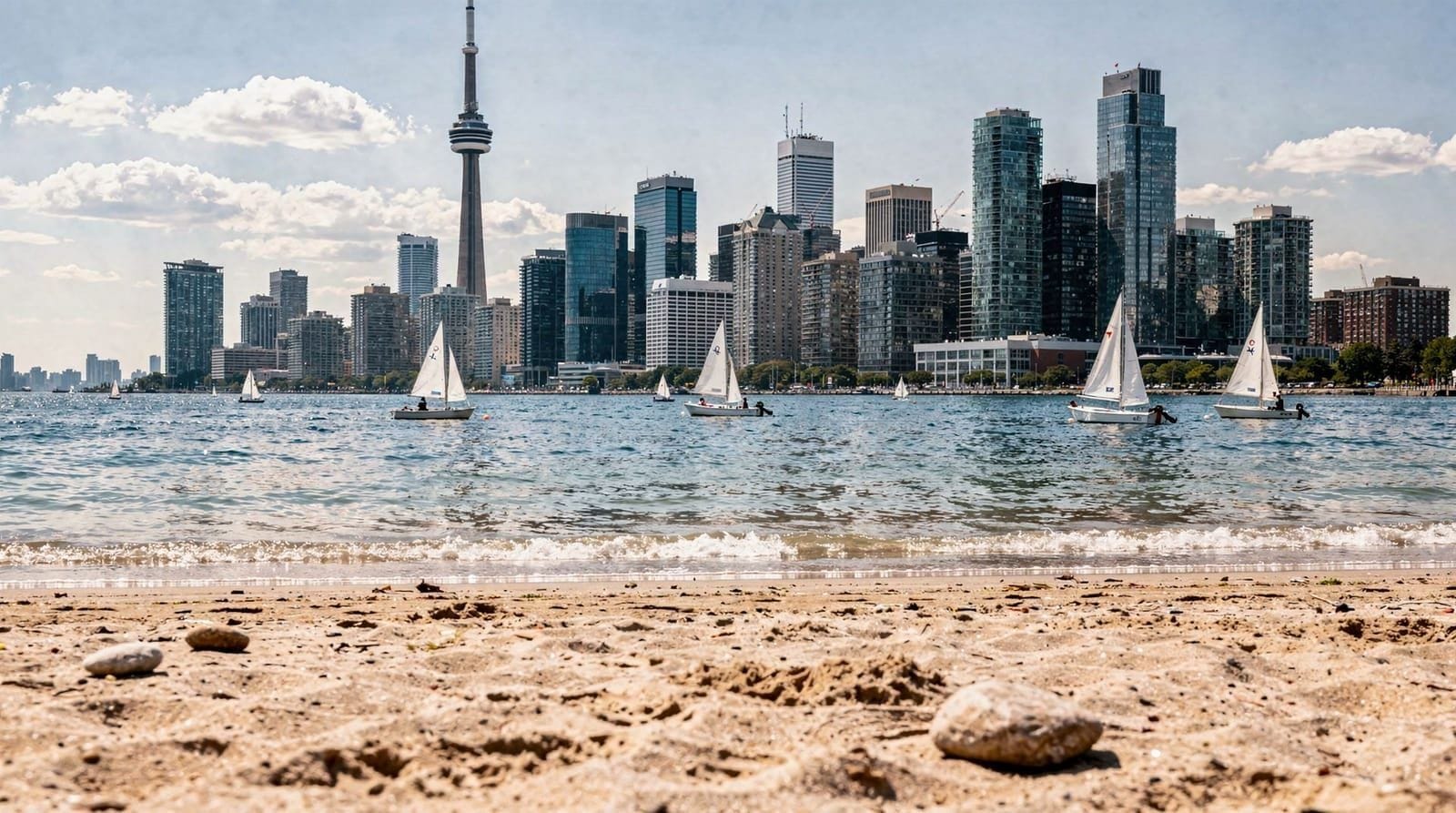
Most World Cup travelers have one match ticket and several open days around it. Toronto has enough to fill them without repeating yourself. A harbourfront walk and ferry to the Toronto Islands is a half-day that gets you away from tournament crowds and onto open water with skyline views. The Distillery District and St. Lawrence Market cover food and a sense of the city’s older architecture in an afternoon.
If other sports interest you beyond soccer, Toronto’s other major venues are worth a look — see our Blue Jays game guide and Raptors game guide for what’s in season alongside the tournament, and our Scotiabank Arena coverage if you want to see the building itself outside of hockey season.
Toronto guided tour of Scotiabank ArenaFor a broader view of the city from the water — a good way to decompress after a loud match day — a harbour cruise gets you skyline views without fighting Exhibition Place crowds:
Toronto harbor and islands sightseeing cruiseEntry requirements and practical logistics
Most international visitors to Canada need either a visa or an Electronic Travel Authorization (eTA), depending on nationality — citizens of the EU, UK, Australia, Japan, and several other countries need only the eTA, which costs $7 CAD, is valid for five years, and is applied for online at canada.ca. Apply well before your trip; while approval is usually fast, World Cup-related volume could slow processing closer to the tournament.
US citizens don’t need an eTA for air travel but do need a valid passport. Currency is Canadian dollars (CAD); with the exchange rate hovering around 1 USD to 1.35-1.42 CAD through mid-2026, American and many European visitors will find prices somewhat favorable compared to home, even with tournament-inflated hotel rates.
What will actually be crowded
Expect Exhibition Place, the immediate streetcar routes serving it, and downtown hotels and restaurants near match dates to be noticeably busier than a normal Toronto summer — which is already the city’s peak tourist season. Areas away from the direct match-day corridor, like The Beaches or Kensington Market, will feel closer to a normal busy summer than a tournament zone.
If you want the World Cup atmosphere without match tickets, downtown fan zones (details to be confirmed closer to the event by the host committee) are the place to look; if you’d rather avoid crowds entirely on your non-match days, lean toward the quieter neighborhoods and day trips like Niagara Falls, 1.5 hours away, as a change of pace.
Comparing Toronto’s host-city experience to other Canadian and North American venues
Toronto is one of several host cities across Canada, the US, and Mexico for the 2026 tournament, and it’s worth setting expectations relative to the others. Compared to smaller North American host cities, Toronto offers considerably more non-match infrastructure — a full range of hotels across every price tier, an international airport with direct connections from most major world cities, and enough independent things to do that a multi-day trip doesn’t depend on the tournament schedule at all.
Compared to larger host cities, it doesn’t have the sheer hotel room inventory that a market like New York or Los Angeles can absorb, which is the practical reason match-week pricing spikes here more sharply in percentage terms even if the absolute dollar numbers land lower than those bigger markets.
Language, currency, and everyday logistics for international visitors
Toronto is English-speaking (with French as Canada’s other official language, though not dominant locally), which removes a layer of friction for many international visitors compared to some other host cities. Currency is the Canadian dollar; cards are widely accepted everywhere, including tap payment on the TTC subway and streetcar system, so carrying large amounts of cash isn’t necessary. Cell coverage and public wifi are reliable throughout the areas visitors will spend time in, including at Exhibition Place and downtown hotels, though data roaming charges are worth checking with your carrier before arrival, or consider a local SIM or eSIM for a multi-week tournament trip.
Combining a match with a broader Ontario trip
Given the cost and effort of getting to Toronto for the tournament, many visitors are extending trips beyond just match days. Niagara Falls, 1.5 hours away, is the most practical add-on for a day trip that doesn’t require another flight or long drive. Travelers with more time are pairing a Toronto match with visits to Muskoka or Prince Edward County for a slower-paced few days away from the tournament’s inevitable crowds and noise, both reachable within 2-2.5 hours by car. If your itinerary includes a second Canadian host city, VIA Rail connects Toronto to other eastern cities in a few hours without needing a rental car.
Booking timeline that actually works
Confirmed match tickets first, flights second, accommodation third — but don’t leave more than a few weeks between the three. Hotels near Exhibition Place will sell out for confirmed match dates well before the tournament, and the ones left standing by the time casual planners look will be priced accordingly. If your dates are flexible, arriving a day or two before your match and staying a few days after (once initial crowds thin) usually gets a better hotel rate than booking exactly match-week.
Getting between multiple host cities if your trip spans more than Toronto
Travelers with tickets to matches in more than one Canadian city should factor in inter-city travel early, since flights between host cities also see tournament-driven price spikes. VIA Rail is a realistic option for eastern Canadian city pairs and avoids the airport-arrival buffer a flight requires, though it’s slower than flying for longer distances. Building at least a half-day buffer between a Toronto match and travel to another host city is a reasonable precaution against transit delays compounding with tournament-related congestion.
What match day itself actually feels like
Expect a noticeably different atmosphere from a regular MLS or CFL game at the same venue — road closures around Exhibition Place extend further out than for a typical event, security screening takes longer given the scale of the tournament, and the surrounding streetcar routes run at a different frequency to handle the crowd surge before and after the final whistle. Arriving at least 90 minutes before kickoff, rather than the 45-60 minutes that suffices for a regular game, is a reasonable buffer against the added security and crowd-flow time.
A realistic budget beyond the match ticket
Between accommodation at tournament-inflated rates, meals, transit, and any non-match activities, a realistic daily budget for a Toronto World Cup trip runs meaningfully above the numbers in our Toronto on a budget breakdown — treat that guide’s figures as a floor rather than an accurate match-week estimate, and pad hotel costs specifically, since that’s where the tournament premium concentrates most heavily.
Frequently asked questions about the World Cup in Toronto
Where are World Cup matches played in Toronto?
Matches are held at BMO Field, located at Exhibition Place near the downtown waterfront, expanded in capacity for the tournament.
How do I get to BMO Field on match day?
Streetcar (routes 509 and 511) from downtown is the most reliable option. Parking near the venue is limited, expensive, and subject to road closures on match days — budget significant extra transit time.
Will hotel prices be higher during the World Cup?
Yes, significantly, especially near Exhibition Place and downtown on confirmed match dates. Book as early as possible once your dates are set; prices only increase as the tournament approaches.
Do I need a visa to visit Toronto for the World Cup?
Depends on nationality. Many visitors (EU, UK, Australia, Japan, and others) need only an eTA ($7 CAD, valid 5 years, applied for online). Check Canada’s official eTA eligibility list for your passport before booking.
What else is there to do in Toronto besides the match?
Plenty — the harbourfront, Toronto Islands, Kensington Market, the Distillery District, and day trips to Niagara Falls all work well as non-match-day plans. See our things to do in Toronto guide for a full breakdown.