Fall foliage escape: Algonquin & Muskoka
Algonquin Park Hiking: Adventure Tour from Toronto
Ontario’s single best fall foliage window
This is the itinerary built around one specific thing: the roughly two-week window, usually mid-September to early October, when Algonquin Provincial Park and Muskoka’s maple-dominated forests turn a genuinely striking mix of red, orange and gold. It’s a narrower seasonal target than most of this site’s itineraries, and worth planning around deliberately rather than treating as a bonus if you happen to be visiting in fall — foliage timing shifts by up to two weeks year to year depending on temperature and rainfall, so check a current fall color report (Ontario Parks and several Muskoka tourism sites publish weekly updates through September) before locking in dates.
| Where | Muskoka (Bracebridge/Huntsville) then Algonquin Provincial Park |
| Duration | 4 days, extendable to a weekend or a full week |
| Cost | around $190–250 CAD/person/day |
| Getting there | car required — no transit into either region |
| Best time | last week of September (Algonquin) into first week of October (Muskoka) |
Both regions are about 2–2.5 hours from Toronto and effectively require a car — there’s no meaningful transit into either Muskoka’s lake towns or Algonquin’s Highway 60 corridor. Budget roughly $190–250 CAD per person per day; fall is peak season for both regions specifically because of the foliage, so book accommodation as early as August if your dates are fixed, since the best-located cabins and lodges near Algonquin’s west gate sell out weeks ahead.
Photography tips specific to this trip
Foliage photography rewards early mornings and overcast light more than most travelers expect — harsh midday sun washes out color saturation, while soft morning light around sunrise (roughly 6:30–7:30am in late September) brings out the reds and oranges far more vividly, especially with mist still lingering over Muskoka’s lakes. A polarizing filter, if you shoot with an interchangeable-lens camera, cuts glare off leaves and water and is worth packing specifically for this trip. Huckleberry Rock and the Lookout Trail in Algonquin are both well-known enough that you won’t have either viewpoint to yourself on a peak-color weekend, so arriving at or near sunrise also means avoiding the crowds that build by mid-morning.
Day 1: Muskoka arrival
Drive about 2 hours north from Toronto to Muskoka, arriving by early afternoon. Spend the rest of the day around Bracebridge, where Bracebridge Falls runs right through the center of town and is especially photogenic with fall color along its banks.
The Muskoka Day Trip with Bracebridge RV-Motorhome Tour is a relaxed way to see several of the town’s scenic points without driving yourself, useful if you’d rather look at the scenery than the road on your first afternoon. Stay overnight in Bracebridge or Huntsville; both have a reasonable range of inns and motels, with Muskoka’s larger resorts (Deerhurst, Taboo) as a pricier alternative if you want a full-service property.
Leave Toronto by mid-morning if you can, since the drive north on Highway 400 can slow considerably on fall weekends when Muskoka’s cottage-country traffic overlaps with other foliage-chasing day-trippers — a 2-hour drive can stretch to 2.5–3 hours on a busy Friday or Saturday afternoon. Fuel up before leaving the highway corridor, since gas stations thin out once you’re on Muskoka’s smaller regional roads, and prices tend to run slightly higher in the more remote stretches near Algonquin.
Day 2: Muskoka’s lakes and lookouts
Spend the day on Muskoka’s short-hike circuit. The Muskoka: High Falls, Hardy Lake & Huckleberry Rock Tour covers three of the region’s best viewpoints in one guided outing — Huckleberry Rock’s lookout in particular is one of Muskoka’s most photographed fall scenes, overlooking Lake Muskoka’s islands and shoreline from an open granite outcrop.
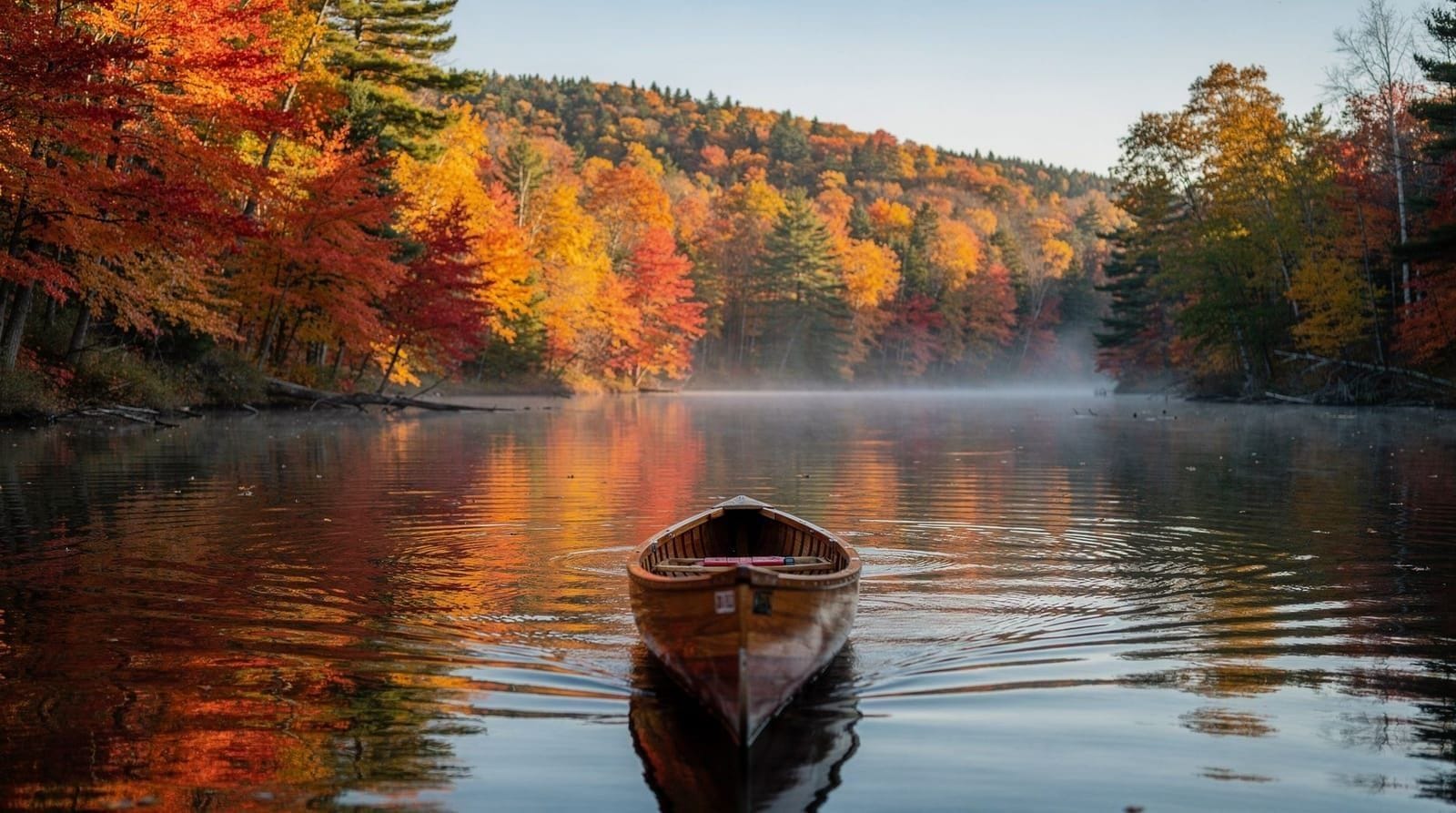
If you’d rather explore independently, Torrance Barrens Dark-Sky Preserve and the lookout at Rock Ridge Trail near Huntsville are both worth the drive — Torrance Barrens doubles as one of Ontario’s designated dark-sky preserves, so if your schedule allows a clear night here, it’s also a genuinely good stargazing spot away from any city light pollution. Rent a canoe for an hour or two on one of the smaller lakes if the weather is calm — reflections of fall color on still water are one of the region’s signature photo opportunities, and mornings tend to have the calmest conditions. The fall foliage in Muskoka guide has a fuller list of viewpoints and the region’s typical color timeline.
Day 3: Algonquin Provincial Park
Drive about an hour from Muskoka to Algonquin Provincial Park. This is the itinerary’s centerpiece day. The Algonquin Park Hiking: Adventure Tour covers a guided hike along the Highway 60 corridor’s most accessible trails, a solid choice if you want local knowledge of which lookouts are hitting peak color on the day you visit — conditions can vary meaningfully between trails even within the same week.
If you’d rather add a specific waterfall stop, the Algonquin Park and Ragged Falls Day Trip combines park access with Ragged Falls, a dramatic multi-tiered waterfall just outside the park’s west gate that’s an easy, short walk from the parking area and one of the more reliably photogenic stops in the region regardless of exact foliage timing.
Booth’s Rock Trail and the Lookout Trail, both along Highway 60, are the two most-recommended short hikes for foliage views if you’re planning independently — both are under 3 km round trip but climb to open granite viewpoints. The fall foliage in Algonquin Park guide has trail-by-trail detail and typical peak-color dates by year.
Pack a picnic lunch rather than counting on finding food inside the park — there are a handful of small concession stops along Highway 60 (the Portage Store at Canoe Lake among them), but options thin out considerably compared to what you’d find in a town, and they can get genuinely busy during peak foliage weekends. The Algonquin Visitor Centre, roughly the midpoint of the Highway 60 corridor, has both a small café and interpretive exhibits on the park’s ecology, worth a stop if you want context on what you’re seeing beyond the views themselves.
Day 4: A slower morning, then back to Toronto
Use the morning for one more short trail or a paddle on Canoe Lake before the roughly 3-hour drive back to Toronto (via Highway 60 to Highway 11, then south). If you’d rather not rush the drive, Muskoka makes a reasonable lunch stop roughly halfway through the return trip — Bracebridge or Huntsville both work well for this, letting you break the drive into two more manageable segments rather than one long final push, especially if fall weekend traffic is heavy on the way south.
Timing this trip correctly
Foliage progresses from north to south and from higher to lower elevation, so Algonquin typically peaks slightly before Muskoka — often by about a week. A realistic target is visiting Algonquin in the last week of September and Muskoka in the first week of October, though this shifts year to year. If your dates are fixed regardless of foliage timing, both regions are still worth visiting outside peak color — Algonquin’s lakes and Muskoka’s granite shoreline are attractive landscapes independent of the leaves, just a different kind of trip.
For a deeper dive on either region on its own, see Algonquin Provincial Park and Muskoka, or the Muskoka vs Algonquin guide if you’re deciding how to split your time between the two.
Booking accommodation for peak foliage weekends
Both regions see their single highest demand of the year during the roughly three-week foliage window, which means pricing climbs alongside demand — expect to pay 15–25% more per night than a comparable summer stay, and expect the best-located properties (lakefront in Muskoka, near the park’s west gate in Algonquin) to book out first. If your travel dates are flexible, a Sunday-to-Wednesday visit avoids the heaviest weekend crowds and pricing while still catching the same foliage window, since color doesn’t change meaningfully within a few days.
What this itinerary doesn’t cover
This route deliberately stays within Muskoka and Algonquin rather than looping further afield — it isn’t built to combine with Niagara Falls or Ottawa in the same trip, since foliage timing between the regions doesn’t line up well and the extra driving would eat into the two days this itinerary gives each stop. If a fall foliage trip with a broader mix of stops interests you more than the deep, two-region focus here, the 10-day Ontario road trip covers similar ground alongside the eastern half of the province, just with less dedicated foliage-chasing time in any single region.
It also assumes a car-based, moderate-hiking trip rather than a paddling-focused one — if canoeing Algonquin’s interior lakes is more your priority than short lookout hikes, the best canoe routes in Algonquin guide is a better starting point than this itinerary’s Highway 60 corridor focus.
Driving safety on fall evenings
Fall’s shorter daylight hours mean more of your driving happens near dawn or dusk than in a summer itinerary, which is exactly when wildlife — particularly deer and moose — is most active near the roadways through both regions. Reduce speed on rural stretches during these windows, and keep an eye on roadside shoulders and treelines rather than assuming clear pavement ahead, especially on Highway 60 through Algonquin, where moose crossings are a genuine and regularly reported hazard.
Where to base yourself in Muskoka
Bracebridge and Huntsville are both workable bases for the Muskoka half of this trip, and the choice matters more here than on a summer visit, since foliage-weekend traffic and booked-out inns can make switching towns mid-trip a hassle.
| Bracebridge | Huntsville | |
|---|---|---|
| Distance to Algonquin’s west gate | ~1 hour | ~30–40 minutes |
| Best for | Bracebridge Falls, Huckleberry Rock circuit | Rock Ridge Trail, closer Algonquin access |
| Town feel | Small, quiet downtown | Slightly larger, more restaurant choice |
| Booking pressure in fall | High, books out by August | High, books out by August |
If Algonquin’s Day 3 hike is the trip’s real priority for you, Huntsville shaves 20–30 minutes off that morning drive; if the Huckleberry Rock circuit and Bracebridge Falls matter more, stay in Bracebridge instead. Neither choice is wrong — both towns sit within the roughly 30–40 minute range of each other described above, so this is a minor optimization rather than a major decision.
Extending this into a longer trip
If four days feels tight, or you’d rather not rush the drive north and back on the bookend days, this itinerary slots directly into the northern half of the 10-day Ontario road trip, which adds Niagara Falls before Muskoka and Ottawa after Algonquin. For travelers who want more time inside the park itself rather than a broader loop, the Algonquin Park 3-Day Tour covers a longer, guided version of the Algonquin portion specifically, useful if you’d rather not self-drive between trailheads over multiple days.
Frequently asked questions about this fall foliage itinerary
When exactly is peak fall foliage in Algonquin and Muskoka?
Typically mid-to-late September for Algonquin and late September to early October for Muskoka, though this shifts by up to two weeks depending on the year’s temperature and rainfall patterns. Check a current-year fall color report in early-to-mid September before finalizing your exact travel dates.
Do I need a car for this itinerary?
Yes — there’s no public transit into Algonquin’s Highway 60 corridor or between Muskoka’s lake towns, and the itinerary depends on driving between multiple lookouts and trailheads each day.
Is this itinerary hiking-intensive?
Moderately — most of the recommended trails (Booth’s Rock, the Lookout Trail, Huckleberry Rock) are under 3 km round trip with some elevation gain to reach viewpoints, manageable for most fitness levels but not flat, casual walking. None require technical hiking experience.
How far in advance should I book accommodation?
As early as possible, ideally by August for late-September and early-October dates. Fall is peak season for both regions specifically because of the foliage, and the best-located properties near Algonquin’s west gate and Muskoka’s lakes book out weeks ahead.
What if I visit and the leaves haven’t turned yet, or have already dropped?
It happens, since exact timing varies year to year. Both regions remain scenic outside peak color — Algonquin’s lakes and granite outcrops and Muskoka’s shoreline are worth visiting on their own terms, just without the specific red-and-gold canopy that draws most visitors to this exact window.
Is this itinerary suitable for a weekend instead of 4 days?
Yes, with adjustments — cutting Day 1 or Day 4’s slower half-day and combining Muskoka and Algonquin into a tighter 2–3 day version works if you’re short on time, though you’ll want to prioritize Algonquin’s Day 3 hike over Muskoka’s lookout circuit if you have to choose.
What camera gear should I bring for foliage photography?
A basic interchangeable-lens camera or even a recent smartphone handles this trip well; a polarizing filter is the single most useful accessory if you have one, since it cuts glare on both leaves and lake water. A wide-angle lens suits the lookout-style viewpoints, while a short telephoto is useful for isolating individual trees or reflections on calmer water.
Are there fees to enter Algonquin Provincial Park?
Yes — a daily vehicle permit is required, purchasable at the park’s access gates or in advance online, and priced per vehicle rather than per person. Muskoka has no equivalent entry fee, since it’s a mix of towns and public access points rather than a single managed park.
Is this trip suitable for non-hikers?
Partially — Muskoka’s lake time and small towns don’t require any hiking at all, and even Algonquin’s short lookout trails are manageable for most fitness levels with some breaks. Travelers who genuinely can’t manage any walking should focus on Muskoka’s lake-based activities and treat the Algonquin day as a scenic drive along Highway 60 instead of a hiking day.
Top experiences
Bookable activities with verified prices and instant confirmation on GetYourGuide.