Things to do in Algonquin Park
Algonquin Park Hiking: Adventure Tour from Toronto
What are the best things to do in Algonquin Provincial Park?
Hike one of the short interpretive trails along Highway 60 (Booth's Rock and Lookout Trail are the strongest for a day visit), canoe on Canoe Lake or Rock Lake, and drive the Highway 60 corridor at dawn or dusk for the best chance of spotting moose.
Ontario’s most famous park, and why the Highway 60 corridor isn’t the whole story
Algonquin Provincial Park, roughly 2.5 hours north of Toronto, is Ontario’s oldest and best-known provincial park — nearly 7,700 square kilometres of Canadian Shield lake-and-forest terrain that most visitors experience through a fairly narrow slice: the Highway 60 corridor, a paved road running through the park’s southern edge with the majority of its day-use trailheads, campgrounds, and the Algonquin Visitor Centre. That’s not a criticism — the corridor genuinely delivers on a day visit — but it’s worth knowing that the vast majority of the park’s area lies well beyond it, accessible only by canoe or backcountry hiking.
Established in 1893, Algonquin predates most of Ontario’s other protected areas by decades, and its combination of accessibility (a paved highway running directly through it) and genuine wilderness scale (larger than the state of Delaware) is part of what’s made it the reference point for provincial parks across Canada. Huntsville, the nearest Muskoka town, functions as the practical gateway for most visitors coming from the west, while the park’s east gate connects more directly toward the Ottawa corridor if you’re combining a visit with the capital.
| Where | Highway 60 corridor, ~2.5hrs north of Toronto |
| Cost | Day-use permit around $21-23 CAD/vehicle |
| Time needed | Full day for the corridor highlights; longer for canoe trips |
| Getting there | Car required; no regular public transit into the park |
| Best time | Late May-early June for moose, late Sept for fall colour |
Hiking the Highway 60 corridor
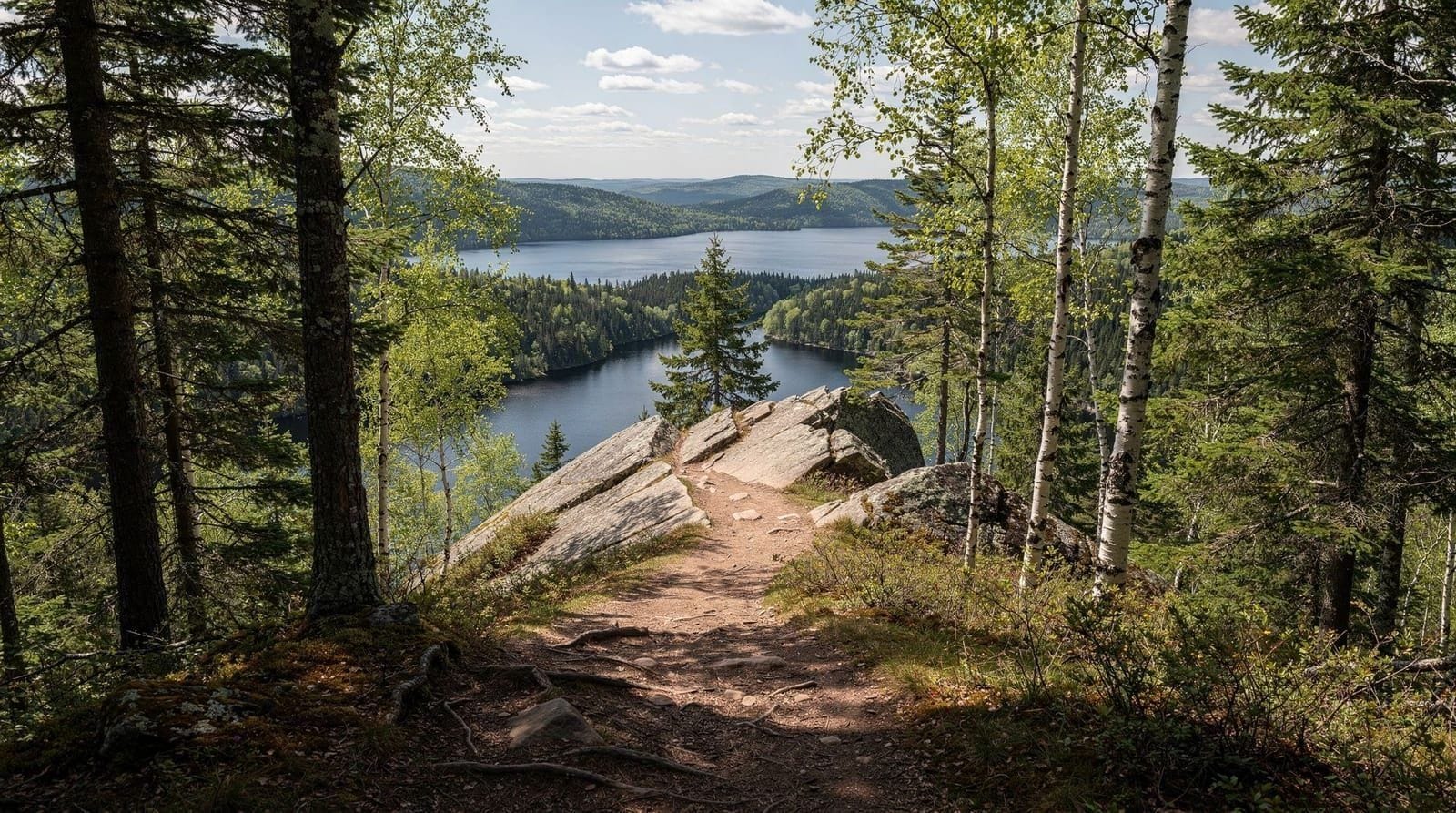
Algonquin maintains more than a dozen interpretive hiking trails directly off Highway 60, ranging from easy 15-minute boardwalk loops to multi-hour climbs, each with numbered stops and a trail guide (available at trailhead boxes) explaining the ecology and geology along the way. Lookout Trail, a roughly 2-hour loop, climbs to one of the park’s best panoramic viewpoints over the surrounding lakes and forest — a strong pick if you only have time for one hike. Booth’s Rock Trail offers a similar payoff with a slightly longer route past old-growth pine and a historic homestead site. For a full breakdown of trail difficulty and timing, see the Algonquin Park hiking guide.
Other notable trails along the corridor include Hardwood Lookout, a shorter, less strenuous climb suited to families, and Track and Tower Trail, which follows a former railway grade past beaver ponds to a former fire-tower site. Trail difficulty and length vary enough along the corridor that it’s worth matching your choice to your group’s fitness level rather than defaulting to the most popular option — the Visitor Centre staff are generally happy to advise based on current trail conditions and time available.
If you’d rather not plan the route yourself, a guided hiking tour from Toronto handles transport and trail selection in a single day trip, useful if you’re not driving or want a naturalist’s context on the park’s wildlife and history:
Algonquin Park hiking: adventure tour from TorontoCanoeing — the park’s signature activity
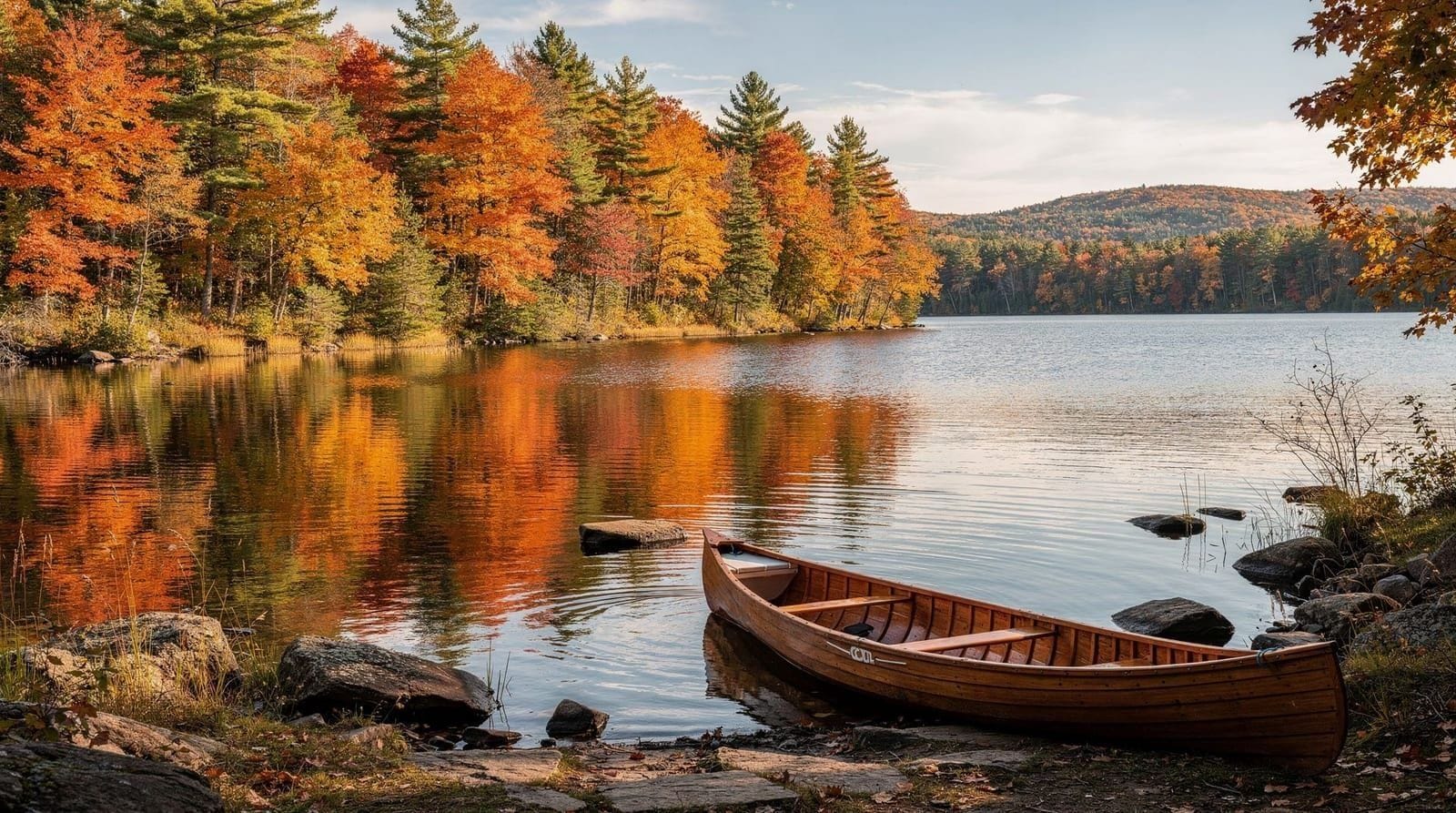
Algonquin is arguably Canada’s most iconic canoeing destination, with more than 2,400 lakes connected by portage trails that form one of the largest protected canoe-tripping networks in the world. Canoe Lake and Rock Lake, both accessible from Highway 60, are the easiest entry points for a day paddle without committing to a multi-day backcountry trip — canoe rentals are available at outfitters near both access points.
For visitors wanting the fuller wilderness experience, multi-day interior canoe trips are Algonquin’s real specialty, though they require permits, planning, and at minimum basic paddling and camping competence. For a curated list of specific routes by skill level, see best canoe routes in Algonquin.
Canoe Lake carries a specific piece of Canadian art history: it’s where Tom Thomson, the painter closely associated with the Group of Seven, died in a still-debated canoeing accident in 1917, having spent several seasons painting the surrounding landscape that would come to define a generation of Canadian landscape art. A small cairn near the lake marks the association, and several of the park’s most iconic views are the same ones Thomson painted more than a century ago.
Spotting wildlife along Highway 60
Algonquin has one of the healthiest moose populations in Ontario, and the Highway 60 corridor — particularly the stretch near wetland areas and mineral licks — is a reliable place to spot them, especially at dawn or dusk in late spring and early summer when moose gather near roadside salt licks. Drive slowly and expect informal “moose jams” (cars pulled over, cameras out) if one is spotted; black bears, otters, and a wide range of bird species round out the park’s wildlife, best seen with patience rather than a fixed schedule.
The Algonquin Visitor Centre
Near the park’s eastern gate, the Visitor Centre offers exhibits on the park’s ecology, geology, and human history (including its logging past — much of Algonquin’s forest was heavily logged before conservation took hold), along with a restaurant and viewing deck overlooking a wetland that’s often productive for wildlife spotting without leaving the building.
Camping in Algonquin
Algonquin has one of the most developed campground networks of any Ontario provincial park, with car-accessible sites along Highway 60 offering everything from basic tent pads to yurts and cabins for those wanting fewer of the traditional camping trade-offs. Reservations open months in advance through the Ontario Parks booking system and fill quickly for July and August weekends — a genuinely useful thing to know if a multi-day stay rather than a day trip is the plan. Backcountry interior campsites, reachable only by canoe or hiking, offer a considerably more remote experience and require their own separate permit and route planning.
Fishing in Algonquin’s lakes
Algonquin’s lakes support a genuine sport-fishing tradition, particularly for lake trout and brook trout in the park’s cooler, deeper waters — a legacy of the region’s history as a fishing retreat for wealthy Toronto and American visitors dating back over a century. A valid Ontario fishing licence is required, and specific regulations vary by lake and season, so checking current rules before casting a line is worth the few minutes it takes.
Algonquin Logging Museum
Near the park’s east gate, a short walking-trail museum tells the story of Algonquin’s logging era through preserved equipment and reconstructed camp buildings — a useful counterpoint to the park’s current conservation identity, since the same forests now protected for hiking and canoeing were, for much of the 19th and early 20th centuries, a major industrial logging operation supplying lumber to markets across North America.
Winter activities
Algonquin doesn’t close down in winter — cross-country skiing and snowshoeing take over several of the summer hiking trails, and the park’s quieter winter atmosphere appeals to visitors specifically seeking solitude over summer’s more sociable crowds. Access and services are considerably more limited than in peak season, so winter visitors should plan carefully and check current trail and road conditions before heading out.
Fall foliage — Algonquin’s peak season
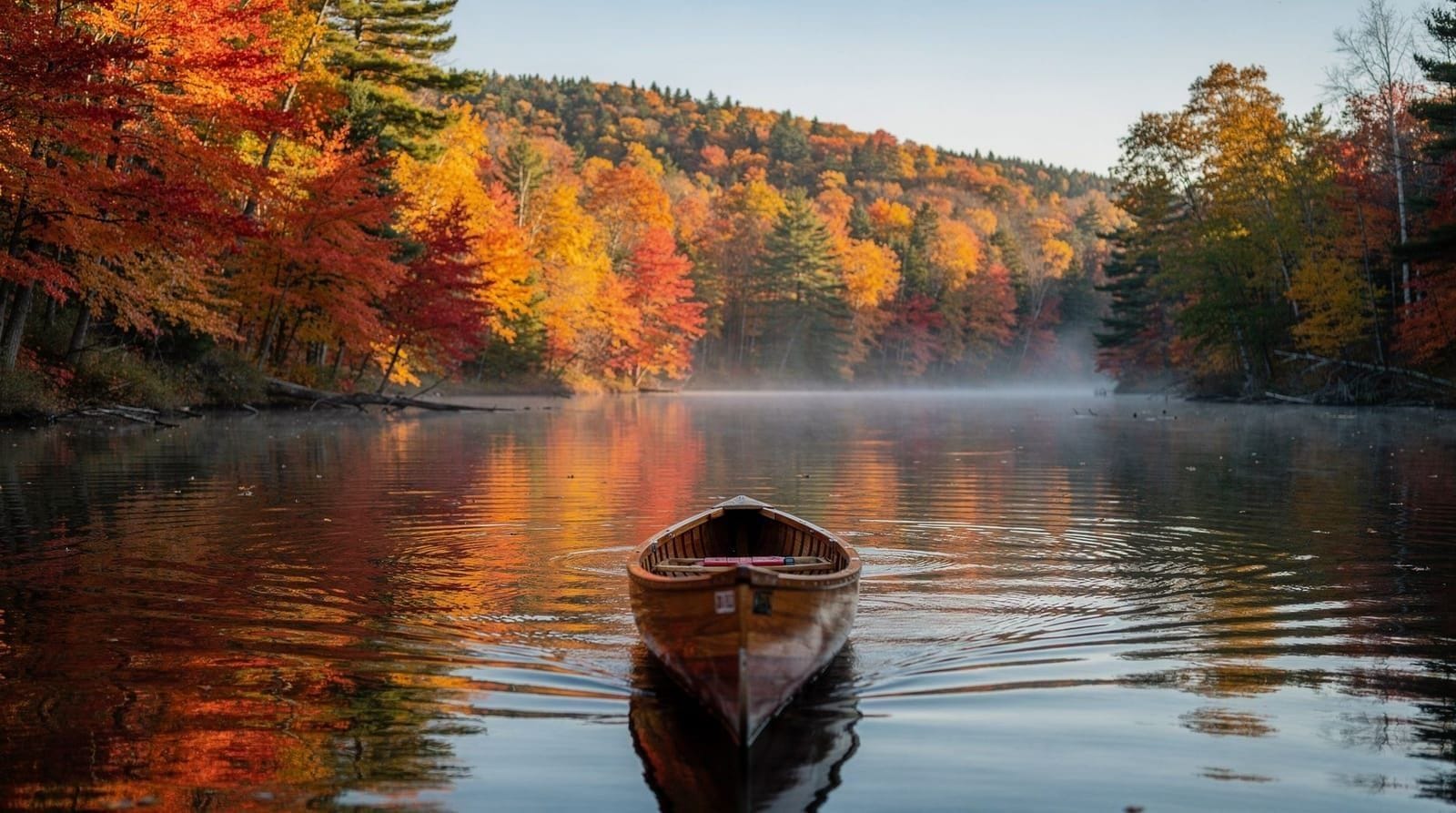
Late September into early October, Algonquin’s mix of sugar maple, birch, and pine turns the park into one of the most photographed fall-colour destinations in Ontario, drawing significant day-trip and weekend traffic specifically for the display. See fall foliage in Algonquin Park for a timing guide, since the peak window shifts annually and the park can genuinely reach capacity on peak weekends, with entry occasionally restricted once parking lots fill.
Practical notes
A park entry (day-use) permit is required and can be purchased at the gate or online in advance — during peak fall foliage weekends, buying ahead avoids the risk of being turned away if day-use capacity is reached. Cell service is minimal to nonexistent through most of the park, so download maps and directions before arriving. The park operates on a very different calendar from Muskoka’s towns: expect genuinely limited services (few restaurants, no real shopping) once you’re inside the gates — see Muskoka vs Algonquin guide for how the two neighboring regions differ in what they offer.
Multi-day options if a single day isn’t enough
A single day covers the Highway 60 corridor’s highlights comfortably, but Algonquin’s real scale — the interior canoe routes, multi-day backcountry trips, and the quieter stretches away from the main road — rewards more time if your schedule allows it. A multi-day guided trip handles the permits, gear, and route planning that make interior canoe camping genuinely daunting to arrange solo on a first visit:
Algonquin Park 3-day tour from TorontoRagged Falls and the park’s western approach
If you’re driving in from Huntsville, Ragged Falls — a dramatic multi-tier waterfall just outside the park’s western boundary — makes a worthwhile short detour on the way in or out, easily combined with a Highway 60 day visit without significant extra driving time. It’s a short, well-marked walk from the parking area to the falls viewpoint, considerably less effort than most of the corridor’s longer interpretive trails.
Algonquin Park and Ragged Falls day trip from TorontoPhotography in Algonquin
Beyond the classic fall-foliage shot, Algonquin rewards photographers willing to work around dawn and dusk — moose sightings, mist rising off lakes like Canoe Lake at sunrise, and the warm light on the park’s pines all favour an early start over a midday visit. The Visitor Centre’s viewing deck over its adjacent wetland is a reliable, low-effort spot for wildlife photography without a long hike, useful if you’re short on time or mobility.
Frequently asked questions about things to do in Algonquin Park
Can I visit Algonquin Park as a day trip from Toronto?
Yes, though it’s a long day given the roughly 2.5-hour drive each way — see Algonquin Park day trip from Toronto for a route that maximizes time in the park.
Do I need a permit to hike in Algonquin?
Day-use trails along Highway 60 require a park entry permit (purchased at the gate or online), but no separate hiking permit. Backcountry canoe camping requires a separate interior camping permit.
When is the best time to see moose in Algonquin?
Dawn and dusk in late spring through early summer, particularly along Highway 60 near wetlands and mineral licks, offer the best odds, though sightings are never guaranteed.
Is Algonquin Park good for beginners who’ve never canoed before?
Day paddles on Canoe Lake or Rock Lake are accessible to beginners with rental equipment and basic instruction from outfitters; multi-day backcountry trips are better suited to those with some paddling and camping experience.
How does Algonquin Park compare to Muskoka?
Algonquin is a protected wilderness park focused on hiking and canoeing with minimal development; Muskoka is a broader region of towns, lakes, and cottage communities with far more services and infrastructure. See Muskoka vs Algonquin guide for a full comparison.
Does Algonquin Park get busy?
Yes, particularly on fall-foliage weekends and summer long weekends, when day-use parking lots along Highway 60 can fill and entry is occasionally restricted until space opens up.
Do I need to book campsites in Algonquin far in advance?
Yes — Ontario Parks opens reservations months ahead, and Highway 60 corridor campgrounds regularly sell out for July and August weekends well before the season starts.
Can I fish in Algonquin Park without a guide?
Yes, with a valid Ontario fishing licence and awareness of lake-specific regulations, which vary across the park — checking current rules before your trip is worth the short time it takes.
Is Algonquin Park open year-round?
Yes, though services and trail access are considerably more limited in winter than in the May-through-October peak season — cross-country skiing and snowshoeing replace summer hiking and canoeing as the primary activities.
Is a single day enough to see Algonquin Park properly?
A single day covers the Highway 60 corridor’s highlights well, but it only scratches the surface of the park’s real scale — a multi-day trip is worth considering if interior canoe routes or backcountry camping genuinely interest you.
Top experiences
Bookable activities with verified prices and instant confirmation on GetYourGuide.