Algonquin Park day trip from Toronto
Toronto: Algonquin Park and Ragged Falls Day Trip
Can you visit Algonquin Park as a day trip from Toronto?
Yes, though it's a long day — the West Gate is about 2.5 hours from Toronto by car, or over 3 hours to reach the park's most popular trails along the Highway 60 corridor. A day trip works, but you'll spend close to 5 hours total driving, leaving roughly 5 to 6 hours in the park itself.
The furthest of Toronto’s classic day trips, and worth the drive
Algonquin Provincial Park is the most ambitious of the standard Toronto day trips — further than Niagara, further than Muskoka — but it’s also the one that delivers the most genuine wilderness for the effort. This is Ontario’s oldest and most famous provincial park, nearly 7,700 square kilometres of lakes, forest, and rock that inspired the Group of Seven painters and remains one of the best places in the province to see real fall colour, spot a moose, or simply get quiet in a way that’s impossible in the city.
| Where | Highway 60 corridor, West Gate ~300 km / 2.5-3hrs from Toronto |
| Cost | around 60-120 CAD/person incl. permit, gas, canoe rental |
| Time needed | full day, ~4-5 hours actually inside the park |
| Getting there | car only, or a guided day tour with transport |
| Best time | late Sept-early Oct for foliage, late May-June for moose |
Almost everything a day-tripper can reach sits along Highway 60, a 56 km paved corridor cutting through the park’s southern edge between the West Gate (closer to Huntsville) and the East Gate (closer to Whitney). This corridor holds the visitor centre, the park’s most accessible hiking trails, canoe put-in points, and the handful of lookout points that don’t require backcountry permits. The vast majority of the park’s interior — the part serious canoe-trippers spend days paddling into — is inaccessible without a multi-day backcountry trip, which is worth knowing going in so you’re not disappointed that a day trip only scratches the surface.
Getting there
The drive from downtown Toronto to the West Gate is roughly 300 km, typically 2.5 to 3 hours via Highway 400 north, then Highway 11 through Muskoka to Highway 60 near Huntsville. If your destination is deeper into the park — the Algonquin Visitor Centre or Canoe Lake, both popular anchors — add another 20 to 30 minutes of driving along Highway 60 itself, which is scenic but has a lower speed limit than the highway you’ve just left.
There’s no public transit option that makes this trip practical without a car. A few seasonal shuttle services exist for backcountry canoe access, but nothing that functions as day-tripper transport from Toronto. If you don’t want to drive yourself, a guided option like the Toronto: Algonquin Park and Ragged Falls day trip handles the drive and typically builds in a stop at Ragged Falls along the way, a genuinely striking cascading waterfall just off Highway 60 that’s easy to miss if you’re navigating yourself.
What a one-day itinerary realistically covers
Given the drive time, plan to arrive by late morning at the earliest and leave by mid-afternoon to be back in Toronto at a reasonable hour. That leaves roughly 4 to 5 hours inside the park.
Ragged Falls (30–45 minutes). A short, easy walk (about 15 minutes each way) from a small parking area off Highway 60, just outside the park’s West Gate, brings you to a wide, multi-tiered waterfall on the Oxtongue River. It’s one of the most photogenic and least effort-intensive stops in the region and a natural first stop coming from Toronto.
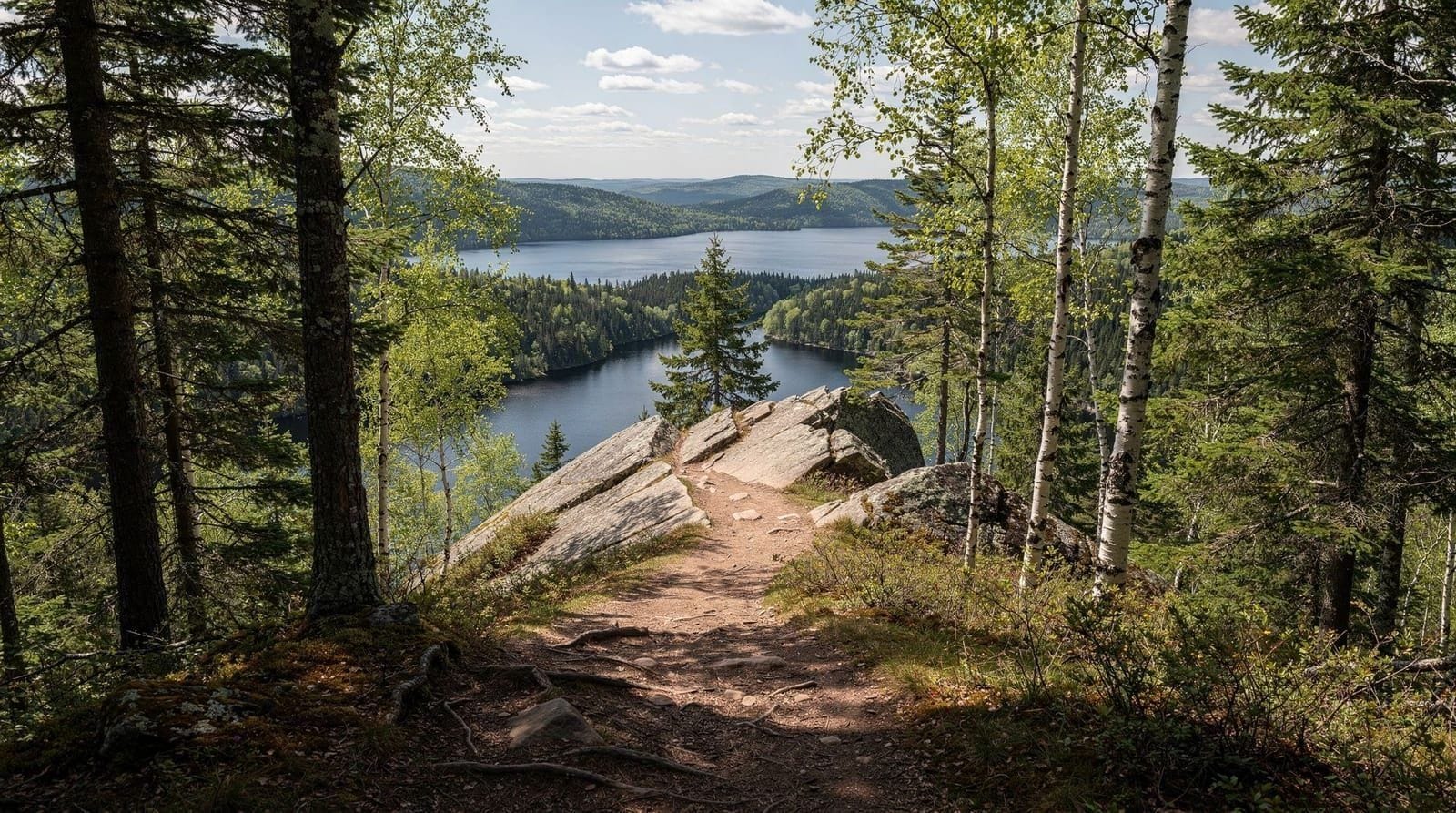
One short hiking trail (1.5–2.5 hours). Algonquin maintains a series of well-marked interpretive trails along Highway 60 ranging from 30-minute loops to half-day hikes. The Whiskey Rapids Trail (about 2 km, roughly an hour) follows the Oxtongue River through mixed forest and is a solid pick for a moderate but not exhausting walk. The Track and Tower Trail (about 7.5 km, 2.5 to 3 hours) climbs to a former fire tower site with panoramic views and is the better choice if you want a real hike and have the time. The Hardwood Lookout Trail is shorter (about 800 m) and delivers one of the best single viewpoints in the corridor for relatively little effort, making it a good option if your time is tight.
Algonquin Visitor Centre (30–45 minutes). Perched on a ridge with a genuinely good view over a wetland valley, the visitor centre has natural history exhibits, a bookstore, and a café with a deck looking out over the same view — a good spot to eat lunch. It’s also the most reliable place to get current trail conditions and wildlife sighting reports from staff.
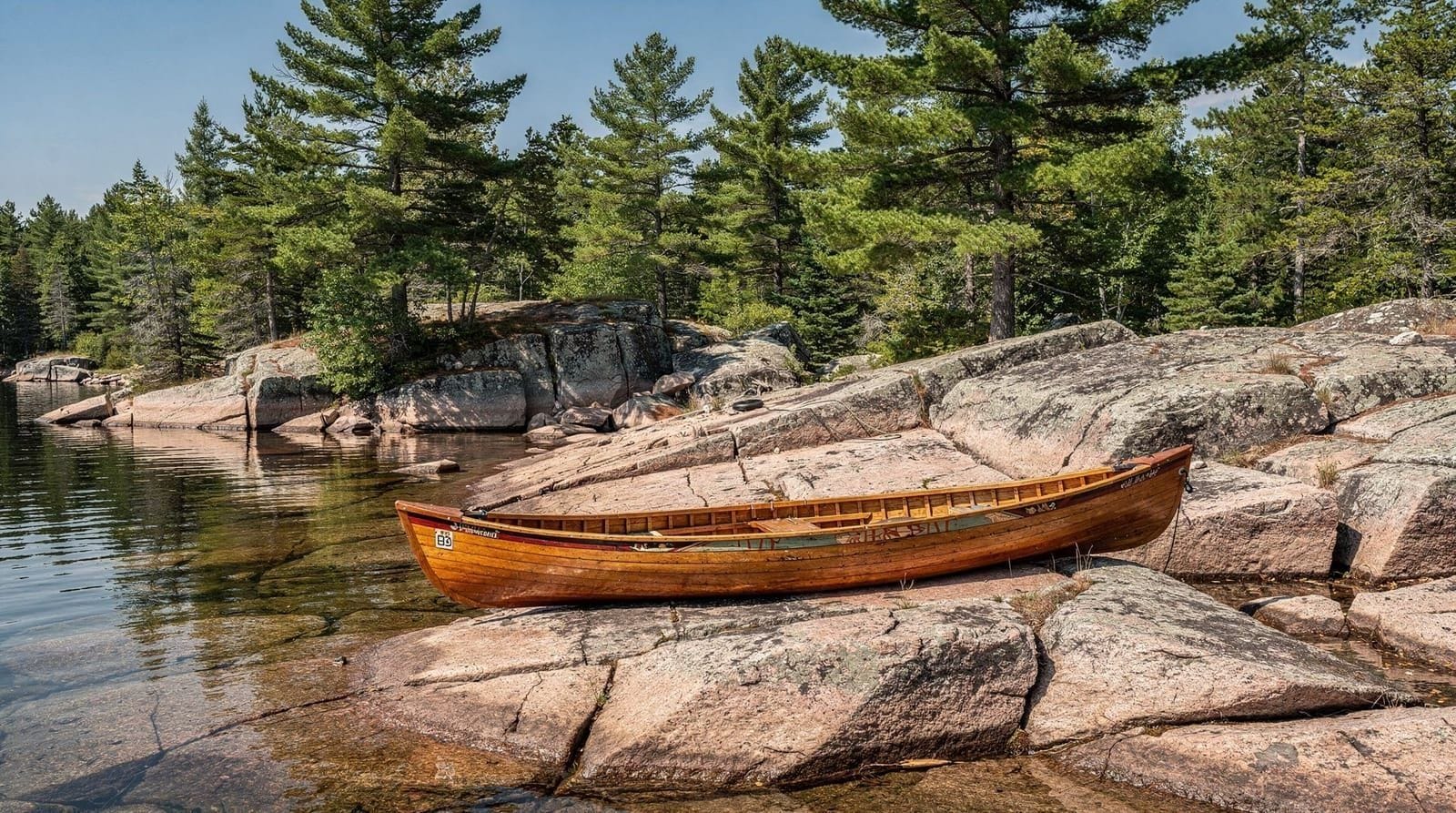
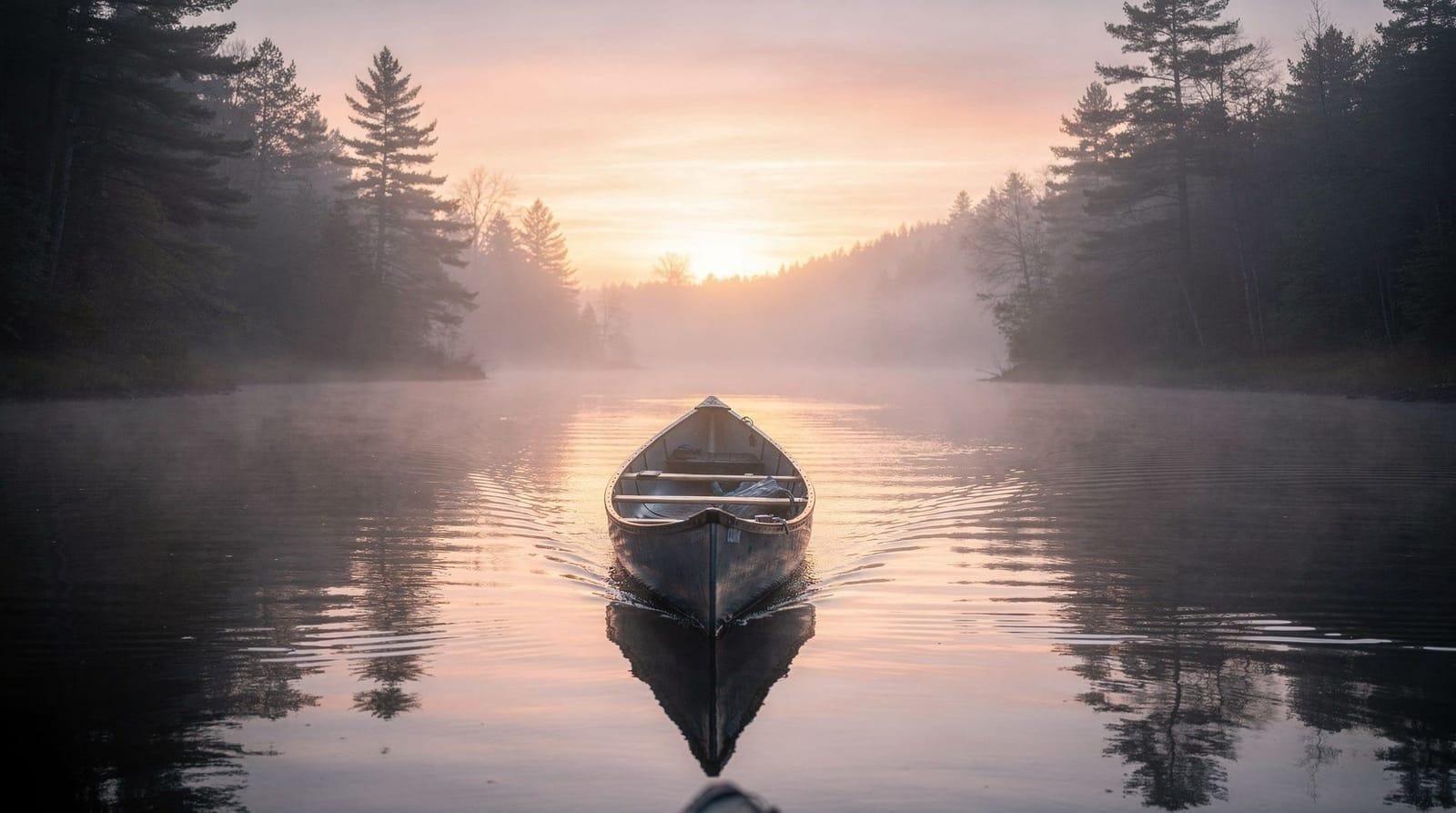
Canoe Lake or a rental canoe (1–2 hours, optional). If you want time on the water rather than just beside it, several outfitters near the park rent canoes and kayaks by the hour at put-in points along Highway 60. Even 45 minutes of paddling on a quiet lake gives a different sense of the park than the roadside trails alone.
What you won’t get to on a day trip
The backcountry — the multi-day canoe routes through chains of interior lakes that most seasoned Algonquin visitors consider the real park — is out of reach on a single day. So is any meaningful chance at extended wildlife viewing beyond roadside sightings; serious moose and wolf watching generally requires staying overnight and being out at dawn or dusk when animals are most active near the road corridor. If the wilderness experience is the primary draw, treat a day trip as a scouting mission for a longer future visit rather than the full Algonquin experience.
Fall colour and moose season — the two reasons people plan around timing
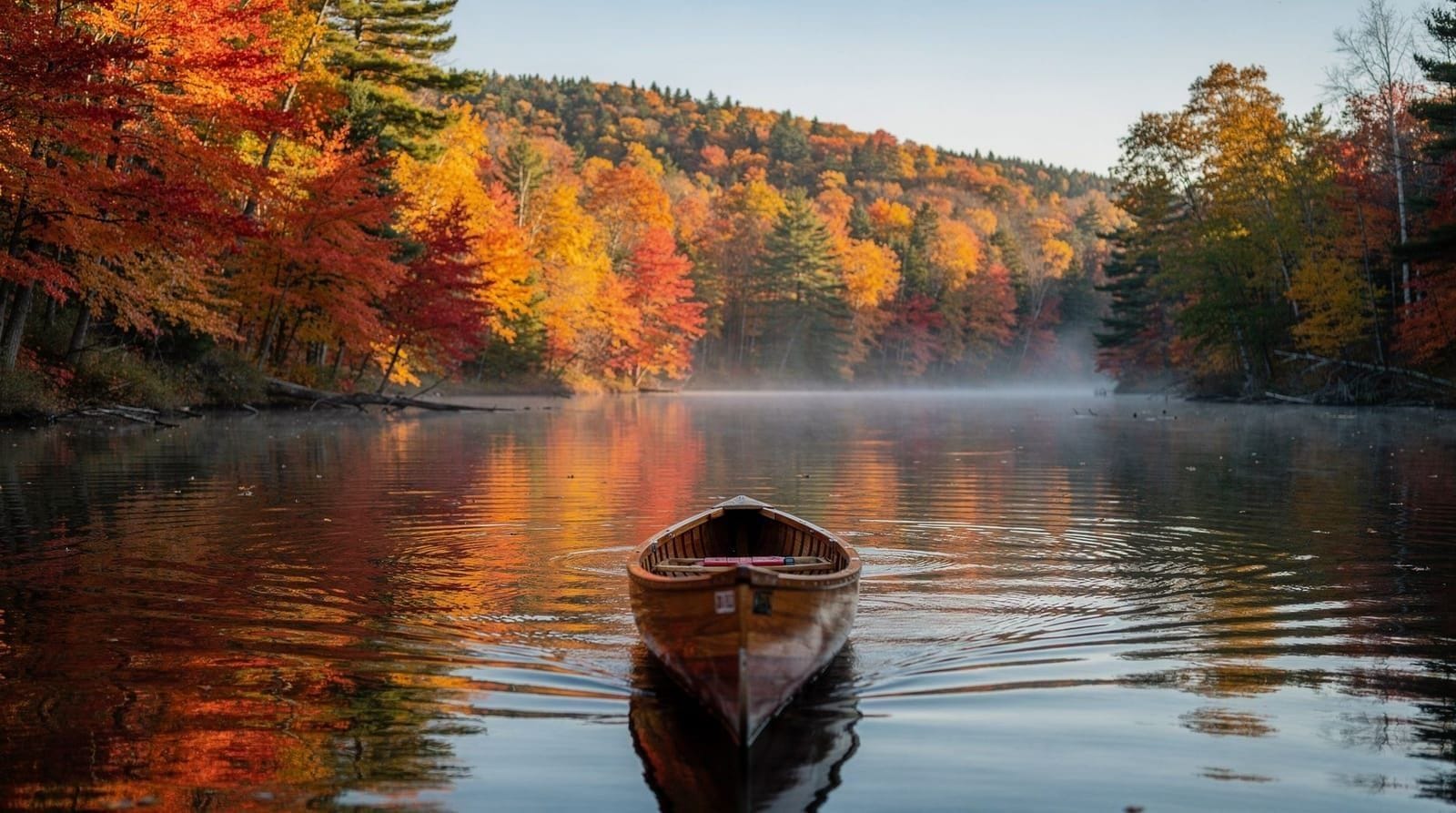
Algonquin’s fall foliage display is one of the best in Ontario, driven by the mix of sugar maple, red maple, and yellow birch along the Highway 60 corridor. Peak colour typically falls in the last week of September into the first week of October, though the exact window shifts year to year with temperature. This is also, unavoidably, the single busiest period for day visits — expect full parking lots at the popular trailheads and a slower drive along Highway 60 itself as everyone stops for photos.
Moose sightings are the other big draw, and late May into June is the best window, when moose are drawn to roadside ponds and to lick salt residue from winter road treatment near the pavement edge. Early morning and dusk offer the best odds; a midday summer visit is far less likely to produce a sighting, though it’s not impossible.
Why the Group of Seven painted here, and why it still matters to the visit
Algonquin holds a specific place in Canadian art history — Tom Thomson and several members of the Group of Seven painted extensively within the park in the early 20th century, capturing the distinctive combination of rock, water, and northern forest that became a defining visual language for Canadian landscape art.
Thomson himself drowned on Canoe Lake in 1917 under circumstances still debated by historians, and a memorial cairn near the lake marks the spot. This history isn’t just trivia — it explains why so many of the park’s most photographed viewpoints (the Lookout Trail among them) carry a slightly different weight for Canadian visitors than a typical scenic overlook, and it’s worth knowing before a lookout starts to feel like just another view.
What backcountry access actually requires, if you’re tempted to go further
For day-trippers whose interest is piqued by the roadside corridor and who start wondering about the park’s famous interior canoe routes, it’s worth understanding the gap clearly. Backcountry camping requires a separate permit system, a reservation made well in advance (particularly for popular access points during summer and fall weekends), and genuine wilderness trip planning — portage routes, canoe rental or transport, food and gear for multiple days. This isn’t something to improvise same-day. If the roadside day trip leaves you wanting more, the practical next step is planning a dedicated multi-day trip rather than trying to extend a single day into an impromptu backcountry excursion.
Wildlife safety notes worth taking seriously
Algonquin has a healthy black bear population, and while attacks are rare, food storage discipline matters even for day-trippers having a roadside picnic — don’t leave food unattended, and use provided garbage receptacles rather than leaving anything in the open. Moose, despite their docile appearance, are large animals that can be dangerous if approached too closely, particularly cows with calves in late spring; view them from your vehicle or a respectful distance rather than approaching on foot for a closer photo, a mistake visitors make more often than park staff would like.
Budget for an Algonquin day trip
A day-use vehicle permit runs around 21 CAD, purchased at the gate or online in advance (recommended on weekends during peak fall colour, when gate lines can back up). Add gas for the roughly 600 km round trip, a canoe rental if you want one (typically 30 to 45 CAD per hour), and a modest lunch, and a solo or shared-car day trip lands somewhere between 60 and 120 CAD per person depending on group size and how much you rent. A guided day trip that includes transport removes the driving from the equation entirely, which matters given how long the drive itself is.
Practical notes before you go
Fuel up before Huntsville — gas stations thin out along Highway 60 itself. Cell service inside the park is unreliable to nonexistent past the West Gate, so download offline maps and let someone know your planned route and return time, standard practice for any wilderness area regardless of how accessible the corridor feels. Bring bug spray between late May and July, when blackflies and mosquitoes are at their worst — this is not optional if you’re doing any of the longer trails. Layer clothing even in summer; temperatures in the park run several degrees cooler than Toronto, especially near water and in shaded forest sections.
Algonquin rewards an early start more than any other day trip on this list, simply because the drive eats so much of the day. Leave Toronto by 7 or 7:30 a.m. if you want a genuinely unhurried few hours in the park rather than a rushed loop that has you turning around almost as soon as you arrive.
Algonquin versus Muskoka for a single day trip
Both are the classic long-weekend escapes from Toronto, but they suit different priorities. Muskoka is closer, more resort-oriented, and easier to pair with a lake swim or a cottage-country lunch, while Algonquin trades that convenience for genuine provincial-park wilderness and a much stronger shot at real hiking and wildlife. If you’re undecided, the Muskoka vs Algonquin guide breaks down which region better fits a hiking-focused day versus a more relaxed lake day.
Skipping the drive: rail and guided alternatives
Algonquin has no direct rail service, which puts it firmly in the car-only category — see best day trips from Toronto by train for which Ontario day trips work without a vehicle if driving isn’t an option. For visitors without a car who still want the Algonquin experience, a guided day tour that includes transport is the practical workaround, and it also removes the fatigue of driving roughly 5 to 6 hours in a single day on top of hiking.
Turning a day trip into something longer
If a single day in the Highway 60 corridor leaves you wanting more, the natural next step is either a longer hiking day — see the Algonquin Park hiking guide for trail-by-trail detail beyond the short stops a day trip allows — or a paddling-focused visit using the best canoe routes in Algonquin as a starting point. Both make a stronger case for staying overnight near the park than trying to pack everything into a single long day. For a broader sense of what else the park offers beyond the day-trip basics covered here, things to do in Algonquin Park rounds out the picture.
Frequently asked questions about an Algonquin Park day trip
Is Algonquin Park too far for a day trip from Toronto?
It’s the longest of the standard day trips from the city — roughly 5 to 6 hours of driving round trip — but it’s doable if you leave early and accept that you’ll spend more time in the car than on trips to Niagara or Muskoka. Many visitors find the payoff, particularly during fall colour, worth the extra drive time.
What’s the best single trail for a day visitor with limited time?
The Hardwood Lookout Trail delivers one of the best views in the Highway 60 corridor for under an hour of walking, making it the best pick if you only have time for one short hike. For something more substantial, the Track and Tower Trail offers a genuine hike with a rewarding summit view.
Do I need to book anything in advance for a day trip?
Day-use vehicle permits can be bought at the gate, but buying online in advance avoids potential gate queues during fall colour weekends. Canoe rentals at the more popular put-in points are worth reserving ahead during peak season, as they can sell out on busy fall weekends.
Can I combine Algonquin Park with Huntsville or Muskoka in the same trip?
It’s tight but possible if you start very early — Huntsville sits about 25 minutes from the park’s West Gate, so a partial stop there on the way in or out is feasible. Trying to properly cover both Muskoka’s lakes and Algonquin’s trails in a single day generally means shortchanging one or the other.
What wildlife might I actually see on a day trip?
Deer and beaver are the most commonly spotted animals along the Highway 60 corridor at any time of year. Moose require more specific timing (late May to June, dawn or dusk) and luck, while wolves are rarely seen and mostly heard, if at all, during evening howls organized by park staff on select summer nights.
Is Algonquin worth it compared to a closer day trip like Muskoka?
It depends on what you want — Algonquin delivers more genuine wilderness, hiking, and wildlife-watching potential, while Muskoka is closer, easier, and better suited to a relaxed lake day. Neither is objectively better; see the Muskoka vs Algonquin comparison above for how to decide.
Can I do Algonquin as a day trip without a car?
Not practically on your own — there’s no direct rail or transit service into the park. A guided day tour with included transport is the only realistic car-free option.
Top experiences
Bookable activities with verified prices and instant confirmation on GetYourGuide.