Muskoka day trip from Toronto
Muskoka Day Trip with Bracebridge RV-Motorhome Tour
Can you visit Muskoka as a day trip from Toronto?
Yes, though it's a longer day than Niagara — Muskoka is about 2 hours by car via Highway 11. A day trip works best if you pick one lake town (Bracebridge, Huntsville, or Port Carling) rather than trying to cover the whole region, since the towns and lakes are spread out and connected by scenic but slow roads.
Cottage country in a single day, without the cottage
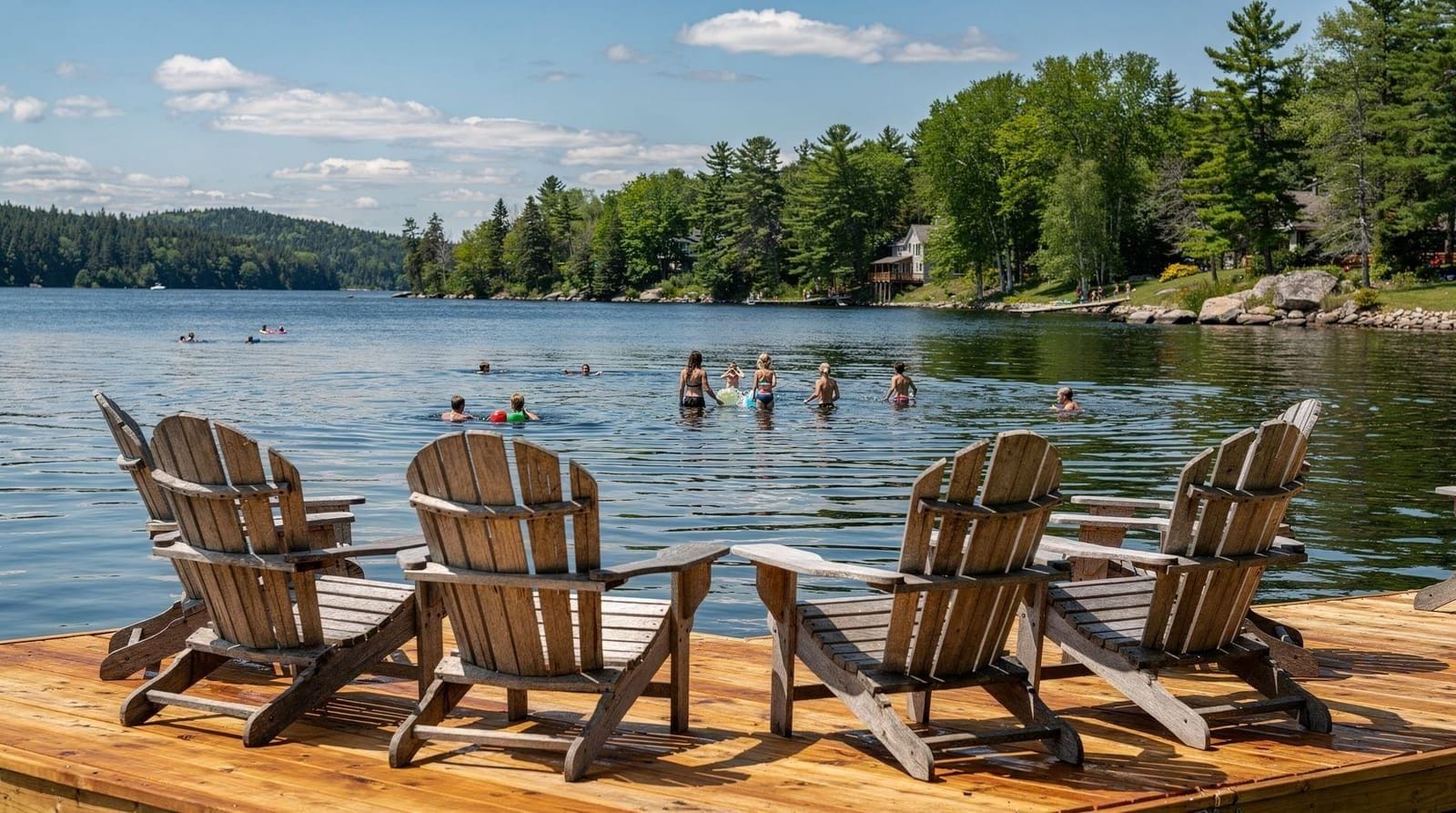
Muskoka is where Toronto goes to escape Toronto — a scatter of lake towns two hours north where the city’s wealthier residents have kept summer cottages since the 1900s, and where “the lake” has become shorthand for a whole way of unwinding. Visiting for a day rather than staying at a resort or renting a cottage changes the experience: you won’t be swimming off a private dock or lounging on a Muskoka chair with a rental all to yourself, but you can still get a real feel for why people love this region, provided you set realistic expectations about how much ground you’ll cover.
| Where | Muskoka, about 2 hours north via Highway 11 |
| Cost | Around 40-150 CAD/person depending on activities |
| Time needed | A full day; pick one lake town rather than all three |
| Best time | Late Sept-mid Oct for fall colour and thinner crowds |
| Getting there | Car essential — no meaningful public transit |
The region spans three main lakes — Muskoka, Rosseau, and Joseph — and several towns strung along Highway 11 and the connecting roads between them. Gravenhurst is the southern gateway and the most accessible by a wide margin. Bracebridge sits roughly in the middle and is the most practical single-town day-trip target. Huntsville is furthest north and doubles as the last stop before Algonquin Park. Port Carling, tucked between Lake Rosseau and Lake Muskoka, is smaller but has an outsized reputation for boat traffic and upscale shopping.
Getting there and getting around
The drive from downtown Toronto to Gravenhurst is about 165 km, typically 2 hours via Highway 400 north to Highway 11. Bracebridge adds roughly 15 minutes further north, Huntsville another 25 to 30 minutes beyond that. Friday afternoons in July and August see serious cottage-traffic congestion on this corridor — locals refer to it as “the Muskoka crawl” — so a Saturday morning departure or an early weekday trip avoids the worst of it.
There is no meaningful public transit connecting Muskoka’s towns and lakes to each other or reliably from Toronto — this is a car-dependent region by design, built around cottage access rather than day-tripper convenience. If you don’t want to drive yourself, a guided option like the Muskoka day trip with Bracebridge RV-motorhome tour handles the transport and gives you a structured look at the town and surrounding lake scenery without needing your own vehicle.
What a realistic one-day itinerary looks like
Gravenhurst first (30–45 minutes), if you’re driving through anyway. It’s the first proper Muskoka town on the route north and has a genuinely walkable downtown, the historic Gravenhurst Wharf, and the RMS Segwun, a restored 1887 steamship that still runs scenic cruises on Lake Muskoka in season. If your day is tight, this is the town to skip in favor of pushing on to Bracebridge — Gravenhurst is pleasant but the least distinctive of the three main stops.
Bracebridge as the anchor (2–3 hours). Bracebridge Falls sits right in the middle of downtown, a genuine waterfall you can view from a bridge without leaving the main street — an unusual bit of urban planning that makes the town worth the drive on its own.
The downtown strip has cafés, an ice cream shop that’s a local institution, and a handful of outfitters if you want to rent a kayak or paddleboard for an hour on the Muskoka River — see our Muskoka hiking and canoeing guide for the region’s better paddling spots if you have more than a quick hour on the water. This is also where the Muskoka day trip tour centers its itinerary, combining the falls with a scenic drive around the lake.
Lake access (1–2 hours). Public beach access exists at a few points — Annie Williams Memorial Park in Bracebridge has a small beach and picnic area right on the Muskoka River, a reasonable stand-in for lake time if you don’t have a cottage or resort day pass. Muskoka Wharf in Gravenhurst is the better bet for simply watching the boat traffic, an activity that’s more entertaining than it sounds once you understand how central boats are to how this region actually functions.
Optional: Huntsville and Muskoka Heritage Place (1–2 hours, only if starting early). Huntsville has a longer, more developed downtown than Bracebridge and access to Fairy Lake, plus Muskoka Heritage Place, a small pioneer village and railway attraction that works well if you’re traveling with kids. Reaching Huntsville and getting back to Toronto at a reasonable hour requires an early start — realistically before 8:30 a.m. If Huntsville’s proximity to Algonquin Park tempts you further, see our Algonquin Park day trip from Toronto guide for why combining both into one day is a stretch better saved for a separate trip.
Muskoka versus a day trip to Algonquin Park
Both regions sit roughly the same drive north of Toronto, and travelers often weigh one against the other for a single day out. Algonquin Park leans harder into hiking and canoeing with minimal town infrastructure, while Muskoka centers on lake towns, restaurants, and shopping alongside its water access. If your day is built around a relaxed lake-town pace rather than an active hiking or paddling agenda, Muskoka is the easier single-day choice; our Muskoka vs Algonquin guide breaks down the fuller comparison for anyone still deciding between the two.
What you’re not going to get in a single day
The resort experience — infinity pools looking over the lake, spa treatments, private beach access — is largely off the table for day-trippers, since Muskoka’s resorts (Taboo, JW Marriott Rosseau, Deerhurst) are built around overnight stays and often reserve amenities for guests. Our Muskoka family resorts guide covers what an actual multi-night resort stay looks like if a day trip leaves you wanting more.
Scandinave Spa, the Nordic-style outdoor spa near Whitehorse Lake, does accept day visitors but requires advance booking and works better as the day’s sole activity rather than one stop among several. Port Carling’s Lake Rosseau and Lake Joseph — the two “million dollar” lakes with the most dramatic cottage architecture — are also harder to appreciate without a boat, since most of what makes them visually striking is only visible from the water.
Why Muskoka became “cottage country” in the first place
Muskoka’s identity as Ontario’s premier cottage region dates back over a century, when wealthy Toronto and even American families began building summer retreats along its lakeshores in the late 1800s and early 1900s, drawn by the rail line that once connected the region directly to Toronto (long since discontinued for passenger service, part of why the area is now car-dependent).
That history left a visible mark: many of the older cottages and resort buildings around Lake Rosseau and Lake Joseph in particular reflect a distinctly early-20th-century architectural style, all wraparound porches and boathouses, that gives the region a different visual character than more recently developed lake destinations elsewhere in Ontario. Understanding this history helps explain why Muskoka carries a certain social cachet in Toronto conversation that other cottage regions don’t quite match — it’s less about any single lake being more scenic than about a hundred-plus years of established tradition.
A honest look at what makes Muskoka worth the drive
It’s fair to ask, given the length of the drive, whether Muskoka genuinely offers something Toronto’s own waterfront or closer parks can’t. The answer comes down to water clarity and quiet — Muskoka’s lakes are deep, clean, and Canadian Shield-fed, a genuinely different swimming experience than Lake Ontario’s murkier, more urban shoreline.
The towns themselves, while pleasant, are not the primary draw; the appeal is fundamentally about the lakes and the slower pace that comes with being somewhere cottages outnumber commercial development. Day-trippers who arrive expecting a bustling resort town experience akin to Niagara Falls sometimes come away underwhelmed, since Muskoka’s towns are genuinely modest in scale — the reward is in the water and the quiet, not in a dense list of attractions.
Practical differences between the three main towns
Beyond the basics, each Muskoka town has a slightly different practical character worth knowing before choosing where to spend your limited day-trip hours. Bracebridge functions as the area’s administrative and commercial hub, with the widest range of everyday services (grocery stores, banks, a hospital) alongside its tourist-facing downtown — useful if you need anything beyond sightseeing.
Huntsville has grown the most in recent years relative to its size, with a livelier restaurant scene than its population might suggest, partly fueled by proximity to Algonquin Park traffic passing through. Port Carling, by contrast, remains almost entirely oriented around the boating economy — its downtown is compact and boutique-heavy, reflecting the wealth concentrated on the surrounding “Lake of Bays” area, and it has the least to offer a visitor without access to a boat.
Seasonal timing that changes the plan significantly
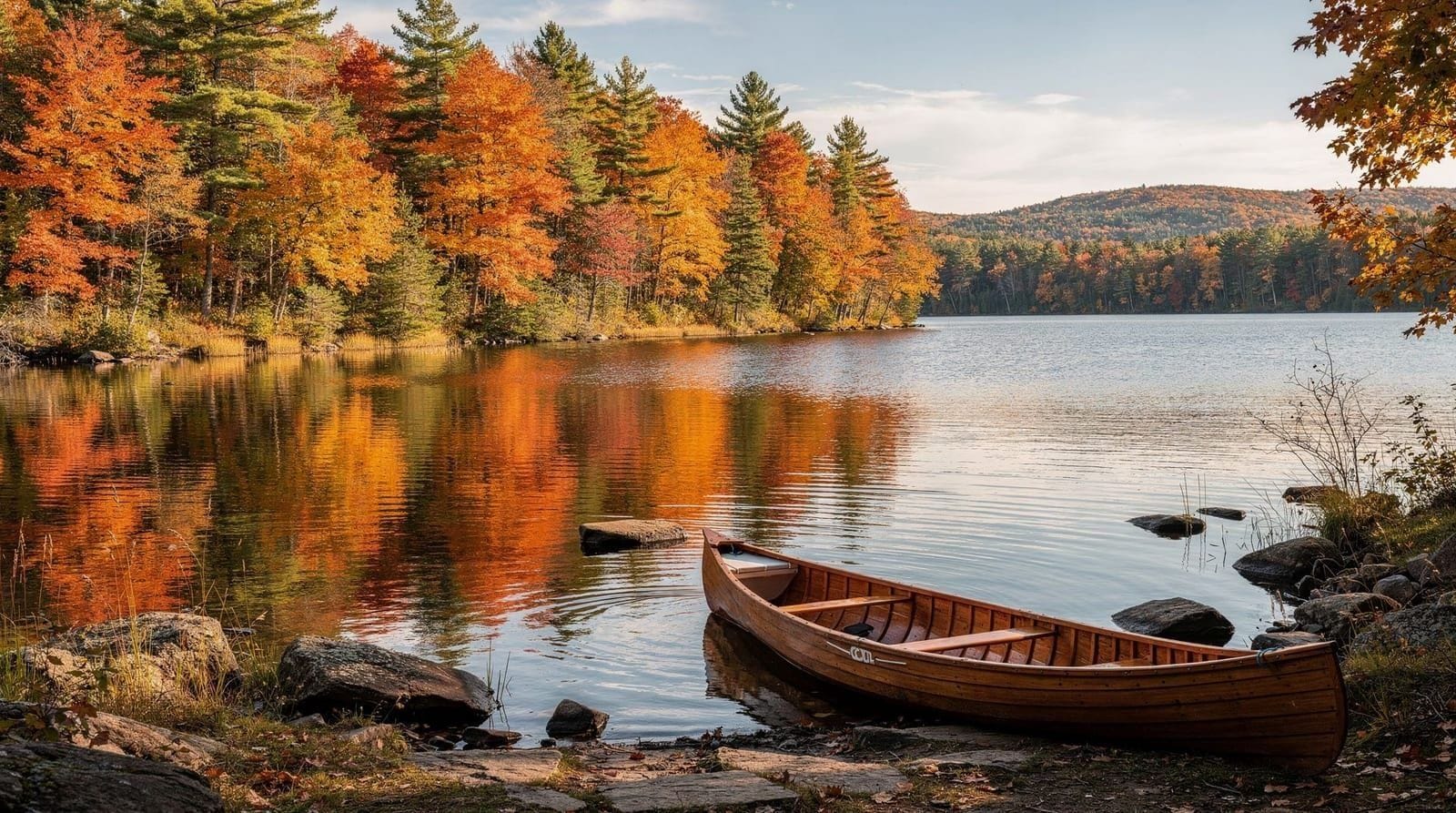
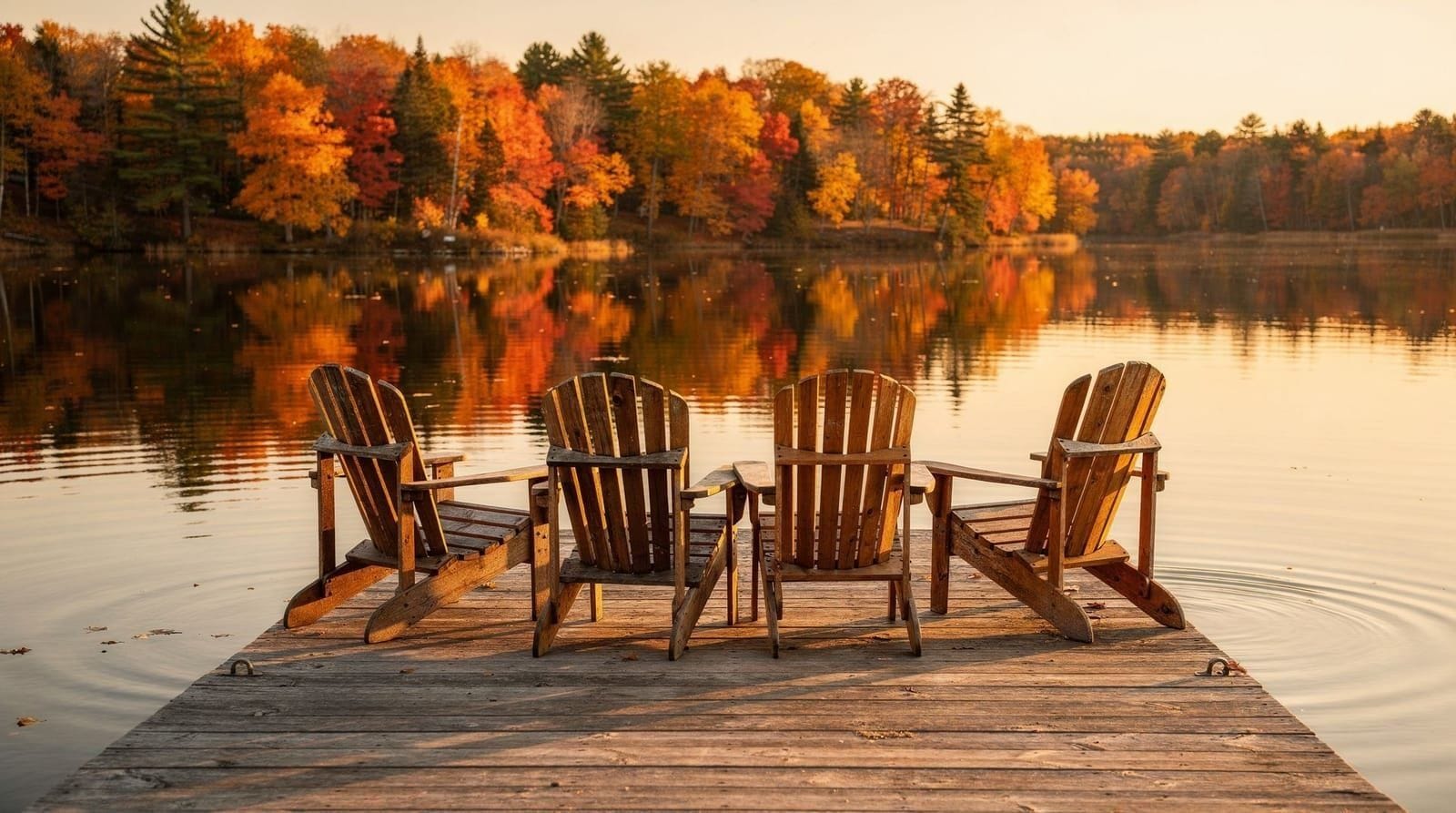
Summer (late June to early September) is Muskoka at full capacity: warm enough to swim, every shop and restaurant open, but also the busiest roads and the priciest everything. Fall, specifically late September through mid-October, is widely considered the best time to visit — the sugar maples around the lakes turn a vivid red and orange, temperatures are comfortable for hiking, and the crowds thin out substantially after Labour Day.
Winter access is real but limited: many resorts close or scale back between seasons, some independent shops shut for the off-season entirely, and while the towns themselves stay reachable by highway, smaller roads leading to lakeside properties can become difficult without winter tires or four-wheel drive. Spring (April–May) is genuinely the least rewarding season for a day trip — many businesses haven’t reopened yet, and the lakes are still too cold for anything beyond looking at them.
Budget for a Muskoka day trip
A driving day trip with lunch in Bracebridge and no paid attractions runs 40 to 70 CAD per person, mostly gas and food. Adding a kayak or paddleboard rental (typically 25 to 40 CAD per hour) or the Segwun steamship cruise (around 40 to 60 CAD for a shorter sightseeing cruise) pushes the total closer to 100 to 150 CAD. A guided RV-motorhome day trip bundles transport and a structured itinerary, which suits travelers without a car or those who’d rather not navigate the Highway 11 corridor themselves.
Practical notes before heading north
Fuel up before leaving the highway corridor — gas stations in the smaller lake towns can be pricier and less consistently open than you’d expect. Cell coverage is generally reliable in the main towns but drops off around the lakes and on smaller connecting roads, so download offline maps if your route includes back roads. Reservations matter more in Muskoka than in Toronto for restaurants during July and August weekends — walk-in seating at the more popular spots can mean an hour’s wait. If swimming is part of the plan, water temperatures typically don’t feel comfortable until mid-June and cool off again by early September, so check conditions if visiting outside peak summer.
Muskoka rewards patience more than efficiency — the appeal is largely about slowing down, which sits awkwardly with a tightly scheduled day trip. Pick one town, don’t try to see all three lakes, and treat it as a taste of the region rather than the full cottage-country experience, which really does require at least an overnight stay to appreciate properly.
Frequently asked questions about a Muskoka day trip
Is Muskoka better as a day trip or an overnight stay?
An overnight stay unlocks the parts of Muskoka that make it famous — resort access, sunset on the water, an actual swim in one of the lakes — that a single day rarely accommodates. A day trip is a reasonable introduction if your schedule genuinely doesn’t allow more, but most visitors who fall for the region end up planning a longer return trip.
Which Muskoka lake town has the most to do without a car once you arrive?
Bracebridge has the most walkable downtown relative to its size, with the falls, shops, and a couple of restaurants all within a few blocks. Huntsville’s downtown is longer and slightly more spread out, while Port Carling is compact but has fewer standalone attractions beyond watching the boat traffic through its lock.
Can you swim in Muskoka on a day trip?
Yes, at public access points like Annie Williams Memorial Park in Bracebridge or Gull Lake Rotary Park in Huntsville, both of which are free and open to day visitors. Water is coldest in early June and again by mid-September, most comfortable from mid-July through August.
Is the drive to Muskoka scenic?
Highway 11 itself is a functional four-lane highway rather than a scenic route, but the smaller connecting roads around Bracebridge, Port Carling, and the lakes themselves are genuinely pretty, especially with fall colour. The scenery reward comes once you’re off the main highway.
What should I pack for a Muskoka day trip?
Bring layers regardless of season — temperatures near the lakes run cooler than downtown Toronto, especially in the morning and evening. If you’re planning any water activity, pack a towel and a change of clothes, since public beach facilities are minimal at most access points.
Should I pick Muskoka or Algonquin Park for a single day trip?
Pick Muskoka for a relaxed lake-and-town day with restaurants and shopping; pick Algonquin Park for an active hiking or canoeing day with minimal services. Our Muskoka vs Algonquin guide covers the full comparison.
Top experiences
Bookable activities with verified prices and instant confirmation on GetYourGuide.