Scarborough Bluffs guide
How do I get to the Scarborough Bluffs?
Bluffer's Park, at the base of the bluffs, is the main access point, reachable by car (limited free parking, fills early on summer weekends) or a roughly 20-minute walk downhill from Kingston Road via Brimley Road. From there, trails lead along the beach and to lookout points; the clifftop parks (Scarborough Bluffs Park, Cathedral Bluffs Park) offer a different, higher vantage without the descent.
Toronto’s cliffs, and how they formed
The Scarborough Bluffs are a 15-kilometre stretch of layered cliffs along Toronto’s eastern Lake Ontario shoreline, rising up to roughly 90 metres in places — a striking landscape that looks more like a coastal feature you’d expect somewhere with actual ocean than a Great Lakes city. They’re made of glacial sediment deposited over hundreds of thousands of years and exposed by shoreline erosion, forming the Iroquois Shoreline formation, named for a prehistoric, larger version of Lake Ontario whose old shoreline the bluffs partly trace. The bluffs are still actively eroding today, which is central to how you should (and shouldn’t) experience them.
| Where | Bluffer’s Park (base) or Cathedral Bluffs Park (clifftop), Scarborough |
| Cost | Free — parking only, limited free lot at Bluffer’s Park |
| Time needed | 2-3 hours for both the clifftop and beach-level views |
| Getting there | Car recommended; roughly 30-40 min from downtown |
| Best time | Sunrise for photography, weekday mornings for smaller crowds |
Why the bluffs matter beyond the view
Geologists have long studied the Scarborough Bluffs’ exposed layers as a rare, readable record of the region’s glacial and interglacial past, with distinct bands of sediment corresponding to different climate periods stretching back roughly 130,000 years — a level of geological detail visible from a city park that’s genuinely unusual, and part of why the site draws interest from researchers as well as photographers and casual visitors.
A one-day itinerary combining both perspectives
A well-structured half-day visit starts with a clifftop stop at Cathedral Bluffs Park for the overview shot, followed by driving or a short rideshare down to Bluffer’s Park for the beach-level walk and, if the weather cooperates, a swim — giving you both the classic postcard angle and the up-close scale of the cliffs in a single, unhurried visit without backtracking unnecessarily between viewpoints.
Bluffer’s Park — the main access point
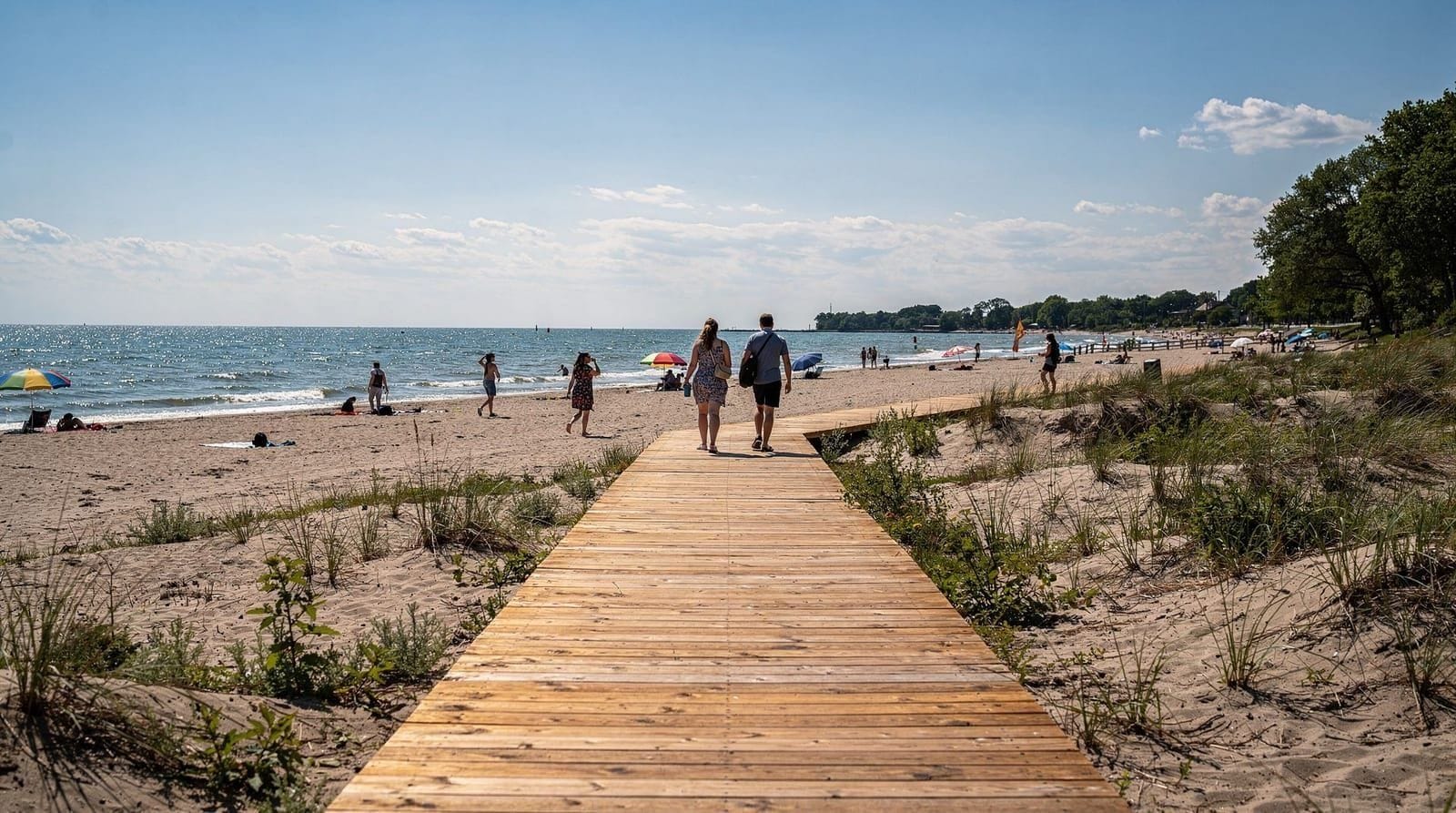
Bluffer’s Park, at the base of the bluffs near the foot of Brimley Road, is the primary way most visitors experience the area — a below-the-cliff park with a marina, a beach, and walking paths along the shoreline giving close-up views of the layered cliff faces towering above. Parking is limited and free but fills quickly on summer weekends; arriving before mid-morning avoids the worst of the crowding. From the park, walking trails run along the beach in both directions, with the bluffs forming a dramatic backdrop the entire way.
Bluffer’s Park Beach
The beach within Bluffer’s Park is one of Toronto’s better lakeside swimming spots, with periodic water quality testing during summer (check the City of Toronto’s beach water quality reports before swimming, since conditions vary after heavy rain). It’s less crowded than the beaches further west along the Beaches neighbourhood, largely because it takes more effort to reach.
Cathedral Bluffs Park and Scarborough Bluffs Park — the clifftop view
For a different perspective entirely, the clifftop parks — Cathedral Bluffs Park and Scarborough Bluffs Park, both accessible from the residential streets above — offer sweeping views looking out over Lake Ontario from the top of the cliffs rather than up from the beach below. Cathedral Bluffs in particular is known for its formations resembling church spires or cathedral shapes, especially striking at sunrise when the light rakes across the cliff face. These clifftop viewpoints require no descent and are the easiest way to see the bluffs if you’re not planning to walk the beach trails.
Why you shouldn’t climb or approach the cliff edge
The bluffs are composed of loose, unconsolidated glacial sediment, not solid rock, and erode continuously — sections have collapsed without warning, and climbing the cliff faces (a temptation for photos) is genuinely dangerous, not just technically prohibited. Fencing and warning signage exist at several points along the clifftop trails for this reason, and staying well back from unfenced edges is a real safety matter, not an overcautious rule. From the beach side, staying clear of the base of active erosion sections is similarly worth taking seriously, particularly after rain when material is more likely to shift.
The marina and paddling
Bluffer’s Park is also home to Toronto’s largest marina on this stretch of shoreline, with several yacht and sailing clubs based there. For visitors wanting to see the bluffs from the water, kayak and stand-up paddleboard rentals are available seasonally near the park, offering a genuinely different perspective on the cliff formations from directly offshore — a vantage point most visitors never consider, since the beach and clifftop views dominate most trip planning.
Guildwood and other bluff-adjacent neighbourhoods
The neighbourhoods along the bluffs’ clifftop — Guildwood, Cliffside, and the Bluffs area itself — are largely residential, with the Guild Park and Gardens (a former estate turned public park featuring architectural relics rescued from demolished Toronto buildings) offering an additional, less-visited clifftop stop with its own bluff overlook, distinct from Cathedral Bluffs and Scarborough Bluffs Park.
Photography and sunrise visits
The bluffs are a well-known sunrise photography spot, with the cliff faces catching warm early light particularly well from the Cathedral Bluffs viewpoint. Sunrise visits also mean far smaller crowds than a typical weekend afternoon, worth considering if you’re after a quieter experience of the same views. Sunset works from the beach side looking back toward the marina, though the cliffs themselves are backlit rather than illuminated at that time of day.
How the Scarborough Bluffs compare to other Toronto natural landmarks
The bluffs are geologically distinct from anything else within Toronto’s city limits — nothing in the High Park trails or ravine system resembles the exposed, actively eroding cliff faces found here, since both of those are forested valley or savannah landscapes rather than shoreline cliffs. For visitors who’ve already spent a day in the city’s ravines or High Park, the bluffs offer a genuinely different kind of natural scenery within the same transit-accessible city.
Getting there from downtown
The bluffs sit in Scarborough, roughly 30-40 minutes from downtown Toronto by car depending on traffic, or reachable by TTC via a combination of subway (Line 2 to a Scarborough station) and connecting bus routes, though the last stretch to Bluffer’s Park itself involves a walk or a short taxi/rideshare ride from the nearest bus stop. A car makes the visit considerably more straightforward, particularly for reaching the clifftop viewpoints, which are spread across residential streets not well served by transit.
The erosion management debate
The bluffs’ ongoing erosion has been a subject of local debate for decades — shoreline stabilization projects (including engineered headlands built out into the lake at points along Bluffer’s Park) have slowed erosion in some sections while leaving others to continue eroding naturally, a deliberate policy choice balancing shoreline protection against preserving the cliffs’ natural geological processes. It’s a useful bit of context for understanding why some stretches of shoreline look more engineered than others as you walk the beach trails.
Best season to visit
Summer brings the beach and marina to life and is the most popular season, though also the most crowded. Fall offers clearer air and dramatic light for photography with far fewer people. Winter can bring genuinely striking ice formations along the cliff base in cold snaps, though footing near the water gets treacherous and isn’t recommended without proper winter traction gear.
For Toronto’s other notable natural landscapes within city limits, see the Toronto ravines guide for the city’s forested valley trail network, and guide to The Beaches for the more developed boardwalk and beach strip further west along the same Lake Ontario shoreline.
What to bring
Sturdy shoes matter more here than at most Toronto attractions — the beach trail at Bluffer’s Park has loose sand and gravel sections, and the clifftop paths at Cathedral Bluffs and Scarborough Bluffs Park run close to unfenced drop-offs in places. Bring water, especially in summer, since shade is limited along both the beach trail and the clifftop lookouts. A swimsuit and towel are worth packing if you’re planning to use Bluffer’s Park Beach, and a light jacket helps at sunrise, when the lakefront can run noticeably cooler than downtown.
Combining a bluffs visit with the rest of Scarborough
Most visitors treat the bluffs as a standalone half-day trip, but Scarborough has other stops worth folding into the same day if you’re already out that far east — the Toronto Zoo sits a further drive northeast, and the neighbourhood itself has a genuinely strong, under-the-radar international food scene reflecting Toronto’s broader multiculturalism, worth a stop for lunch before or after your bluffs visit rather than driving back downtown hungry.
Accessibility
Bluffer’s Park’s main paved areas near the marina and beach parking are reasonably accessible, though the trails running along the base of the cliffs become uneven sandy or gravel paths further from the parking area. The clifftop parks (Cathedral Bluffs, Scarborough Bluffs Park) have paved viewing areas close to street parking, making the overview shot achievable without a hike if mobility is a concern — a genuinely easier option than the beach-level walk for visitors who want the view without the uneven terrain.
Frequently asked questions about the Scarborough Bluffs
Can I swim at Scarborough Bluffs?
Yes, Bluffer’s Park Beach at the base of the bluffs is a City of Toronto-monitored swimming beach with periodic water quality testing during summer. Checking current water quality reports before swimming is worth doing, especially after heavy rain.
Is it safe to climb the Scarborough Bluffs?
No. The bluffs are made of loose, unconsolidated glacial sediment that erodes continuously and can collapse without warning. Climbing the cliff faces is genuinely dangerous, and staying well back from unfenced edges at the clifftop parks is a real safety precaution, not just a rule.
What’s the difference between Bluffer’s Park and Cathedral Bluffs Park?
Bluffer’s Park sits at the base of the cliffs and includes a beach, marina, and shoreline trails looking up at the bluffs. Cathedral Bluffs Park and Scarborough Bluffs Park sit atop the cliffs and offer sweeping lake views looking down and out, with no descent required.
Is parking available at the Scarborough Bluffs?
Bluffer’s Park has limited free parking that fills quickly on summer weekends; arriving before mid-morning improves your chances. The clifftop parks are accessed from residential streets with more limited on-street parking options.
How far is the Scarborough Bluffs from downtown Toronto?
Roughly 30-40 minutes by car depending on traffic. By TTC, it requires a subway ride to Scarborough followed by a connecting bus and a short walk or rideshare for the final stretch to Bluffer’s Park.
When is the best time to photograph the Scarborough Bluffs?
Sunrise is widely considered the best time, particularly from the Cathedral Bluffs clifftop viewpoint, when early light catches the layered cliff face directly and crowds are at their smallest.
Can I kayak near the Scarborough Bluffs?
Yes, seasonal kayak and stand-up paddleboard rentals operate near Bluffer’s Park, offering a view of the cliffs from the water that most visitors touring by land don’t see.
Are there other viewpoints besides Bluffer’s Park and Cathedral Bluffs?
Yes, Guild Park and Gardens, a former estate turned public park nearby, offers its own clifftop overlook along with architectural relics from demolished Toronto buildings, making it a worthwhile, less-crowded addition to a bluffs visit.
Do I need a car to visit the Scarborough Bluffs?
Not strictly, but it makes the visit considerably easier. TTC gets you to Scarborough via subway and connecting bus, but the final stretch to Bluffer’s Park involves a walk or short rideshare, and the clifftop parks sit on residential streets with limited transit access.