Dundas Peak Hamilton hiking guide
How do I hike to Dundas Peak?
Dundas Peak is reached via a roughly 4 km round-trip loop through Spencer Gorge Conservation Area, typically starting at the Websters Falls parking lot, taking in Websters Falls, the Peak overlook, and Tews Falls. During peak season (May-October weekends) the conservation area requires an advance online parking or shuttle reservation — walk-ins are turned away when capacity is reached.
Hamilton’s most photographed viewpoint, and why you now need to plan ahead
Dundas Peak, an escarpment overlook near Hamilton with sweeping views across the Dundas Valley, has become one of the most-photographed hiking destinations in the Greater Toronto Area over the past decade — enough so that the trailhead’s home conservation area, Spencer Gorge, now runs a mandatory reservation system on weekends and holidays from May through October. This guide covers the loop itself and, just as importantly, how to actually get in without being turned away at the gate.
| Where | Spencer Gorge Conservation Area, near Dundas, Hamilton |
| Cost | Conservation area entry fee + reservation, no cost for the trail itself beyond that |
| Time needed | 2-3 hours for the full 4 km loop |
| Getting there | ~45 min-1 hr drive from Toronto via QEW/Highway 403; GO Transit to Hamilton then car/taxi for the last stretch |
| Best time | Weekdays to skip the reservation scramble; late Sept-mid Oct for fall colour (book early) |
The loop: Websters Falls, the Peak, and Tews Falls
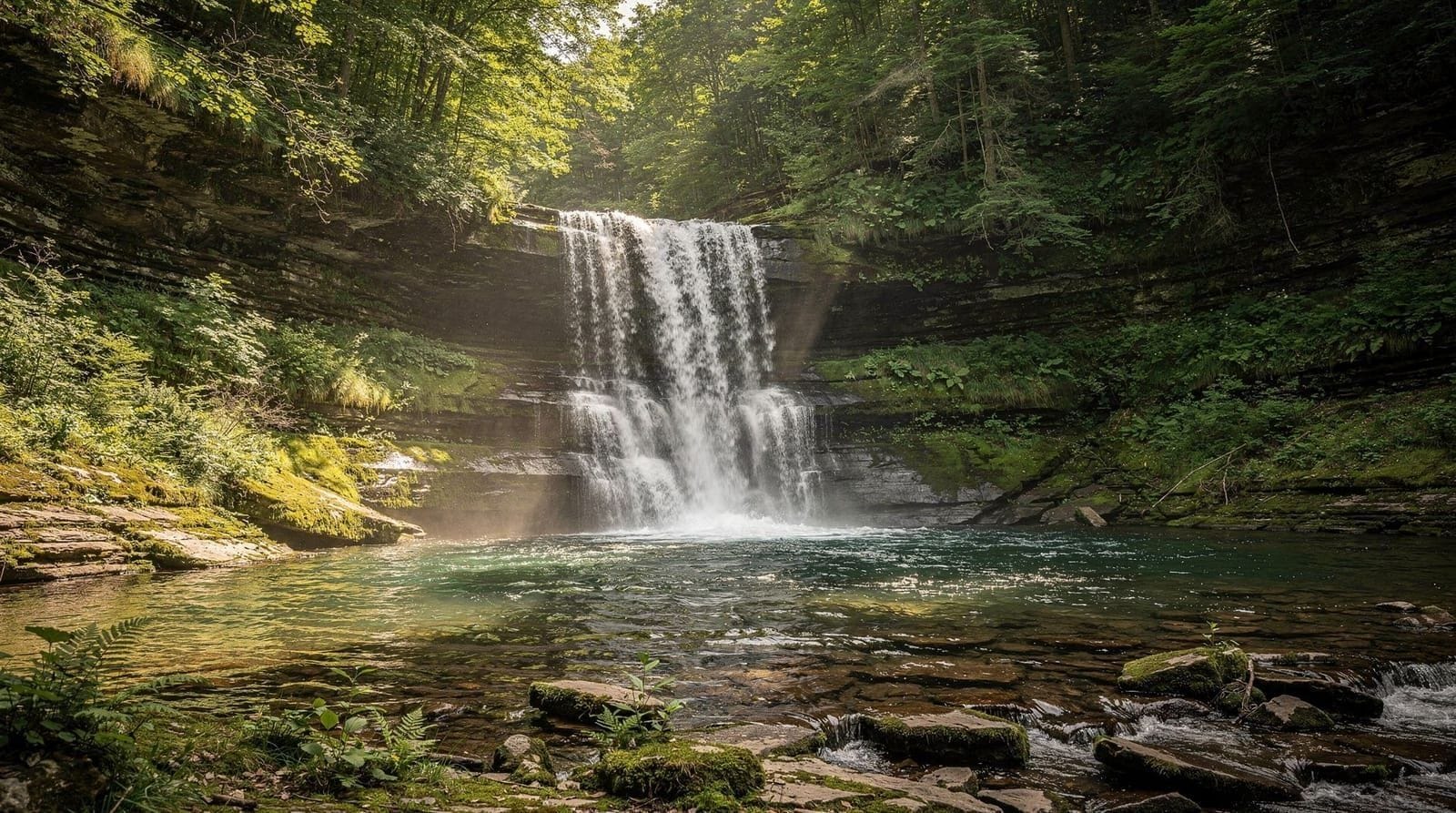
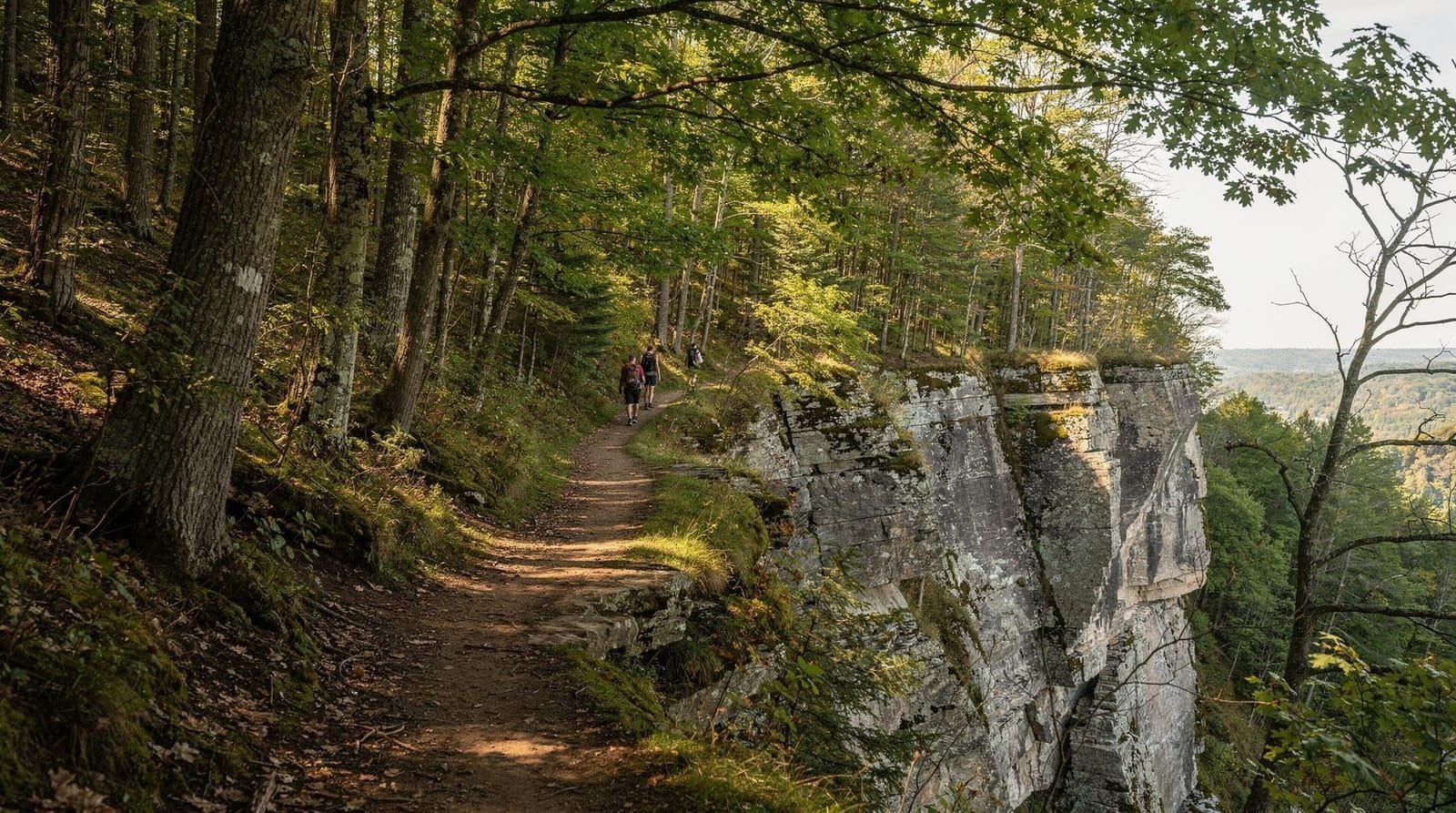
The standard route starts at the Websters Falls parking area, where a short walk leads to Websters Falls, a broad 22-metre curtain waterfall that’s the most immediately dramatic sight on the route. From there, the Bruce Trail’s side path climbs onto the escarpment rim toward Dundas Peak, a rocky overlook with an unobstructed view across the Dundas Valley toward Hamilton — the shot that’s made this trail a fixture on Ontario hiking lists.
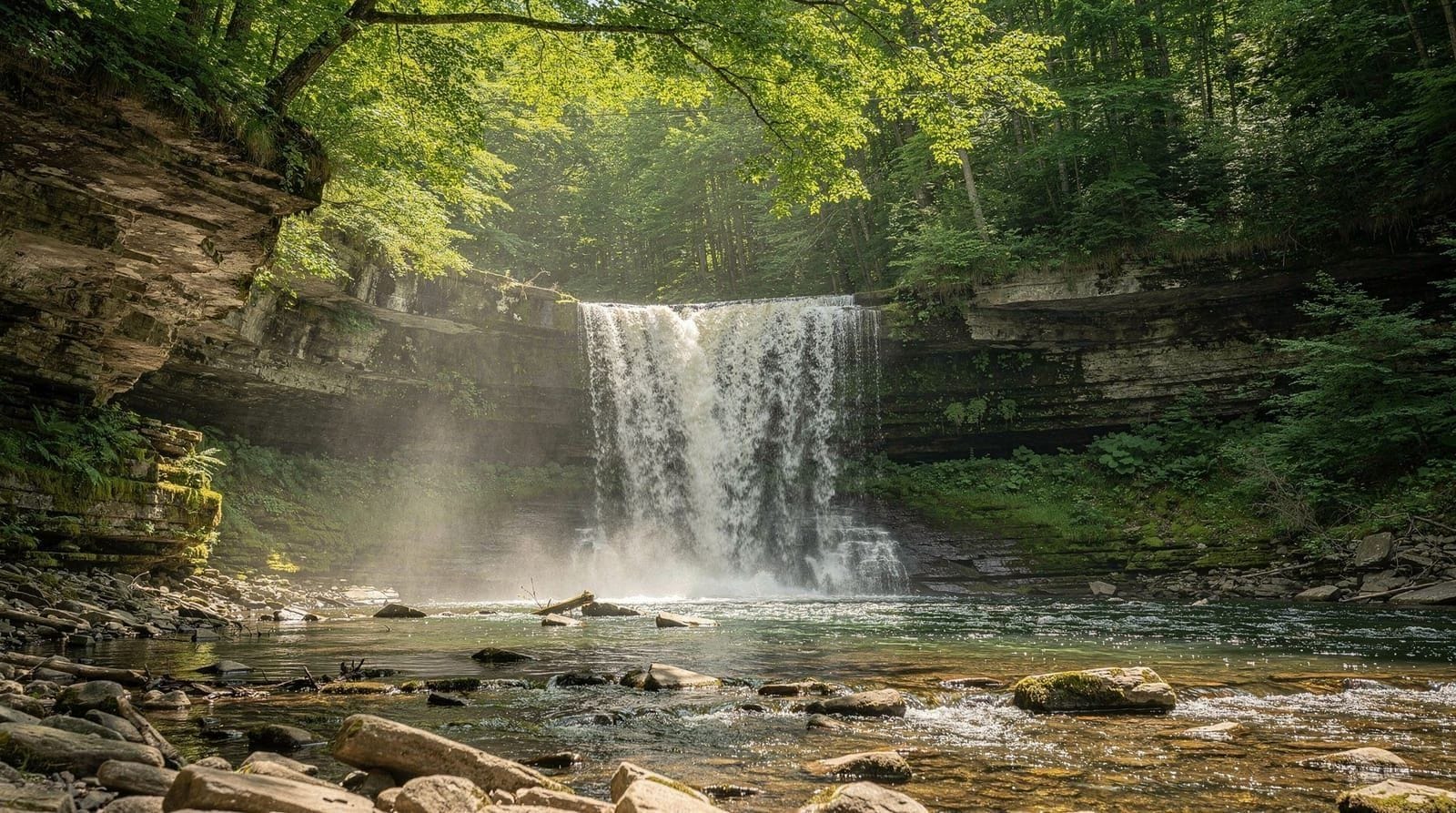
The trail continues along the escarpment edge to Tews Falls, a narrower but taller drop (roughly 41 metres, actually higher than the main horseshoe at Niagara Falls, though with a fraction of the water volume) reached via a side spur and a set of stairs down to a viewing platform. The full loop covering all three points runs roughly 4 km and takes 2-3 hours at a comfortable pace, longer if you’re stopping often for photos, which most people do.
The reservation system — read this before you drive out
Since 2020, Hamilton Conservation Authority has required advance online reservations for parking and, at peak times, timed shuttle access to Spencer Gorge Conservation Area on weekends and holidays between May and October. This isn’t a formality — capacity is genuinely limited, and vehicles without a reservation are turned away rather than queued. Reservations open on a rolling basis and popular weekend slots, especially during fall colour season, fill within days of release. Weekday visits generally don’t require the same reservation system, making a weekday trip the easiest way to avoid the booking scramble entirely if your schedule allows it.
Why Hamilton has so many waterfalls
The concentration of over 100 waterfalls within Hamilton’s city limits comes down to the same Niagara Escarpment geology responsible for Niagara Falls itself — the escarpment’s edge runs directly through the city, and every creek crossing it drops over the same layered limestone-and-shale rock, creating a waterfall wherever water meets the escarpment’s edge. Dundas Peak and its two falls sit at the western end of this same geological feature, roughly 100 km from where the escarpment produces Niagara Falls at the eastern end of the Niagara Peninsula.
Difficulty and footing
The loop is rated moderate rather than easy — there’s real elevation change getting up onto the escarpment rim, and several sections near the falls involve uneven rock and exposed edges without guardrails. Warnings against climbing over safety fencing for photos are posted for good reason: falls at both waterfalls have resulted in serious injuries and fatalities over the years from people going past marked barriers for a better angle. Sturdy footwear matters, particularly since sections near the falls stay damp and slick even in dry weather from spray and runoff.
Fall colour season
Late September through mid-October brings the Dundas Valley’s mixed hardwood forest into full colour, visible in a wide sweep from the Peak overlook — arguably the single best fall-colour panorama accessible by an under-2-hour drive from Toronto. This is also, unsurprisingly, the single hardest period to get a reservation, so booking as early as the system allows is worth the effort if fall colour is the specific goal.
Combining with the rest of Hamilton’s waterfalls
Hamilton is sometimes called the “waterfall capital of the world” for having more than 100 documented waterfalls within city limits, almost all fed by the same escarpment geology as Dundas Peak. If Spencer Gorge’s reservation system doesn’t line up with your schedule, several other falls — Albion Falls, Tiffany Falls, Devil’s Punch Bowl — don’t require reservations and make a reasonable alternative or addition. See the Hamilton waterfalls day trip guide for a route covering several of these without the Spencer Gorge booking requirement.
The Dundas Valley Conservation Area — a quieter alternative nearby
If Spencer Gorge’s reservation system is fully booked, the adjacent Dundas Valley Conservation Area offers a much larger network of hiking and mountain-biking trails without the same booking requirement, including sections of the Bruce Trail passing through mature Carolinian forest. It doesn’t have Dundas Peak’s specific overlook, but the Sydenham Road entrance connects into a genuinely extensive trail system worth a full day on its own, and it’s a practical fallback if your Spencer Gorge reservation attempt doesn’t succeed.
Photography tips for the Peak overlook
The Peak faces roughly southwest, meaning afternoon and evening light generally works better for photography than early morning, when the valley below can sit in shadow. The overlook gets crowded quickly once a reservation window opens, particularly on clear days — arriving at your window’s start rather than mid-window improves your odds of an unobstructed shot before the platform fills in. A wide-angle lens captures the full valley sweep better than a standard zoom, given how expansive the view is from the rim.
What happened at Spencer Gorge before the reservation system
Prior to 2020, Spencer Gorge saw uncontrolled visitor numbers on peak weekends that led to gridlocked access roads, illegal roadside parking blocking emergency access, and a genuine strain on the trail and cliff-edge safety infrastructure — problems the reservation system was specifically designed to solve. It’s worth understanding this history if the booking requirement feels like an inconvenience: it exists because the alternative, tried for years, didn’t work for either visitors or the conservation area.
Getting there from Toronto
Hamilton is roughly 45 minutes to an hour from downtown Toronto by car via the QEW or Highway 403, making Dundas Peak one of the more accessible escarpment hikes on this list for a half-day trip. GO Transit runs to Hamilton, but the Spencer Gorge trailhead itself isn’t well served by public transit from the Hamilton GO stations — a car, taxi, or rideshare for the last stretch is effectively necessary.
The village of Dundas
Dundas itself, a short drive from Spencer Gorge, is a walkable historic town with cafés and restaurants worth a stop before or after the hike — a more low-key alternative to driving straight back to Hamilton or Toronto after the trail. It’s a reasonable place to plan lunch around, particularly if you’re visiting on a weekday when the reservation pressure at Spencer Gorge is lower and the day feels less rushed. If you have extra time, the things to do in Hamilton guide rounds out the rest of the city beyond the waterfall circuit.
Practical notes
Parking at the Websters Falls lot is limited even with a reservation, and arriving at the start of your reserved window (rather than mid-window) improves your odds of a spot. Bring water — there are no services along the trail itself, and the exposed sections near the Peak get hot in direct summer sun. Dogs are permitted on leash. The trail is not stroller- or wheelchair-accessible given the terrain.
For more on the Niagara Escarpment’s broader hiking network beyond the Hamilton stretch, see the Niagara Escarpment Trail guide, which covers the same geological formation further along toward Niagara wine country. If escarpment views are the draw rather than the hike itself, the High Park cherry blossoms guide covers a very different but equally photogenic seasonal outing within the city itself.
What to do if you’re turned away
Because entry is strictly tied to your reservation window, arriving without one — or late for your slot — means turning around rather than talking your way in; the Conservation Authority enforces this closely given the past overcrowding problems. If that happens, the nearby Hamilton waterfalls day trip route covers several reservation-free falls, or the Dundas Valley Conservation Area described above offers a genuine full trail system as a same-day fallback rather than wasting the drive out entirely.
Frequently asked questions about hiking Dundas Peak
Do I need a reservation to hike Dundas Peak?
Yes, on weekends and holidays between May and October, Hamilton Conservation Authority requires an advance online parking or shuttle reservation for Spencer Gorge Conservation Area, where the Dundas Peak trailhead sits. Weekday visits generally don’t require the same reservation.
How long is the hike to Dundas Peak?
The full loop covering Websters Falls, the Peak, and Tews Falls runs roughly 4 km and takes 2-3 hours at a relaxed pace, including stops at each viewpoint.
Is Dundas Peak hard to hike?
It’s rated moderate — real elevation gain onto the escarpment rim and some uneven, exposed terrain near the waterfalls, but manageable for most reasonably fit hikers without technical experience.
Is Tews Falls taller than Niagara Falls?
Yes, at roughly 41 metres Tews Falls has a greater vertical drop than Niagara Falls’ main Horseshoe Falls, though with a fraction of the water volume — it’s a narrow, ribbon-like falls rather than a wide curtain.
Why does Spencer Gorge require reservations?
The trail’s popularity, driven partly by social media exposure, led to serious overcrowding and safety incidents, prompting Hamilton Conservation Authority to introduce mandatory parking and shuttle reservations in 2020 to manage capacity.
Can I visit Dundas Peak from Toronto as a half-day trip?
Yes — Hamilton is roughly 45 minutes to an hour from downtown Toronto by car, making Dundas Peak one of the more accessible escarpment hikes for a half-day or morning outing, provided you have a valid reservation for peak-season weekends.
What should I do if I can’t get a Spencer Gorge reservation?
The adjacent Dundas Valley Conservation Area offers an extensive alternative trail network without the same reservation requirement, or several of Hamilton’s other waterfalls (Albion Falls, Tiffany Falls) can be visited without booking ahead.
What time of day has the best light at Dundas Peak?
The overlook faces roughly southwest, so afternoon and evening generally deliver better light than early morning, when the valley below tends to sit in shadow.