Peterborough
Peterborough anchors the Kawarthas with the world's highest hydraulic lift lock, a walkable downtown, and easy access to the region's lakes.
Quick facts
- Distance from Toronto
- 1.5 hours (125 km) by car
- Population
- About 85,000
- Landmark
- Peterborough Lift Lock, the world's highest hydraulic boat lift
- Nearby
- Gateway to the Kawartha Lakes region
Where the Trent-Severn Waterway does something strange
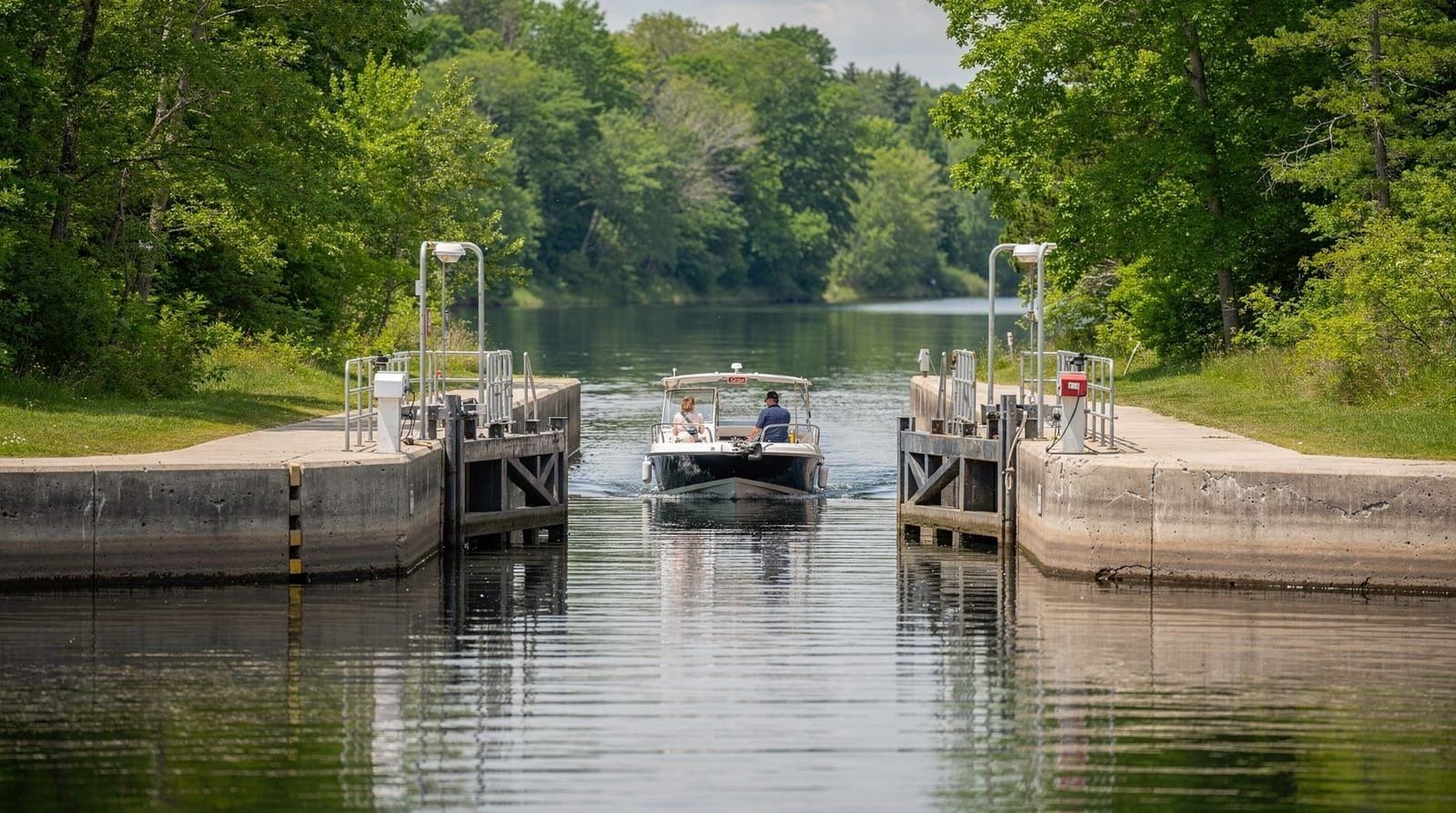
Peterborough’s defining landmark is a piece of engineering most visitors have never heard of until they see it in person: the Peterborough Lift Lock, completed in 1904, remains the highest hydraulic boat lift in the world, raising and lowering boats nearly 20 meters between two sections of the Trent-Severn Waterway using nothing but water-filled counterweight chambers — no engines, no external power source, just balanced hydraulics from over a century ago that still work today. Watching a boat rise or descend the lock, especially for a first-time visitor, is genuinely more dramatic than the low-key engineering description suggests.
| Where | Peterborough, Ontario, ~125 km / 1.5 hrs from Toronto |
| Cost | Free to view the lift lock; museum admission and meals modest |
| Time needed | 1 day for downtown and the lock, 2+ as a Kawarthas base |
| Getting there | Car via Highway 401/115; no direct rail |
| Best time | June–September for the lift lock and lake season |
That waterway connection is central to Peterborough’s identity and its role as the gateway to the Kawartha Lakes region — the city sits at the point where the Trent-Severn Waterway, a historic canal system linking Lake Ontario to Lake Huron via a chain of rivers and lakes, passes through on its way north into cottage country.
The lift lock and Trent-Severn Waterway
Beyond watching the lock in operation, a small visitor centre at the site explains the engineering and history behind the system, which was built over decades starting in the 1830s as a transportation and log-driving route before evolving into the recreational boating corridor it is today. Boat tours through the lock itself run seasonally, giving visitors the chance to actually experience the lift rather than just watch it from shore.
Downtown Peterborough
Peterborough’s downtown, centered around George Street, has a walkable mix of independent shops, restaurants, and a historic theatre district anchored by the restored Market Hall. Trent University, whose modernist riverside campus was designed by architect Ron Thom in the 1960s, gives the city a university-town layer that adds to the restaurant and cultural scene beyond what a city of its size would typically support.
The Canadian Canoe Museum, which relocated to a new purpose-built site along the waterway, holds one of the world’s largest collections of canoes and kayaks and tells the story of canoe travel in Canadian Indigenous and settler history — a genuinely substantial museum that’s easy to underestimate from the outside. It pairs well conceptually with a paddling trip itself; for visitors who want to try canoeing rather than just see the collection, our best canoe routes in Algonquin guide covers the more serious paddling routes a further drive north.
A base for the Kawarthas
Peterborough functions as the practical hub for exploring the wider Kawartha Lakes region — a chain of lakes, cottage communities, and small towns spreading north and west of the city. Visitors without a cottage to stay at typically base in Peterborough and drive out for day trips to the lakes, since the city has the widest range of hotels and restaurants in the region.
Getting there from Toronto
Peterborough is about 1.5 hours (roughly 125 km) from Toronto via Highway 401 and Highway 115. There’s no direct passenger rail service to Peterborough currently, so a car is the practical way to get there; a bus service connects from Toronto but adds meaningfully to the travel time compared to driving.
Little Lake and outdoor space close to downtown
Little Lake, right at the edge of downtown, gives Peterborough a genuine waterfront within walking distance of the city center — Millennium Park along its shore has trails and green space that make for an easy pre- or post-dinner walk without needing to drive out to the wider lake district.
Jackson Park and hiking close to the city
Jackson Park, a wooded creek-valley park within the city limits, offers a surprising amount of forest trail for an urban park, including sections along Jackson Creek that feel considerably more remote than their location minutes from downtown would suggest.
When to visit
June through September covers the full boating season on the Trent-Severn Waterway, including regular lift-lock operations and the widest range of open restaurants and attractions. Fall brings good foliage along the waterway and a quieter, cooler alternative to the summer cottage-season crowds that fill the wider Kawarthas.
Comparing Peterborough to Ontario’s other lake-country bases
Peterborough is a genuinely different kind of base than Muskoka or Prince Edward County: it’s a real working city with a university and a walkable downtown rather than a resort town built purely around lake tourism, which means better off-season value and a wider range of everyday restaurants, at the cost of a slightly less polished “cottage country” feel right in town. For families weighing several close-to-Toronto options at once, our family day trips from Toronto guide puts Peterborough in context against other options within a similar drive time.
Practical notes
Peterborough’s downtown is compact enough to explore on foot once parked, and most of the city’s key sights — the lift lock, the Canoe Museum, downtown restaurants — sit within a reasonably short drive or walk of each other. If your visit is focused on the wider Kawarthas rather than the city itself, renting a car for the full trip is worth planning for, since the lake communities beyond Peterborough have limited or no public transit.
Frequently asked questions about Peterborough
What is the Peterborough Lift Lock?
A hydraulic boat lift completed in 1904 that remains the highest of its kind in the world, raising and lowering boats nearly 20 meters between two levels of the Trent-Severn Waterway using water-filled counterweights rather than external power.
Is Peterborough a good base for exploring the Kawartha Lakes?
Yes — it has the widest selection of hotels, restaurants, and services in the region, making it the practical hub for day trips out to the lakes and cottage communities that make up Kawartha Lakes.
How do I get to Peterborough from Toronto without a car?
Bus service connects Toronto to Peterborough, though it takes considerably longer than driving. There’s currently no direct passenger rail service, which makes a car the more practical option for most visitors, especially if you plan to explore beyond the city itself.
Is the Canadian Canoe Museum worth visiting?
For anyone interested in Canadian history or paddling culture, yes — it holds one of the largest canoe and kayak collections in the world and situates the boats within a broader Indigenous and settler history of travel across Canada’s waterways.
What’s the best time to visit Peterborough?
June through September for full access to the lift lock, boating season on the Trent-Severn Waterway, and the city’s outdoor spaces. Fall offers good foliage along the waterway with fewer crowds than peak summer.