How to avoid crowds at Niagara Falls
Niagara Falls gets over 14 million visitors a year, and most arrive in the same six-hour window
Niagara Falls, Ontario welcomes more than 14 million visitors annually, and the crowding problem isn’t really about the total number — it’s about how concentrated arrivals are. Most day-trippers from Toronto leave the city between 8 and 10am, arrive at the falls between 9:30 and 11:30am, and spend the middle of the day at the same handful of attractions: Table Rock, the Journey Behind the Falls entrance, and the boat tour dock. That means a genuinely simple lever — shifting when you arrive relative to that wave — does more to reduce your actual wait times than almost anything else on this list.
| Worst window | 9:30-11:30am, and Canadian long weekends |
| Best arrival time | Before 9am |
| Best months | June and September for the crowd-to-weather balance |
| Parking (peak lots) | Around $30-35 CAD/day; farther lots $20-25 CAD |
| Getting there | ~1.5hrs from Toronto by car, tour, or GO Transit/WEGO |
Go early, stay through the wave, or come at night
The single most effective tactic is arriving before 9am. Table Rock and the falls-view promenade are open and largely uncrowded in the first hour after most attractions open, giving a window of genuinely quiet photos and viewing before the day-trip buses and self-drive crowds land. The early bird Niagara Falls small group day trip from Toronto is built specifically around this — departing Toronto before the standard tour wave, which means arriving at the falls ahead of the crowd rather than in the middle of it.
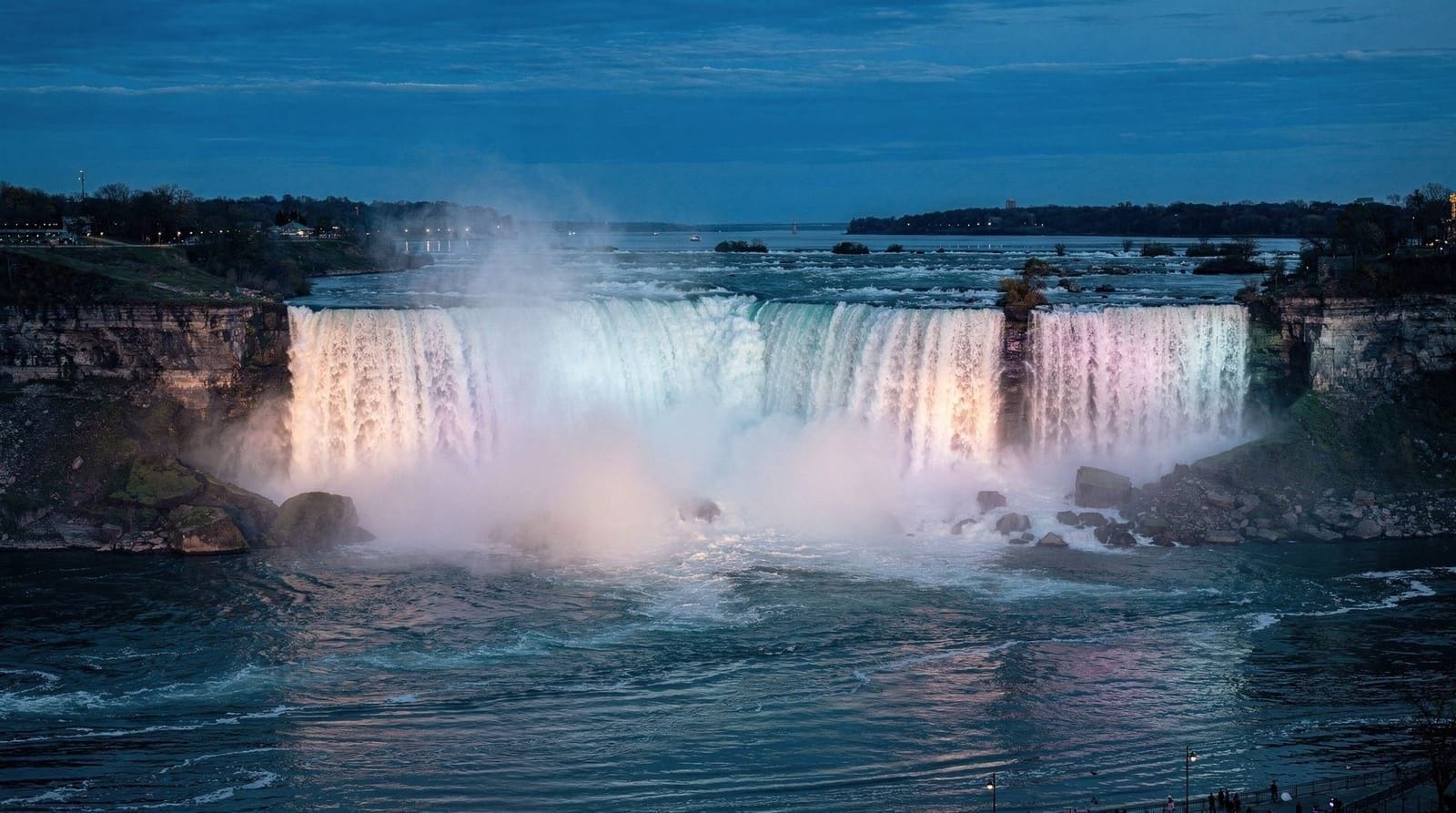
The alternative is going the other direction entirely: staying into the evening, when illumination viewing draws a different, thinner crowd than midday sightseeing (see our guide to Niagara Falls illumination timing for specifics).
Skip-the-line and early-access tickets are worth the small premium
For the paid attractions — Journey Behind the Falls in particular — standard daytime tickets can mean genuine queue time during peak summer hours, sometimes 30-45 minutes at the worst points of a July or August afternoon. The early access boat and Journey Behind the Falls combo gets you into both attractions before general admission opens to the broader crowd, a meaningful time saving on a peak-season day.
If day-of flexibility to buy ahead isn’t realistic, the Niagara 5-attraction pass with WEGO bus at minimum locks in entry and transit without needing to queue for individual tickets at each stop.
Avoid weekends and Canadian long weekends specifically
Niagara Falls’ worst crowding consistently lines up with Canadian long weekends — Victoria Day (late May), Canada Day (July 1), Civic Holiday (early August) and Labour Day (early September) — when both Ontario day-trippers and cross-border US visitors converge on the same three-day window. If your travel dates have any flexibility, shifting even one day off a long weekend meaningfully thins the crowd. Regular summer Saturdays are also busier than weekdays, sometimes significantly so — a Tuesday or Wednesday visit in July sees noticeably shorter lines than the same attractions on a Saturday.
Table Rock is the bottleneck — know where else to look
Nearly every Niagara visitor funnels through the Table Rock viewing area at some point, since it’s the closest point to Horseshoe Falls and the entry point for Journey Behind the Falls, which makes it the single most congested spot along the whole promenade during peak hours. Fewer visitors realize that the Niagara Parkway offers several less-crowded viewpoints further along the gorge — the area near the Whirlpool and the Aero Car crossing, or the quieter stretch of promenade north toward the Rainbow Bridge, both give a legitimate falls view (from further away for the Whirlpool section) with a fraction of the foot traffic.
The Canadian vs American side crowd difference
Crowds on the Canadian side, with its head-on view of both falls, are consistently heavier than the American side, which has a more oblique angle but noticeably thinner crowds most of the year — worth considering if a less-packed experience matters more than the postcard viewing angle. Our Niagara Falls Canada vs USA side guide breaks down the trade-offs in more depth.
The honest trade-off: guided tours vs going solo
Guided day tours from Toronto solve the parking and transit-timing problem entirely but tie you to the group’s schedule, including its lunch stop and departure time, which can mean less flexibility to linger at a quiet viewpoint once you’ve found one. Self-driving or taking the GO Transit/WEGO combination gives full control over timing but requires navigating Niagara’s parking, which fills fast on peak days and runs $20-30 CAD for a full day near the main attractions.
Neither is objectively better — the early-bird small group tour genuinely splits the difference well, since it front-loads the schedule to beat the crowd while still handling logistics for you. Full comparison in our how to get to Niagara Falls from Toronto guide.
What we’d actually do
If forced to pick one tactic: arrive before 9am, whether self-driving, on GO Transit, or via an early-departure tour, and plan the paid attractions (Journey Behind the Falls, the boat) for that first quiet hour rather than after lunch. Everything else on this list helps, but arrival timing is the single lever that changes the experience most. Full attraction planning is in our things to do in Niagara Falls guide.
Parking strategy for self-drivers
For visitors driving themselves rather than joining a tour, parking strategy matters almost as much as arrival timing. The official Niagara Parks lots closest to Table Rock fill first and cost the most, roughly $30-35 CAD for a full day in peak season; lots a 10-15 minute walk further out, or the WEGO-connected park-and-ride lots further from the falls themselves, run noticeably cheaper, often $20-25 CAD, and the short walk or shuttle ride is a reasonable trade for both the savings and the fact that walking in from a farther lot means passing fewer other cars circling for the same close spots.
What a genuinely quiet Niagara visit looks like start to finish
Putting the tactics above together: arrive by 8:30-9am on a weekday outside a long weekend, head straight to Table Rock for photos before the crowd builds, use an early-access ticket for Journey Behind the Falls or the boat tour to skip the mid-morning line, have lunch away from the main promenade strip (which gets crowded and pricier at peak hours), and either leave by early afternoon before the day-trip buses peak, or stay through to catch a quieter evening illumination viewing after the daytime crowd disperses. That structure, more than any single tip, is what actually produces a low-crowd Niagara day.
Crowd patterns by month, roughly
July and August carry the heaviest crowds by a clear margin, driven by school holidays on both sides of the border. June and September are meaningfully quieter while still offering warm, comfortable weather — arguably the best crowd-to-weather trade-off of the year. May and October see further-reduced crowds with cooler but still manageable conditions. November through March is the quietest stretch by far, though several major paid attractions are closed for the season during that window, so the trade-off shifts from “crowds” to “attraction availability.”
| Month(s) | Crowd level | Weather | Note |
|---|---|---|---|
| July-August | Heaviest | Warm | School holidays both sides of the border |
| June, September | Moderate | Warm, comfortable | Best crowd-to-weather trade-off |
| May, October | Lower | Cooler, manageable | Good shoulder-season pick |
| November-March | Quietest | Cold | Several paid attractions close for the season |
Restrooms, food, and other logistics during peak hours
Peak-hour crowding affects more than just viewing spots — restroom lines near Table Rock and food service at the main promenade restaurants both slow down noticeably during the 9:30-11:30am arrival wave and again over the lunch hour. Building in a short buffer before or after those windows for practical stops, rather than trying to squeeze them into the busiest hour, saves real time over the course of a day trip.
A note on off-peak illumination viewing
Evening illumination viewing draws a genuinely different, thinner crowd than midday sightseeing, and pairs naturally with an early-arrival day since the crowd pattern dips again after the day-trip buses leave in the late afternoon. See our guide to Niagara Falls illumination timing for the seasonal schedule specifics if an evening visit fits your itinerary.
A note on weekday vs weekend tour pricing
Guided tour pricing from Toronto is generally flat regardless of day, which means the quieter weekday departures don’t cost more but also don’t cost less than the busier weekend ones — a small but useful fact, since it means there’s no financial penalty for choosing the less crowded option if your schedule allows the flexibility.
Cross-border considerations if adding the US side
Visitors combining both sides of the falls in one trip should factor border crossing time into their crowd-avoidance planning too — the Rainbow Bridge crossing can add a genuinely unpredictable 15-60 minutes depending on time of day and season, longest on summer weekend afternoons, so crossing early or scheduling it outside the peak arrival window helps avoid a second, unrelated bottleneck on top of the falls themselves.
Frequently asked questions about avoiding Niagara Falls crowds
What is the least crowded time to visit Niagara Falls?
Weekday mornings before 9am, outside Canadian long weekends and outside the July-August peak, see the thinnest crowds. Shoulder-season visits (May, September-October) also help significantly.
Is the Canadian or American side of Niagara Falls less crowded?
The American side is generally less crowded than the Canadian side, though it offers a more oblique viewing angle rather than the head-on view of both falls.
Are skip-the-line tickets worth it at Niagara Falls?
Yes, particularly in July and August when standard queue times for Journey Behind the Falls can reach 30-45 minutes at peak hours — early-access combo tickets meaningfully reduce that wait.
What are the worst days to visit Niagara Falls?
Canadian long weekends — Victoria Day, Canada Day, Civic Holiday and Labour Day — see the heaviest crowds of the year, along with regular July-August Saturdays.
Is a guided tour or self-driving better for avoiding crowds at Niagara Falls?
An early-departure small group tour effectively splits the difference — it beats the standard crowd wave while handling logistics, whereas self-driving gives more schedule control but requires managing your own arrival timing and parking.