Kingston day trip from Toronto
Can you visit Kingston as a day trip from Toronto?
Yes — VIA Rail runs a direct roughly 2.5-hour route from Union Station, making Kingston one of the more practical train-based day trips on this list. The historic downtown, Fort Henry, and the waterfront are all within a manageable walk or short taxi ride of the station.
Canada’s first capital, and one of the easier train day trips
Kingston sits at a genuinely significant point on the map — where Lake Ontario narrows into the St. Lawrence River, at the doorstep of the Thousand Islands, and historically, at the political heart of pre-Confederation Canada.
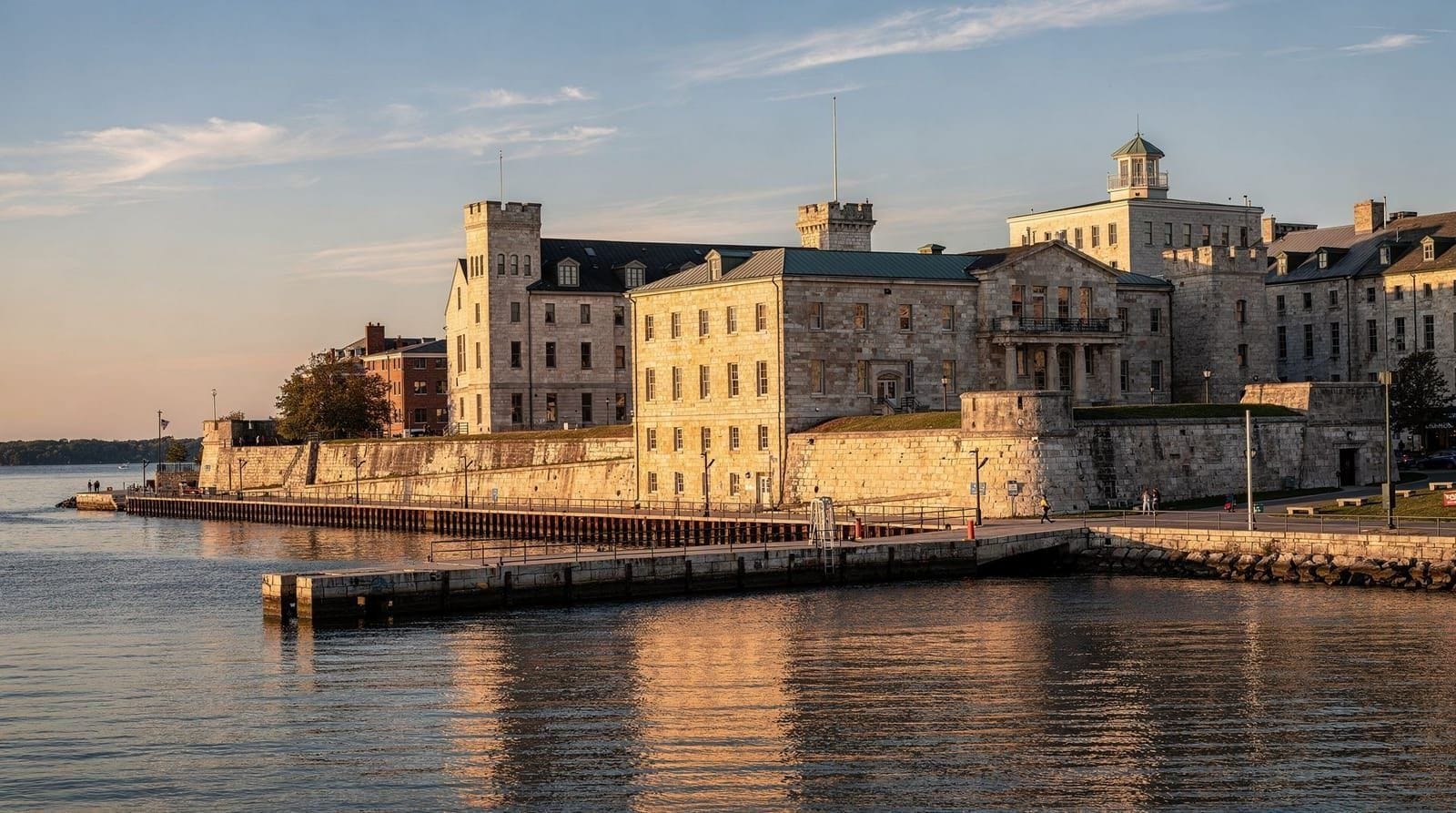
It served briefly as the capital of the united Province of Canada from 1841 to 1844, a period that left the city with an unusually dense collection of substantial 19th-century limestone buildings, earning it the enduring nickname the Limestone City. That architectural legacy, combined with Fort Henry’s imposing hilltop presence and a genuinely lively waterfront, makes Kingston one of the more satisfying and, thanks to a direct VIA Rail connection, one of the easier day trips in this entire series.
| Where | Kingston, Ontario, roughly 260 km east of Toronto |
| Getting there | VIA Rail, direct, around 2.5 hours from Union Station |
| Cost | Around 100-180 CAD/person including train, Fort Henry, and lunch |
| Time needed | A full day; add an overnight to comfortably add the Thousand Islands |
| Best time | June-September for full Fort Henry programming; Sept-Oct for lighter crowds |
Getting there
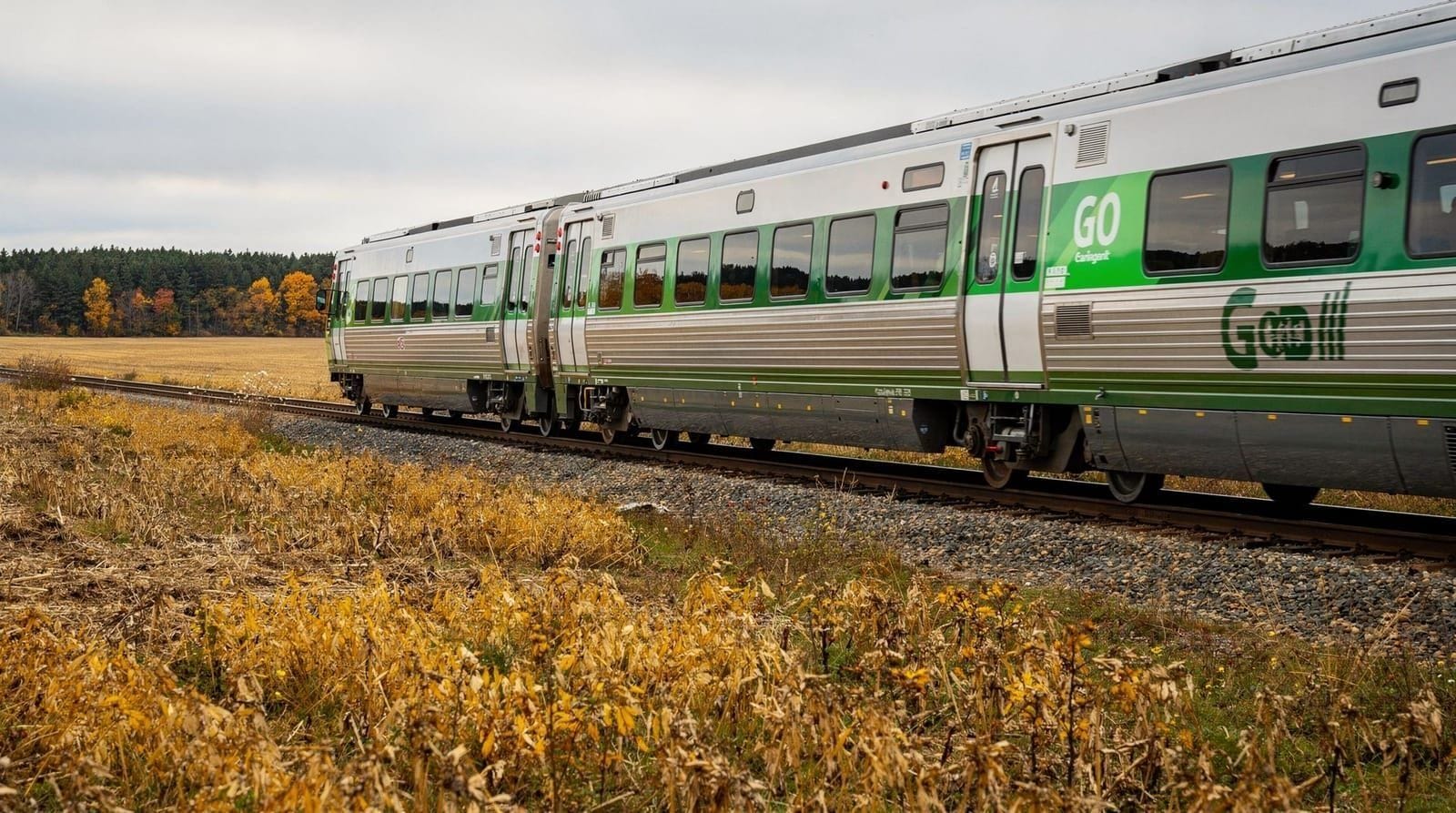
VIA Rail runs direct service between Toronto’s Union Station and Kingston, taking roughly 2.5 hours — a comfortable train ride that lands you within a reasonable walk of downtown and the waterfront, avoiding both driving and parking altogether. This makes Kingston, alongside Stratford, one of the genuinely practical train-based day trips from Toronto — see our best day trips from Toronto by train guide for how it stacks up against other train-friendly options, rather than requiring a car or a guided tour to work.
Driving is the alternative, taking about 2.5 to 3 hours via Highway 401, offering more flexibility if you’re planning to extend the trip toward the nearby Thousand Islands or Prince Edward County, both within a further 30 to 90 minutes of Kingston.
Fort Henry: the city’s signature attraction
Fort Henry National Historic Site sits on a hill overlooking the city and the St. Lawrence, a well-preserved British fortification originally built to defend the strategically vital entrance to the Rideau Canal system and the naval dockyard below. The fort operates as a living history site with costumed interpreters, and in peak season, the Fort Henry Guard performs elaborate 19th-century military drill demonstrations — marching formations, artillery displays, and fife-and-drum performances that are genuinely impressive as historical theatre, not just a static museum walkthrough. Admission runs in the range of 20 to 25 CAD for adults, and the full visit, including a demonstration if timed right, takes 2 to 3 hours.
Downtown and the waterfront
Kingston’s downtown core, centered around Princess Street and the waterfront along King Street, holds a genuinely well-preserved stretch of 19th-century limestone commercial buildings, now filled with restaurants, shops, and cafés that give the area a lived-in, university-town energy rather than a purely preserved-for-tourists feel — Queen’s University’s downtown-adjacent campus contributes a lot of that character. Springer Market Square, the historic market plaza in front of City Hall, hosts a Saturday farmers’ market and is a natural anchor point for a downtown wander.
The waterfront itself, particularly around Confederation Basin, is genuinely pleasant to walk, with views out toward the harbour and, further out, the first scattering of Thousand Islands. Kingston City Hall, a grand 1840s limestone building constructed when the city still held ambitions of remaining Canada’s permanent capital, anchors the waterfront’s most photogenic stretch.
Kingston Penitentiary, a notorious maximum-security prison that operated from 1835 until its closure in 2013, now offers seasonal guided tours run largely by former correctional staff — a genuinely unusual and popular attraction for visitors interested in a less conventional slice of Canadian history, though tours require advance booking and don’t run year-round.
Why Kingston lost the capital, and what it kept instead
Kingston’s brief stint as capital of the united Province of Canada ended in 1844, partly due to its vulnerable position close to the American border in an era of ongoing tension, and partly due to political maneuvering that eventually settled the permanent capital question on Ottawa in 1857.
What Kingston kept, though, was the substantial investment in civic architecture that came with capital status — City Hall, built on a scale meant to project permanence and importance, remains oversized relative to what a city of Kingston’s eventual population would typically construct, a physical reminder of the ambitions the city briefly held. That mismatch between the grandeur of the surviving 19th-century civic architecture and Kingston’s actual scale today is part of what gives the downtown its distinct, slightly formal character compared to other Ontario cities of similar size.
Queen’s University’s role in the city’s character
Queen’s University, founded in 1841 and one of Canada’s oldest universities, occupies a large campus directly adjacent to downtown, and its presence shapes Kingston’s economy and culture considerably beyond the academic calendar. The student population supports a restaurant and bar scene with more variety and later hours than a city Kingston’s size might otherwise sustain, and the university’s own historic buildings, particularly around the older parts of campus, are worth a short detour if architecture and campus walks interest you. Term time (roughly September through April) brings a noticeably livelier downtown energy than the quieter summer months, when much of the student population disperses.
A realistic one-day itinerary
Arrive on a morning train, landing in Kingston by around 11 a.m. Spend the first stretch of the day at Fort Henry, timing your visit around a scheduled drill demonstration if one’s running that day — check the schedule in advance, since demonstrations are seasonal and not offered every day. Head downtown for lunch around Princess Street or the market square, then spend the afternoon walking the waterfront and downtown core before catching an evening train back to Toronto. This pace comfortably fills a full day without feeling rushed, particularly given the train removes any drive-time stress from the schedule.
Combining Kingston with the Thousand Islands
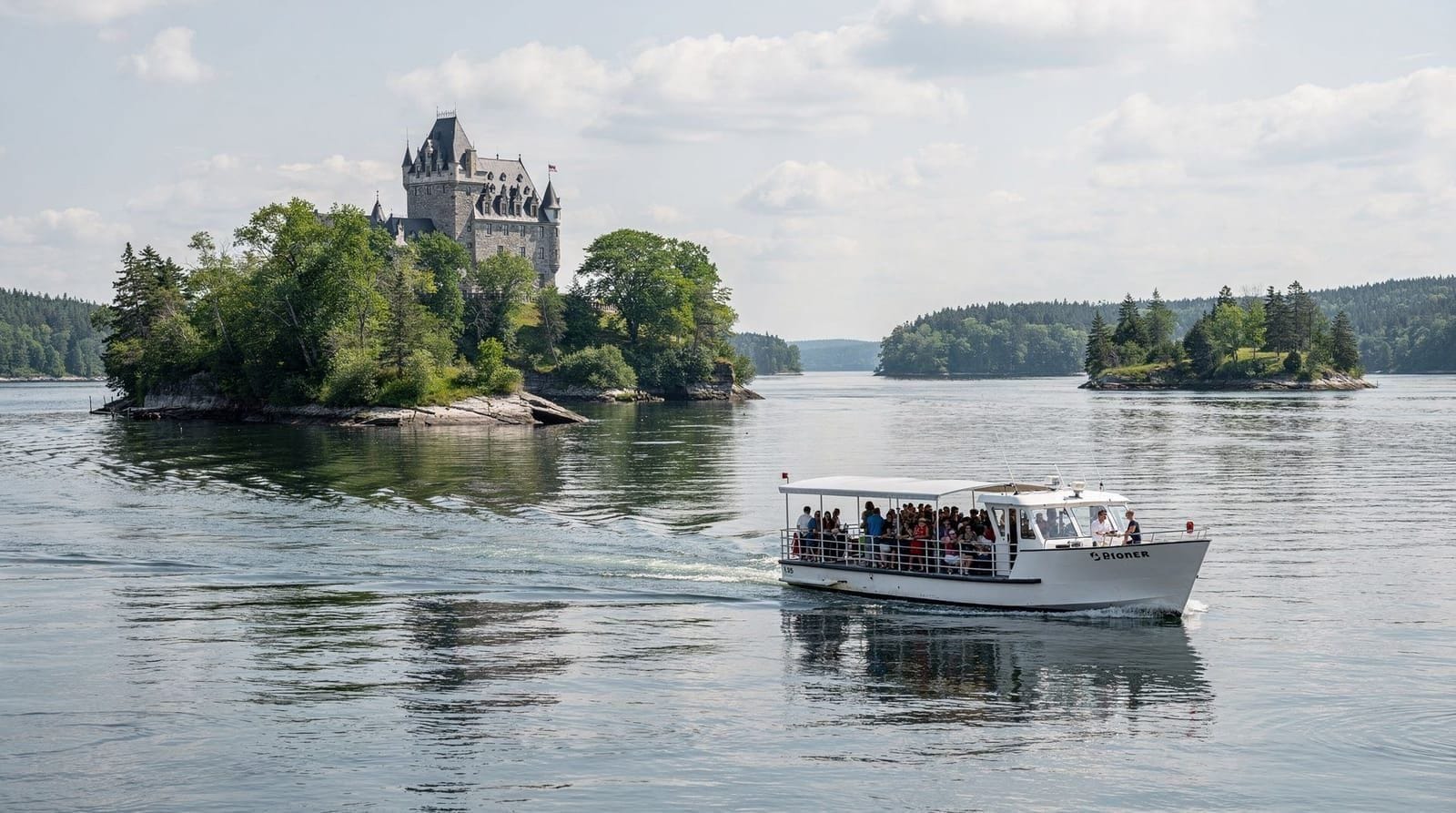
Gananoque, the main gateway town for Thousand Islands boat cruises, sits about 30 minutes from Kingston by car, making a combined visit tempting on paper. In practice, adding a full Thousand Islands cruise to a Kingston day trip from Toronto makes for a genuinely long day once you factor in the roughly 2.5 to 3-hour travel time each way already required just to reach the region. If both destinations interest you, treating Kingston as the primary day-trip focus and saving a dedicated Thousand Islands cruise for a separate trip, or extending to an overnight stay, generally produces a better experience than rushing both into a single day.
Thousand Islands cruise with Boldt Castle stopThings to do beyond the headline attractions
Beyond Fort Henry and the waterfront, our things to do in Kingston guide covers the fuller list of museums, walking routes, and lesser-known stops for anyone extending a single day into a longer stay or returning for a second visit.
Combining with Prince Edward County
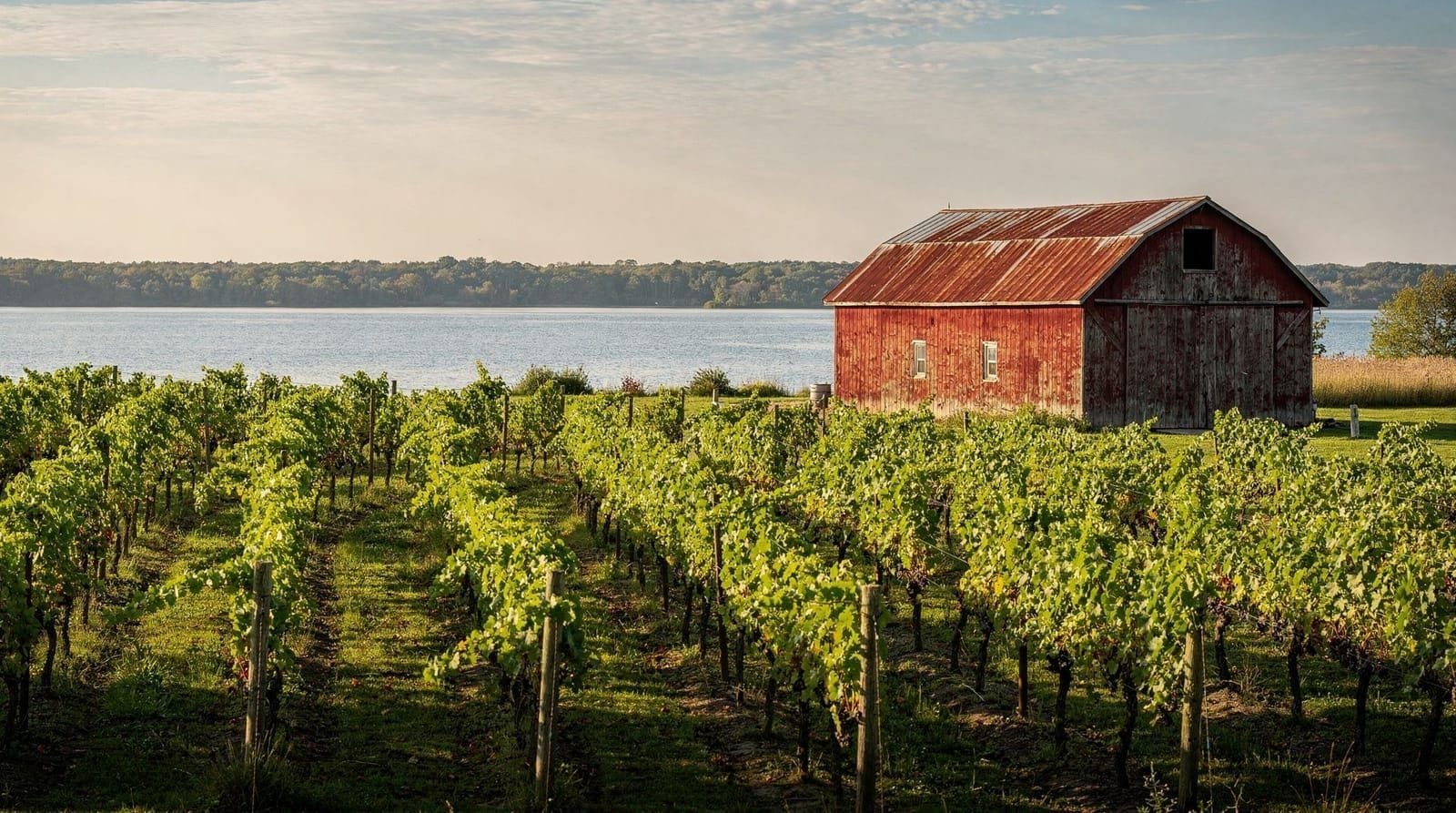
Kingston also sits within reasonable range — about an hour by car — of Prince Edward County’s wine region, another popular but geographically distant Toronto day-trip destination. As with the Thousand Islands, combining Kingston and the County into a single day from Toronto is ambitious given the total travel distance involved; it works better as part of a multi-day eastern Ontario road trip than a single compressed day.
Seasonal notes
Summer (June through August) is Kingston’s busiest tourist season, when Fort Henry’s drill demonstrations run most frequently and the waterfront is at its liveliest, with restaurant patios full and the farmers’ market at its most active. Fall brings comfortable walking weather and thinner crowds, a strong window for the downtown and waterfront portions of the trip. Winter sees Fort Henry’s demonstration schedule pause and Kingston Penitentiary tours typically stop running, though the downtown core and its restaurants remain fully operational, giving a quieter but still worthwhile version of the trip. Spring is a gradual reopening period similar to fall’s quieter energy, with full programming resuming by late May or June.
| Season | Fort Henry | Crowds | Best for |
|---|---|---|---|
| Summer (Jun-Aug) | Full drill schedule | Busiest | Seeing the Fort Henry Guard perform |
| Fall (Sep-Oct) | Reduced schedule | Thinner | Walking downtown and the waterfront |
| Winter (Nov-Mar) | Closed/paused | Quietest | Downtown restaurants without the crowds |
| Spring (Apr-May) | Reopening gradually | Light | A quieter preview before summer |
Budget for a day trip
Round-trip VIA Rail fare between Toronto and Kingston typically runs somewhere in the 50 to 100 CAD range depending on how far ahead you book and fare class. Fort Henry admission adds roughly 20 to 25 CAD, and lunch downtown runs a further 20 to 30 CAD. A full day, train and Fort Henry included, lands somewhere between 100 and 180 CAD per person, making this a moderately priced day trip relative to options requiring guided tours or multiple attraction tickets.
Kingston’s role in the Rideau Canal system
Kingston sits at the southern terminus of the Rideau Canal, a UNESCO World Heritage Site connecting the city to Ottawa via a 202 km waterway of locks and lakes originally built in the 1820s and 1830s for military purposes, in case of renewed conflict with the United States after the War of 1812.
Fort Henry’s original strategic purpose was specifically to guard this canal entrance and the adjoining naval dockyard, and the canal itself, still fully navigable and popular with recreational boaters today, is part of why Kingston’s waterfront developed the particular mix of military and commercial maritime infrastructure still visible in the city’s historic architecture. For visitors with extra time, a short walk along the canal’s Kingston terminus, near the Kingston Mills locks a short drive from downtown, adds context to the fort visit that many day-trippers skip in favor of downtown time alone.
Practical notes before you go
Book train tickets in advance where possible, particularly for weekend travel during summer, when popular departure times can sell out. Check Fort Henry’s drill demonstration schedule online before your visit, since it varies by day and season, and timing your fort visit around a scheduled performance meaningfully improves the experience. Comfortable walking shoes are worth it — most of Kingston’s appeal for a day-tripper comes from walking the downtown, waterfront, and the approach to Fort Henry itself.
Bellevue House and other lesser-known historic sites
Beyond Fort Henry and the downtown core, Kingston holds a handful of smaller historic sites worth knowing about for a repeat visit or a day trip with extra time — Bellevue House, a National Historic Site and the former home of Canada’s first Prime Minister, Sir John A. Macdonald, offers a quieter, more intimate historic house-museum experience than the fort’s larger-scale military presentation. These smaller sites rarely make it into a first, time-constrained day trip, but they’re worth flagging for anyone whose interest in Kingston’s history extends beyond the two headline attractions.
Kingston’s Thousand Islands cruises as an in-city option
While a full Thousand Islands day trip typically centers on Gananoque, Kingston itself offers its own shorter harbour and river cruise options departing directly from the downtown waterfront, a reasonable way to get some time on the water without the additional drive to Gananoque if your day trip is already tightly scheduled around Fort Henry and the downtown core. These tend to run shorter than the dedicated Thousand Islands cruises further downriver but still offer a taste of the same scenery closer to where Lake Ontario narrows into the St. Lawrence.
Frequently asked questions about a Kingston day trip
Is Kingston a good train day trip from Toronto?
Yes, one of the better options in this series — the roughly 2.5-hour direct VIA Rail connection removes any need for a car, and most of what’s worth seeing (downtown, waterfront, Fort Henry) is reachable on foot or a short taxi ride from the station.
How long does a Fort Henry visit take?
Budget 2 to 3 hours for a thorough visit, longer if timed around a scheduled drill demonstration, which adds a genuinely worthwhile performance element beyond simply walking the fort’s grounds and exhibits.
Is Kingston Penitentiary open to visitors?
Seasonally, yes — guided tours run during warmer months and require advance booking, since capacity is limited and demand is high given the site’s notoriety. Check current tour availability before planning a visit around it specifically.
What’s the best month to visit Kingston?
Summer offers the fullest schedule of activities including Fort Henry’s drill demonstrations, but September and early October provide a strong balance of good weather, functioning attractions, and lighter crowds than peak summer.
Can I do Kingston as a day trip without a car?
Yes, more easily than most destinations in this series — VIA Rail’s direct connection and Kingston’s walkable downtown core mean a car isn’t necessary for a satisfying day trip focused on the city itself, though a car helps if you want to extend to the Thousand Islands or Prince Edward County on the same trip.
Should I book a Thousand Islands cruise from Kingston or from Gananoque?
Gananoque is the traditional gateway for the dedicated Thousand Islands cruise fleet and generally offers more departure options, but Kingston’s own downtown waterfront runs shorter cruises directly, useful if your day is already built around Fort Henry and you don’t want the extra drive.